


Program Overview
This novel, PhD-level training program for current University at Albany students provides a multi-disciplinary curriculum with a focus on RNA and its health relevance. We develop our future science leaders by providing students with access to faculty, techniques, and collaborations within UAlbany, including The RNA Institute, and the College of Nanotechnology Science & Engineering.
The participating students are selected from PhD programs within the UAlbany departments of Biological Sciences, Biomedical Sciences, Chemistry, and Nanoscale Science and Engineering.
Funded in part by a T32 NIH training grant, the program supports a comprehensive, intellectually rigorous, and individualized PhD training experience. The training program is run by The RNA Institute, which is housed in and sponsored by the UAlbany College of Arts and Sciences.
The program also offers resource-faculty with RNA interests from the UAlbany Mathematics and Physics departments. The participating faculty represents a unique assembly of RNA expertise, ranging from single-molecule biophysics and chemical synthesis to developmental biology and infectious diseases.
overview
Program Outcomes
Students will develop a basic understanding of RNA science and transform knowledge into technical applications.
Trainees have the unique opportunity to choose mentors in one of the four departments, participate in cross-departmental collaborations, and have faculty members from all four departments or Physics and Mathematics serve on their thesis committee.
We will thus ensure a broad experience that prepares our students for a wide range of career options.
outcomes
Doctoral Training Program Curriculum and Courses
curriculum-courses
Curriculum
Curriculum
The training program has developed a curriculum based on the national need for interdisciplinary training, in the general area of RNA Science and Technology in Health and Disease, to prepare students for jobs in academia, industry, government, communication, scientific foundations, and other private sector enterprises.
View the RNA Fellowship Checklist of Requirements.
First Year
Students in the program complete a series of core courses required of their home departments, followed by courses on specific topics of interest in subsequent years. Students also undertake research rotations during their first year and then select a research advisor. Students will usually be selected for the training program in the Spring (second) semester of their first year.
Second Year and Beyond
During their studies, trainees will take the two-semester RNA Flagship course. Other departmental electives can be selected. At each colloquium given by an RNA Fellow they present on a topic that is broadly defined as the role of RNA in their research project or lab’s research area.
Students opt for the Entrepreneurship or Scientific Communications Workshop. Throughout their training, students will attend both their departmental and RNA-specific seminars.
Trainees, who are supported by teaching assistantships, will receive ample opportunities to teach. During their research training they will also be called upon to supervise undergraduates, allowing them to develop mentoring skills.
RNA Flagship Courses
RNA Flagship Courses
The courses usually meet for 110 minutes once a week over a 13-week period, for a total of about 48 contact hours per semester.
Physical and Chemical Principles in RNA Biology (BMS619)
Students will learn about common RNA techniques, experience application of these techniques in journal club discussions and get to use computer programs to process data or visualize molecules.
Responsible Conduct & Skills in Research (BIO515A)
Students will learn basic statistical approaches and data analysis methods to design high quality experiments and interpret and report data with confidence. Rigor and reproducibility training is also provided through workshops and discussion groups during the RNA Symposium and summer RNA Retreat.
Program Tracks
tracks
Entrepreneurship & Industry Track
Entrepreneurship & Industry Track
Throughout a six-lecture workshop series students learn about and discuss the process of deciding why and when it makes sense to commercialize scientific technology. Workshops focus on the patent process, when intellectual property should be protected, what constitutes inventorship and what gives a patent value.
Students dissect the patent process including how a patent is put together and the process of applying for a patent. In addition, students learn about what constitutes a claim set and what makes a patent strong or weak, using several issued patents as examples.
Publicizing Science Track
Publicizing Science Track
Scientists need not only write in lucid and creative ways, but to communicate their work to other scientists and to the public. Students trained to do experiments must be educated to write in ways that project their work and open doors to writing creatively in an increasingly competitive arena.
Science writing and communication constitute an important platform of education for RNA Trainees. They will have many opportunities to learn to write well including access to introductory courses, Communication in Science (BMS510) or Responsible conduct and Skills in Scientific Communication (BIO 515B) to promote effective scientific writing of journal articles and data presentation skills for posters and giving oral presentations.
Students will have even broader opportunities to hone their writing and communication skills through the New York State Writers Institute. The RNA Training Program and Writers Institute share common interdisciplinary goals including promoting creativity and critical thinking and a commitment to making something new.
Individuals who have written about science for a broader public and have visited the Writers Institute include premier scientists like Jon Beckwith, Michio Kaku, Eric Kandel, Steven Jay Gould, Steven Pinker, and V.S. Ramachandran, and science journalists such as Natalie Angier and James Gleick.
Workshop: The science-writing workshop will consist of four 90-minute sessions with one session being held each month during the fall semester. All workshops will be led by Dr. Jill U. Adams. Dr. Adams is a scientific journalist and member of the National Association of Science Writers.
In the workshops, students will improve their own and each other’s science communication skills, primarily by learning to tailor communications to both the writers’ goals and their intended audiences. They will also learn about different science writing opportunities and careers. The expectation is that each fellow will produce a publication-worthy essay that could appear in the RNA Institute Newsletter, Trolley, the publication of the New York State Writers Institute, or similar publication. Dates and times of the workshops will be announced by Dr. Adams.
Popular science presentations: RNA fellows will attend at least one selected presentation related to popular science, sponsored by the renowned Writer’s Institute. Presentations will be announced once the Fall Writers Institute schedule is set.
How to Apply for the Doctoral RNA Training Program
All admissions to graduate programs at the University at Albany are handled by the Offices of Graduate Education. UAlbany program deadlines and admission requirements can be found on the Graduate Programs webpage. Contact UAlbany's Graduate School at [email protected] or 518-442-3980 with questions about admission procedures.
You should in your application express interest in being selected for the RNA Training Program. Students will be admitted into the program after their first year of study in one of the PhD programs.
If you are admitted to our program, you will be asked to select several laboratories in which to do rotations before you join one for your PhD work.
apply
Doctoral Training Leadership and Faculty
leadership
Program Directors
Program Directors
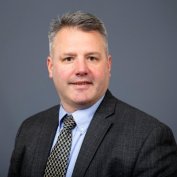
Dr. Thomas Begley
Director of RNA Training Program and Distinguished Endowed Professor in Biological Sciences

Dr. Arun Richard Chandrasekaran
Co-Director of RNA Training Program, Assistant Professor in Nanoscale Science & Engineering
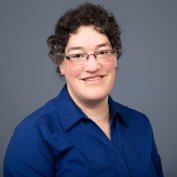
Dr. Gabriele Fuchs
Associate Professor in Biological Sciences
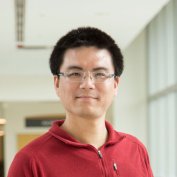
Dr. Alan Chen
Chair and Associate Professor in Chemistry
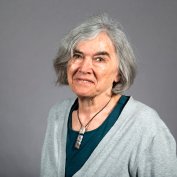
Dr. Marlene Belfort
Senior Advisor
Training Program Faculty Members
Training Program Faculty Members
The RNA Training Program faculty includes members from four UAlbany departments Biological Sciences, Biomedical Sciences, Chemistry, and Nanoscale Science and Engineering. In addition, we have resource-faculty from the departments of Mathematics and Physics at UAlbany.
RNA Doctoral Program Training Faculty
Seminars, Colloquia and Conferences
seminars-colloquia-conferences
About
About
Scientific gatherings are invaluable to students, because they demonstrate how those highly skilled in a field present a seminar; expose students to basic approaches and principles which traverse disciplines; provide opportunities to discuss careers and decision-making processes; acquaint students with cutting edge, often unpublished, research results; and allow networking with scientists to increase job prospects.
Doctoral RNA Program News and Highlights
Highlights from the RNA Institute’s Newsletter
Highlights from the RNA Institute’s Newsletter
Doctoral Training Program featured in the Spring 2021 issue of In the Loop - March 1, 2021
RNA Science Training Rewarded by NIH - September 1, 2019
News
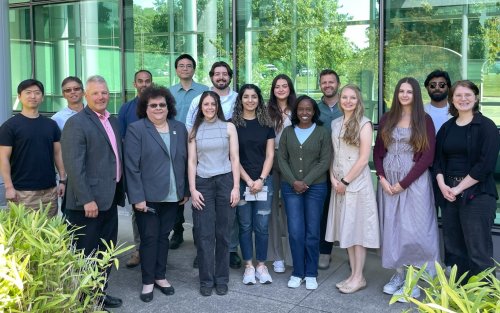
The 11th Cohort of RNA Fellows Marks New Opportunities for Collaboration and Discovery
Pictured: The Dean of the College of Arts and Sciences, Jeanette Altarriba, Directors of the RNA Fellows program Drs. Thomas Begley & Arun Richard Chandrasekaran, RNA Fellows, and their mentors.

The 7th Cohort of RNA Fellows has Scientific Depth and Diversity
12 doctoral students from UAlbany and SUNY Poly have been named 2021-22 RNA fellows — the seventh such cohort in the institute’s young history.
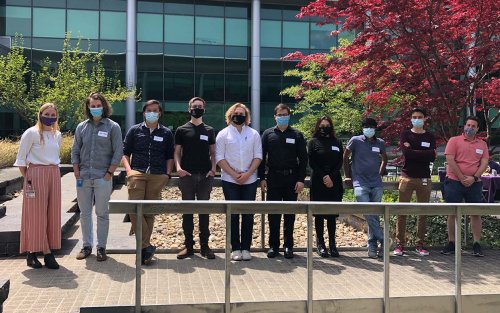
Introducing the 7th cohort of RNA Fellows
The RNA Institute hosted a lunch to introduce the new 2021-2022 cohort of RNA Fellows.
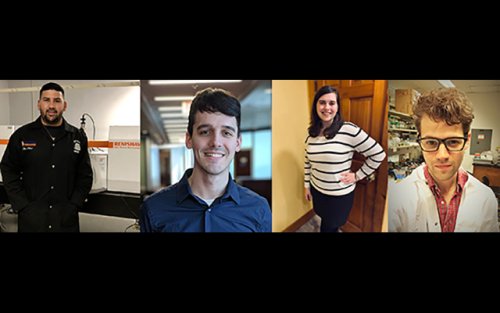
Training Program in RNA Sciences Continues Growing in its 6th Year
Attracted by the chance to delve deep into RNA science and enhance career prospects, young PhD-level researchers continue to pursue The RNA Institute’s Fellows Program at record levels.

RNA Scientists Advance Early Detection of Duchene Muscular Dystrophy
The devastating effects of Duchene muscular dystrophy (DMD) can be mitigated if detection takes place in early childhood. Sadly, early diagnosis is rare. Now, University RNA researchers have discovered a novel method that could solve this long-standing problem.