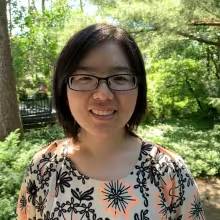
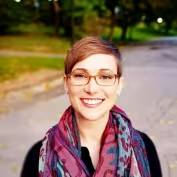
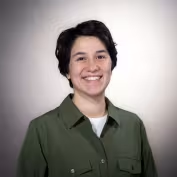
Dr. Halley Eacker graduated in 2021 with a PhD in Educational Psychology and Methodology with a concentration in Special Education. She entered the program as a certified teacher in several areas including Students with Disabilities, and in Literacy, and with experience as a special education teacher. After her doctoral studies, Halley has continued working in the field of special education. She is currently a Behavior Specialist in a public school district, supporting students and their families.
During her doctoral program, Halley received university scholarships recognizing her academic achievements. Her dissertation was titled Addressing the development of reading comprehension in students with ASD: A meta-analysis. Results confirmed an overall effect of reading comprehension interventions, including tried-and-true practices such as explicit instruction, shared reading, vocabulary instruction and use of technology. Her results provided an example of synthesizing findings across single case studies to determine overarching impacts and implications for the field.
Halley reports that she gained meaningful guidance, support and opportunities for growth from professors in her doctoral program. She particularly appreciates the opportunity that the doctoral program gave her to work closely with two faculty members on a writing intervention with students with autism spectrum disorder. She also values learning methodological techniques (e.g. single-case design) that are essential in special education research. Presenting the findings at the AERA Annual Meeting, and at Coimbra in Portugal, were very valuable experiences.
Halley’s doctoral study was funded through a grant awarded by the U.S. Department of Education to the Division of Special Education. It incorporated experience in research, undergraduate and graduate teaching, and field supervision of student teachers and interns. These well-rounded experiences provided a comprehensive understanding of the field of special education and allowed her to take on many different and interesting roles after graduation.
When given the opportunity to provide advice to aspiring and current students, Halley had two main recommendations:
1. Explore what is meaningful to you.
In her doctoral program, Halley herself drew upon her teaching experience and addressed the concerns and challenges she faced as a practitioner. She aimed to conduct research that would have a positive impact on students with disabilities, but also increase access to meaningful support for educators.
2. Keep in mind that there are many options for how you can use your PhD after graduation. It might take some time for you to find your path – this is okay!
Following her PhD study, Halley entered the private sector and focused on school improvement services and program evaluation. This afforded her the opportunity to work with local and state agencies to improve policy and practice on a broad scale. More recently she transitioned to a role in a public school setting as a Behavior Specialist. She is proud to be part of a supportive school community where she can share her knowledge and collaborate with an amazing team.
Halley currently lives in Albany with her partner and their pets. She enjoys gardening and spending time with friends and family. (2024)