




A professional child education therapist having a session with a child in a family support center.

Master of Science  in
Educational Psychology and Methodology

Program of Study

programofstudy

The 30-credit master's program can be completed part time over a period of years or over three semesters of full-time study.

Core courses comprise one class in each of the following areas.


Human Development

Sample courses: Development in Childhood, Adolescent Development, Lifespan Development, Advanced Developmental Psychology, Comparative Theories of Human Development.


Learning

Sample courses: Educational Psychology, Advanced Educational Psychology: Learning and Instruction, Motivation, Children’s Learning and Cognition, Application of Cognitive Theories to English Language Arts and Social Studies, Self-Regulated Learning.


Individual Differences and Special Education

Sample courses: Introduction to Human Exceptionality, Learning Disabilities, Instructional Environments and Practices for Students with Disabilities, Educating Students with Emotional Disorders and Challenging Behaviors, Assessment of Students with Disabilities, Early Childhood Special Education

Research Methods

Sample courses: Research Project in Educational Psychology, Educational Research Design.


Measurement and Evaluation

Sample courses: Assessment in Education, Educational and Psychological Measurement, Seminar in Measurement, Theories of Validity and Reliability.


Statistics

Sample courses: Statistical Methods I or II, Seminar in Statistics, Multivariate Methods for Applied Researchers.


Electives

Choose four courses with your advisor’s approval.


Educational Research Project

Gain experience collecting data and performing statistical analysis by designing your own research project and reporting your findings in a formal academic report. This special project may be completed in your research methods class.

Career Options


Teacher Certification

If you hold a NY State "Generalist" certificate (Early Childhood Education Birth- Grade 2, Childhood Education Grades 1-6, Generalist in Middle Childhood Education Grades 5-9, Students with Disabilities Birth-Grade 2, Students with Disabilities Grades 1-6 and Students with Disabilities Generalist Grades 5-9), this program can be used to fulfill the MS requirement for Professional certification (as of 11/29/2021).


Develop Expertise in Data Analysis

If you're aiming to land a research job, you can increase your competitive advantage by taking electives in computational statistics and other subjects related to empirical analysis.

Take classes to learn: Regression, Multivariate Statistics, Factor Analysis, Meta Analysis, Single Case Design, Psychometrics & Assessment, including Item Response Theory


Strengthen Your PhD Application

Improve your opportunities for doctoral study in education and psychology at UAlbany or other prestigious research universities by working on faculty-led research projects and/or completing an internship with a human services agency or school system.


College student study group
career

Why UAlbany


Join an International Academic Community

At UAlbany, you connect with students and faculty from around the world. The master's program also attracts international learners who want to develop advanced reading and writing skills in academic English while earning a graduate psychology degree at a major American research university.


Start Right Away with Rolling Admissions

Applications are reviewed year-round, so you can enroll soon after being admitted to the program. To apply, you only need to have earned 12 undergraduate or graduate credits in psychology, educational psychology, education, or related fields.


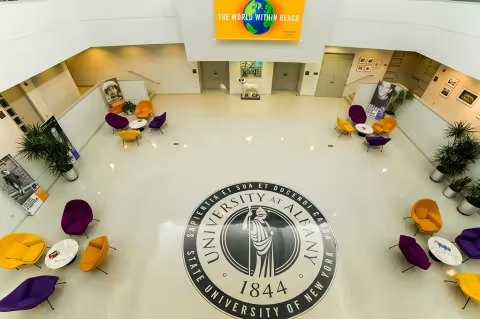
The University Hall atrium with University Seal on floor and four sets of tables and chairs.
why
Accelerated Undergraduate/Graduate Option

If you’re a current UAlbany undergraduate student with at least a 3.2 GPA, you may be eligible to begin your graduate degree coursework as early as your junior year. Save time and money by applying up to 12 academic credits, billed at the undergraduate rate, towards both degrees. By doing so, you may be able to complete your combined program in only 5 years and spend less than you would if you completed each program separately.

Contact your undergraduate advisor to see if you’re eligible and learn about your combined graduate program options.

UAlbany graduate with confetti at Commencement.
combined

Admissions Requirements

admissions
Deadlines
  • Fall: Rolling
  • Spring: Rolling
  • Summer: Rolling

Although admission is rolling, please note it can take 6-8 weeks for a decision.

There is no departmental assistantship consideration for this program.

Required Application Materials
  • Transcripts from all schools attended
  • Three letters of recommendation (at least one from an academic source)
  • Statement of Goals

The statement is generally one to two pages discussing what you have to offer the program and what you wish to get out of the program.  It should include a brief description of the applicant's field of interest, related background, desired area of study and research emphasis or career goals. 

Student Learning Objectives


Learning objectives that UAlbany students are expected to attain through their course of study within their academic program.

Master of Science

By the end of the program, teacher education candidates will:

1. Learner Development and Individual Learning Differences

  • 1.1 understand how language, culture, ability, intersecting identities, and family background
    influence learning.
  • 1.2 use understanding of development and individual differences to respond to the needs of students.

2. Respectful Learning Environments

  • 2.1 create safe, inclusive, culturally responsive learning environments to engage students in
    meaningful learning activities and social interactions through collaboration with general educators, service providers and other colleagues.
  • 2.2 use motivational and strength-based instructional interventions, approaches, and tools to engage students in a variety of environments.
  • 2.3 use a range of preventive and responsive practices documented as effective to support students’ social, emotional, physical, and educational well-being.
  • 2.4 develop and apply effective, culturally responsive/sustaining procedures and proactive behavior management strategies that provide the differentiated behavioral supports all students need to function successfully in the classroom.
  • 2.5 develop, implement, and evaluate a systematic behavior intervention plan for students who
    require intensive and highly individualized behavioral supports.
  • 2.6 design or select curriculum materials for promoting social and emotional learning.
  • 2.7 take action to mitigate factors that influence the over-representation of Students of Color and Multilingual students in programs for students with disabilities and in disciplinary outcomes (e.g. disaggregated data, specifically disciplinary data).

3. Content Knowledge

  • 3.1 recognize the central concepts, structures, and tools of inquiry of the content areas they teach.
  • 3.2 organize and apply content knowledge and integrate cross-disciplinary skills to develop
    meaningful learning progressions across contexts for all students through a variety of professional roles.
  • 3.3 use general and specialized content knowledge for teaching across curricular content areas to individualize learning.
  • 3.4 modify general curricula and materials, using inclusive practices, to support all students
  • 3.5 use inclusive practices to make the curriculum accessible to students, such as the modification of general and specialized curricula and materials.

4. Assessment

  • 4.1 minimize bias (e.g., racial, linguistic, ability) by selecting and using technically sound equitable formal and informal assessments.
  • 4.2 use knowledge of measurement principles and practices to interpret assessment results (including learning, behavior, transition, and the classroom environment) and guide educational decisions.
  • 4.3 use multiple types of assessment information in making decisions about students in collaboration with colleagues and families.
  • 4.4 use assessment outcomes to provide feedback to meaningfully engage students in high quality learning.

5. Instructional Planning and Strategies

  • 5.1 incorporate an individual’s abilities, interests, funds of knowledge, learning environments, and cultural and linguistic factors in the selection, development, and adaptation of learning experiences for all students.
  • 5.2 use technologies to support instructional assessment, planning, and delivery.
  • 5.3 implement strategies to enhance language development and communication skills.
  • 5.4 utilize augmentative and alternative communication systems and a variety of assistive technologies to support communication and learning.
  • 5.5 develop and implement a variety of education and transition plans across a wide range of settings and different learning experiences in collaboration with students, families, and school-based teams and adult serving community and vocational organizations.
  • 5.6 teach to mastery and promote generalization of learning.
  • 5.7 teach cross-disciplinary knowledge (e.g. academic language) and skills such as critical thinking and problem solving.

6. Professional Learning and Ethical Practice

  • 6.1 use CEC’s professional Ethical Principles and Professional Practice Standards (found in the
    internship handbook) to guide practice.
  • 6.2 reflect on how foundational knowledge, equitable theories of practice, and current sociocultural events and issues influence professional practice.
  • 6.3 appreciate and acknowledge that diversity is a valued aspect of families, cultures, and schools, and that complex human issues (e.g., sociocultural, race, trauma) can interact with the delivery of special education services.
  • 6.4 recognize the significance of lifelong learning by participating in professional activities and
    learning communities.
  • 6.5 engage in activities such as advocacy and mentoring, and involvement in school and in the
    community.
  • 6.6 design plans and directions for working effectively with support personnel (e.g., paraeducators, tutors, substitute teachers, and volunteers).

7. Collaboration

  • 7.1 use theory and elements of effective collaboration (e.g., respectful communication).
  • 7.2 serve as a collaborative resource to colleagues.
  • 7.3 use collaboration to promote the well-being of students across a wide range of settings and
    collaborators.
slo

Careers and Advisement

The Pathways Into Education (PIE) Center is the central office on campus serving undergraduate, graduate, and prospective students interested in pursuing careers in education and programs leading to teacher certification.

Graduate Advisement:
Email Graduate Advisement
518-442-3529

Please call or email to schedule an appointment.