




Four students conducting water testing at the Empire State Plaza.

Master of Public Health in
Environmental Health Sciences

Program of Study

programofstudy

In the Environmental Health Sciences MPH program, you’ll gain expertise in primary public health fields while enhancing your lab skills as well as your understanding of environmental factors and their impact on health. Electives provide an opportunity to dive deeper into your areas of interest, and internships create substantial opportunity for professional, hands-on experience.


Core Courses

  • Biological Basis of Public Health
  • Introduction to Environmental Health
  • Principles and Methods of Epidemiology I
  • Introduction to the Theory of Statistics
  • Health Care Organization Delivery and Financing
  • Social and Behavioral Aspects of Health
  • Professional Practice in Public Health


Additional Required Courses

  • Principles of Environmental Chemistry
  • Principles of Toxicology
  • Risk Assessment
  • Quantitative Course (choose one)
    • Principles and Methods of Epidemiology II
    • Computer Programming for Data Management and Analysis in Public Health
    • Principles of Statistical Inference II 
    • Geographic Information Systems (GIS) and Public Health

Electives


Choose courses that suit your interest in consultation with your advisor.


Integrative Learning Experience


Through an Integrative Learning Experience (ILE), you will produce a high-quality written product that demonstrates synthesis of foundational and concentration competencies.


Professional Internships


By completing internships in at least two different organizational settings, such as a state health department, county health department, hospital or non-governmental organization (NGO), you’ll gain extensive professional public health experience focused on environmental health. These internships frequently lead to job offers, with 34% of our graduates being offered positions at their internship sites.

Previous students have completed work at partner sites such as the Wadsworth Center, the Radix Ecological Sustainability Center and the Food Pantries for the Capital District. Whether you’re helping local farms reduce their food waste or monitoring a community’s exposure to harmful chemicals in their water system, as an intern you’ll gain meaningful experience and connections to help further your career while making a difference in the lives of the populations you serve.

If you enter the program with significant experience in public health, you can apply to waive up to 6 credits of this 9-credit requirement.

Learn more about public health internship opportunities at UAlbany.

Research Opportunities


Professors in the College of Integrated Health Sciences conduct research in community settings and scientific labs. More than 75% of the faculty hold appointments with the NYS Department of Health, which makes it easy to obtain public health internships in labs of the internationally recognized Wadsworth Center.

As a graduate student, you learn in advanced labs on UAlbany’s Health Sciences Campus and can participate in research projects in the Cancer Research Center, Prevention Research Center, Public Health Preparedness Center, Cardiac Quality Improvement Initiative, and Center for Health Workforce Studies.


Professor teaching a group of students about DNA
mph-environmental-opportunities

Career Outlook


With an Environmental Health Sciences MPH, you’ll have an array of career options available to you in organizations across the private and public sectors, including the New York State Department of Health, NYSDOH Bureau of Toxic Substance Assessment, NYS Energy Research and Development, NYS Center for Environmental Health and more.

Potential job titles with an Environmental Health Master of Public Health:

  • Environmental Health Scientist
  • Exposure Assessment Specialist
  • Safety Engineer
  • Environmental Health Associate
  • Environmental Health Educator
  • Public Health Preparedness Coordinator
  • Environmental Compliance Officer
  • Health and Safety Project Coordinator
  • Environmental Health Policy Analyst


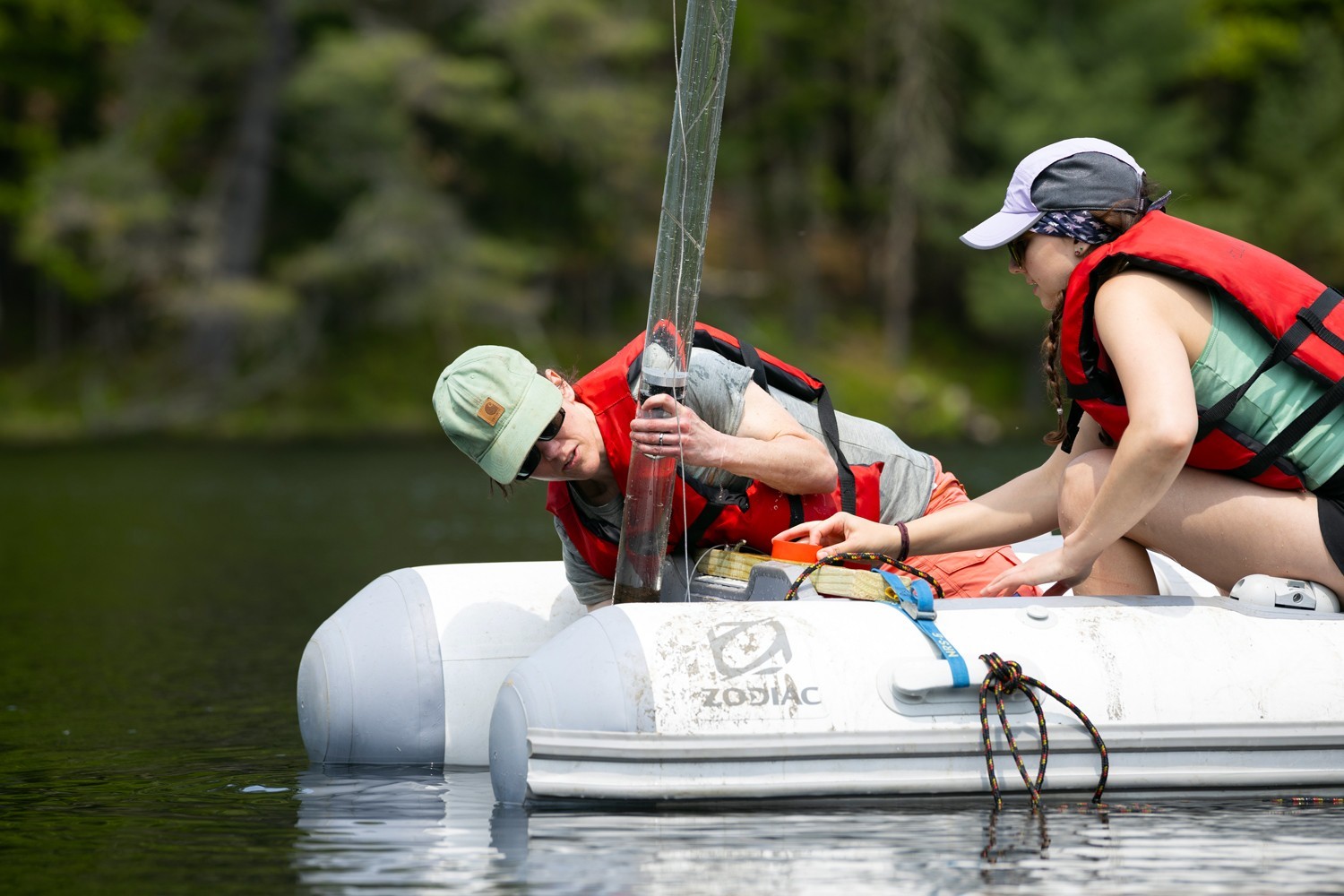
Two students conducting environmental research in a boat on a lake.
careers
Advanced Dual-Degree Options

MPH + JD Option through Albany Law School

MPH + JD Option through Albany Law School

Secure your MPH while attaining your law degree. You can earn your Master of Public Health and Doctor of Jurisprudence (JD) in only 3.5 years, through UAlbany’s collaborative agreement with Albany Law School.

You'll gain a solid substantive foundation and practical experience in areas including public health core disciplines, bioethics, lawyering skills and policy development, ensuring a vast understanding of the issues confronting health-care lawyers today. You'll graduate with the skills to make a significant impact on the health of communities and populations.

This collaborative program prepares you for extensive career opportunities in law, health care and public health. You’ll be equipped to address public health problems through the lens of the law, providing valuable insight into how our legal system may help or hinder public health efforts.

You'll complete your first year in the health law track at Albany Law School, followed by coursework at both Albany Law and the University at Albany.

You can choose from any of UAlbany's eight MPH degree programs, which will give you advanced knowledge and skills in a particular public health discipline. Select Albany Law School courses (from an approved list) can count toward the MPH. In addition, you may transfer up to 12 UAlbany credits from an approved list to count towards your JD and cross-register for up to 6 internship credits. 

You must apply to and be accepted by both programs. Visit the Albany Law School Juris Doctor Program for more information and admissions requirements related to the JD degree.

For more information about the MPH/JD program, contact [email protected].

The MPH + MD Option through Albany Medical Center

The MPH + MD Option through Albany Medical Center

If you’re pursuing a Doctor of Medicine (MD) at Albany Medical College (AMC), you can broaden your perspective and enhance your patient care, research and advocacy skills to address public health issues in your career as a physician by earning an MPH at UAlbany.

Through UAlbany’s agreement with Albany Medical Center, you can earn your MPH in one of six disciplines while simultaneously pursuing your MD, and complete both degrees in five years.

After completing three years of AMC’s medical curriculum and Step 2 of the USMLE, you’ll spend three semesters at the University at Albany. Coursework – some of which may be online – fits seamlessly into the medical training timeline.

This dual enrollment allows you to have some of your master’s course requirements waived, along with 6 credits of the required internship in public health. After completing the MPH courses, you will return to AMC for the final year of medical school, ensuring the MPH integrates smoothly into medical training.

With an MD-MPH, you will be well positioned for a career in academic medicine, government agencies, health systems leadership or global health.

For more information, contact [email protected].

MPH + JD Option through Albany Law School


Secure your MPH while attaining your law degree. You can earn your Master of Public Health and Doctor of Jurisprudence (JD) in only 3.5 years, through UAlbany’s collaborative agreement with Albany Law School.

You'll gain a solid substantive foundation and practical experience in areas including public health core disciplines, bioethics, lawyering skills and policy development, ensuring a vast understanding of the issues confronting health-care lawyers today. You'll graduate with the skills to make a significant impact on the health of communities and populations.

This collaborative program prepares you for extensive career opportunities in law, health care and public health. You’ll be equipped to address public health problems through the lens of the law, providing valuable insight into how our legal system may help or hinder public health efforts.


You'll complete your first year in the health law track at Albany Law School, followed by coursework at both Albany Law and the University at Albany.

You can choose from any of UAlbany's eight MPH degree programs, which will give you advanced knowledge and skills in a particular public health discipline. Select Albany Law School courses (from an approved list) can count toward the MPH. In addition, you may transfer up to 12 UAlbany credits from an approved list to count towards your JD and cross-register for up to 6 internship credits. 

You must apply to and be accepted by both programs. Visit the Albany Law School Juris Doctor Program for more information and admissions requirements related to the JD degree.

For more information about the MPH/JD program, contact [email protected].

The MPH + MD Option


If you’re pursuing a Doctor of Medicine (MD) at Albany Medical College, you can enhance your ability to address public health issues in your career as a physician by earning an MPH at UAlbany.

Through UAlbany’s agreement with Albany Medical Center, you can earn your MPH in one of six disciplines while simultaneously pursuing your MD, and complete both degrees in five years. This dual enrollment allows you to have some of your master’s course requirements waived, along with 6 credits of the required internship in public health.
 

See the Graduate Bulletin for MPH/MD program requirement details.

For more information, contact [email protected].


A group of medical professionals having a discussion around a conference table.
An Interdisciplinary Approach to Public Health

Studying public health at UAlbany is an opportunity to go beyond a traditional exploration of the field. Here you can take courses that spark your interest across all the departments in the College of Integrated Health Sciences, an interdisciplinary approach that will help you form a deep understanding of public health and its many influences and connections to other fields.

Explore the departments within the College of Integrated Health Sciences to learn more about course offerings, faculty, research and current students.

Tuition Assistance for Public Health Employees


If you are a full-time salaried employee in a county health department in New York State or for the NYS Department of Health, you may be eligible to receive tuition assistance through the Public Health Leaders of Tomorrow (PHLOT) and Public Health Infrastructure Tuition (PHIT) programs. Applicants who wish to be considered for a PHIT scholarship must also apply for a PHLOT scholarship. PHLOT scholarships will be applied first and PHIT will be applied second.

Visit Scholarships for NYS Health Department Employees for more information.

tuition
Accelerated Undergraduate/Graduate Options

If you’re a current UAlbany undergraduate student with at least a 3.2 GPA, you can save time and money by beginning your MPH graduate degree coursework as early as your junior year. Up to 24 academic credits, of which 12 credits are billed at the undergraduate rate, will count towards both degrees – so you can complete your combined program in only 5 years and spend less than you would if you completed each program separately.  

Contact your undergraduate advisor to see if you’re eligible and learn about your combined graduate program options.

UAlbany graduate at Commencement

International Students

This degree is designated as a STEM program. International students maintaining F-1 status are allowed to apply for up to 12 months of post-completion Optional Practical Training (OPT) following completion/graduation from their degree program. Currently, this degree program is also designated by the Department of Homeland Security (DHS) as an eligible degree for the F-1 STEM OPT work authorization extension; students who secure qualifying employment may be eligible to apply for the STEM OPT extension for a cumulative total of up to 36 months of F-1 OPT work authorization.

Admission Requirements

Ready to pursue your MPH at the University at Albany? Here's what you'll need to get started.

admissions
Deadlines
Deadlines

Priority: January 15 – First consideration for scholarship funding 
General: March 1 – Second consideration for scholarship funding 
Final: Rolling until August 1 on space available basis

We do not admit to the on-campus MPH program in the spring semester unless you have first completed the Certificate in Public Health Fundamentals and Principles. The Certificate in Public Health Fundamentals is an 18-credit, fully online program that can be completed in as little as two semesters, and all 18 credits transfer directly to the MPH program. Students may apply to the Certificate for spring admission while simultaneously applying to the MPH for fall admission. Please contact us at [email protected] to learn more about the benefits of this pathway and the application process.

Applicants who wish to be considered for a College of Integrated Health Sciences scholarship must submit their application by the priority deadline.

SOPHAS fee waivers are available for the first program you apply to in SOPHAS to cover the initial $150 application fee. There are three types of fee waivers: financial-based, service-based and international-based. You may only apply for one type of fee waiver, and the waiver request must be submitted to SOPHAS before you submit your SOPHAS application. SOPHAS fee waivers are granted on a first come, first served basis, so applicants are strongly encouraged to apply before the priority deadline when requesting a waiver. For more information, visit SOPHAS Fees and Fee Waivers.

Applications are accepted for all programs on a space available basis after the published deadlines. 

MPH Degree Application

The application and all supporting materials for the Master of Public Health must be submitted through SOPHAS

Visit the SOPHAS Applicant Help Center for help with starting your SOPHAS application.
 

Application Requirements

  • Must hold a bachelor’s degree from a college or university of recognized standing
  • Grade point average of 3.00 or better
  • One semester of social sciences
  • One college level course in mathematics (algebra or pre-calculus) or statistics with a grade of B or higher (high school AP courses do not count towards this prerequisite)
  • Two semesters of college level biology
  • Two semesters of college level chemistry

Note: GRE not required for admission.
 

International Requirements

  • International students must submit a minimum TOEFL score of 98 (or 5.0 under the 2026 scoring system), IELTS score of 7.0, or Duolingo score of 125. We will only accept official scores sent by the testing institution.
  • UAlbany SOPHAS TOEFL code is 5688. We do not use department codes.
  • Official Duolingo scores must be sent to the University at Albany (SOPHAS does not accept Duolingo scores). Students may include unofficial scores in their SOPHAS application, but official scores must be received by the University at Albany.
  • The TOEFL or IELTS is not required for international students who have completed at least four semesters of full-time study within a four-year time frame from time of application, and maintained at least a B average at a college or university in the United States or a country from an approved list.  For questions regarding English Language Proficiency waivers, please email Soha Acosta at [email protected].
  • International students must request a transcript evaluation from World Education Services (WES). The WES evaluation must be sent directly to SOPHAS, NOT the University at Albany or the College of Integrated Health Sciences.
     

Required Application Materials

Official Transcripts

  • Official transcripts from EVERY post-secondary academic institution attended, including college coursework completed during high school, must be sent directly from the institution to SOPHAS. You must report all colleges and universities attended and submit official transcripts, even if your transfer credits are listed on your primary transcript. See Sending Official Transcripts for more guidelines.
  • UAlbany students must have an official UAlbany transcript sent directly to SOPHAS. When ordering the transcript, select Third Party Application Service SOPHAS, not University at Albany, as the recipient.
  • Applicants who use the professional transcript entry service provided by SOPHAS should note that the entry process adds TWO FULL WEEKS to the time it takes for an application to be verified and considered complete by the admissions committee.
  • Applicants who have completed their education in the United States must self-report courses in the Transcript Entry section, which enables reviewers to see your academic strengths through an electronic transcript. The use of a professional transcript entry service is strongly discouraged, as it increases the cost of applying and delays the review of your application by several weeks. We strongly encourage applicants to self-report coursework and grades in the Transcript Entry section to ensure a smooth and cost-effective application process.

Three letters of recommendation

  • A minimum of two letters must be from academic faculty
  • At least one letter must be from a university faculty member in the major field of study
  • Applicants who have been out of school for five or more years may submit professional references
  • Letters must be signed and on institutional/organizational letterhead.

Personal Statement

  • Why do you wish to pursue a career in public health and why are you interested in your chosen area of study?
  • 2-page limit

CV/Resume
 

Application Submission

Applicants should submit their application as soon as the items you have control over are complete (personal statement, resume/CV, institutions attended, coursework entry, and all other required sections of the online application). Test scores, transcripts and letters of recommendation will be added as they are received, after which SOPHAS will begin verifying your application.

Applications will not be reviewed until all required items, including official transcripts, official test scores, and required letters of recommendation, have been received and your application has been verified. Please note that once SOPHAS has received all of your application materials, it may take up to 4 full weeks to be verified by SOPHAS. Be sure to request all transcripts, recommendations, and standardized test scores in advance so your application can be completed and verified by the specified application deadline.

For application specific questions, contact us at [email protected] or 518-442-2450.

Combined BS/MPH Required Application Materials

The combined program is highly competitive. You must have a cumulative grade point average of 3.2 or higher and have completed 56 total credits hours toward your BS. Students typically apply in their junior year. The department accepts applications only for fall semester start.

Application Materials

  •  Completed Degree Application through the Graduate School (not SOPHAS). Select the fall term you will first start taking graduate coursework.
  • Official transcripts of all undergraduate coursework not completed at UAlbany.
  • Two letters of recommendation from academic faculty. One must be from your major area of study.
  • Attestation from academic advisor that all gen ed requirements, major requirements (except three electives), capstone sequence, and minor requirements will be completed by the end of the third year of study.
  • 1-2 page personal statement detailing interest in public health, your chosen area of study, and reasons for pursuing the BS/MPH
  • Resume
  • $75 application fee

Note: GRE not required for admission.

Accepted Student Profile

Average GPA: 3.35

Special Notes
Special Notes

Please note: This program requires an internship, field experience, study abroad component, or clinical experience requirement. Students who have previously been convicted of a felony are advised that their prior criminal history may impede their ability to complete the requirements of certain academic programs and/or to meet licensure requirements for certain professions. If applicants have concerns about this matter please contact the Dean’s Office of the intended academic program. 

Student Learning Objectives


Learning objectives that UAlbany students are expected to attain through their course of study within their academic program.

MPH Environmental Health Sciences Core Competencies
  1. Evaluate federal policies/regulatory programs/guidelines that effect environmental and occupational health.
  2. Explain mechanisms of toxicity of biological, chemical, physical hazards, including their absorption, distribution, metabolism and excretion as well as susceptibility factors including individual behaviors and psychosocial stressors.
  3. Apply knowledge of physical, chemical and/or biological properties for major classes of environmental agents, including a discussion of sources and environmental fate and transport.
  4. Critically read and interpret both peer-reviewed literature and governmental scientific reports.
  5. Conduct and evaluate an exposure assessment for environmental toxins.
MPH Foundational Competencies
  • Apply epidemiologic methods to the breadth of settings and situations in public health practice
  • Select quantitative and qualitative data collection methods appropriate for a given public health context
  • Analyze quantitative and qualitative data using biostatistics, informatics, computer-based programming and software, as appropriate
  • Interpret results of data analysis for public health research, policy or practice Public Health & Healthcare Systems
  • Compare the organization, structure and function of health care, public health and regulatory systems across national and international settings
  • Discuss the means by which structural bias, social inequities, and racism undermine health and create challenges to achieving health equity at organizational, community and societal levels Planning and Management to Promote Health
  • Assess population needs, assets and capacities that affect communities’ health
  • Apply awareness of cultural values and practices to the design or implementation of public health policies or programs
  • Design a population-based policy, program, project or intervention
  • Explain basic principles and tools of budget and resource management
  • Select methods to evaluate public health programs Policy in Public Health
  • Discuss multiple dimensions of the policy making process, including roles of ethics and evidence
  • Propose strategies to identify stakeholder and build coalitions and partnerships for influencing public health outcomes
  • Advocate for political, social or economic policies and programs that will improve health for diverse populations
  • Evaluate policies for their impact on public health and health equity Leadership
  • Apply principles of leadership, governance and management, which include creating a vision, empowering others, fostering collaboration and guiding decision making
  • Apply negotiation and mediation skills to address organizational or community challenges Communication
  • Select communication strategies for different audiences and sectors
  • Communicate audience-appropriate public health content, both in writing and through oral presentation
  • Describe the importance of cultural competence in communicating public health content Inter-professional Practice
  • Perform effectively on inter-professional teams Systems Thinking
  • Apply systems thinking tools to a public health issue
slo