


The 11th Cohort of RNA Fellows Marks New Opportunities for Collaboration and Discovery

By Ryan Leacock
ALBANY, N.Y. (September 24, 2025) Eleven outstanding doctoral students from across the University at Albany’s scientific disciplines have been selected as 2025-26 RNA Fellows, marking the eleventh cohort in the Institute’s 15-year history.
The Fellows represent four PhD programs — Biological Sciences, Biomedical Sciences, Chemistry, and Nanoscale Science and Engineering. The training is supported by a prestigious training grant from the National Institutes of Health (NIH), and additional funding from The Graduate School at the University at Albany. The RNA Fellow program is coordinated by The RNA Institute, part of the UAlbany College of Arts and Sciences.
Jeanette Altarriba, Dean of the College of Arts and Sciences, emphasized the Institute’s impact on student development: “The RNA Institute stands as a premier example of how innovative training and mentorship can transform the student experience. Our Fellows gain more than technical expertise; they build confidence, form professional networks, and discover how their research can shape the future of science and society. Programs like this ensure that our students are not only well-prepared for advanced study and careers in the life sciences, but also empowered to lead with creativity, purpose, and vision.”
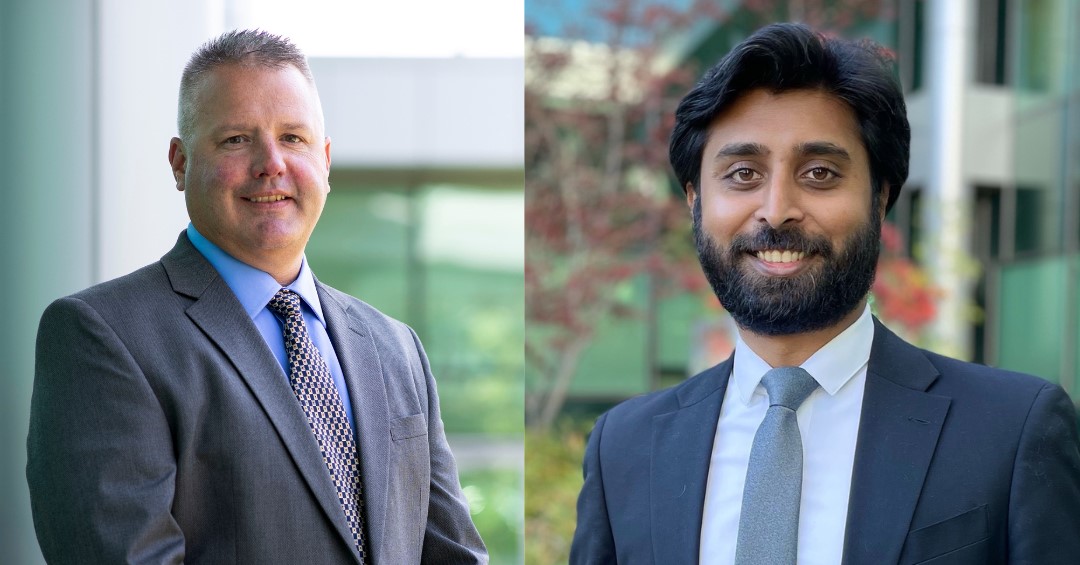
Thomas Begley, Ph.D., RNA Fellows program director and Distinguished Professor in Biological Sciences, emphasized the caliber of the new cohort:
“Our RNA Fellows receive state of the art training in science and technology from a world class group of mentors from the RNA Institute, and Departments of Biological Sciences, Chemistry, Biomedical Sciences and Nanoscale Science and Engineering. We have an impressive group of new RNA Fellows that follow our past cohorts that have graduated to prestigious positions in academia, industry and government.
He noted the value of the NIH T32 training program, which underpins the RNA Fellows Initiative: “The NIH T32 program allows us to train a multidisciplinary group of students to advance science that can improve human health. Our RNA Fellows represent the next generation of scientific leaders, and we are proud to have them as part of our training program in RNA Science and Technology in Health and Disease.”
These RNA Fellows form a cohesive cohort that take an RNA-centric curriculum of courses and colloquia. A full overview of the RNA Fellow Program can be viewed on the RNA Institute Doctoral Training Program page.
PhD student Sean Jones, mentored by College of Integrated Health Sciences Associate Professor Pallavi Ghosh, is researching the regulation of two antibiotic resistance genes in Mycobacterium abscessus. He explained, “I applied for the NIH Fellowship so I could get training that was applicable to my career, in both scientific knowledge and knowledge of how science is applied in industry.” As a participant in the Entrepreneurship & Industry track, Sean hopes to strengthen his skills by analyzing large data sets from RNA-seq and ChIP-seq experiments, as these experiments can give a lot of useful data.
Naa Nuerki Adade, a PhD student in Biological Sciences co-mentored by RNA Institute Faculty member Kaalak Reddy and Associate Professor in Biology Gabriele Fuchs, was drawn to the program’s professional development opportunities. “I applied for this prestigious RNA fellowship because I view it as an instrumental opportunity for extra mentorship, support, and professional development that will enrich my graduate training and prepare me for the next stage of my career," she said. "I aim to enhance my scientific communication skills through opportunities like the Hudson Valley RNA Club and the RNA Retreat. I am also eager to deepen my knowledge of RNA science and its therapeutic applications and broaden my professional exposure through conference participation supported by the RNA Fellowship travel grant."
Arun Richard Chandrasekaran, Ph.D., co-director of the RNA Fellows program and Assistant Professor in the College of Nanotechnology, Science, and Engineering highlighted the program’s unique training design: "One of the highlights of the RNA fellows program is the training tracks offered to fellows. Through the Publicizing Science and Entrepreneurship and Industry workshops, the RNA fellows get first-hand insight into conveying their research and translating their work to be useful for the community."
Scott Tenenbaum, Ph.D., Professor in the College of Nanotechnology, Science, and Engineering and facilitator of the Entrepreneurship & Industry track of the fellowship, pointed to the growing interest in entrepreneurship among graduate students:
“Entrepreneurship is an increasingly popular topic among graduate students who view it as an appealing career choice. The RNA Institute has produced significant intellectual property, resulting in several spin-off companies. As part of its training program, Fellows can join a year-long Demystifying Entrepreneurship boot camp, designed to teach essential concepts and encourage students to pursue or even launch their own enterprises.”
During the months of October & November the RNA Institute plans to highlight two RNA Fellows per week on our Social Media pages (Instagram, LinkedIn ). Please visit these sites to celebrate and learn more about our RNA Fellows!
The full list of the 11th cohort of RNA Fellows is as follows:
Naa Nuerki Adade, Biological Sciences. Mentors: Dr. Kaalak Reddy and Dr. Gabriele Fuchs
Dissertation: Unraveling the Mechanisms of Stress Response to the Misincorporation of ITP into mRNA
Reagan Conrad, Biological Sciences. Mentor: Dr. ChangHwan Lee
Dissertation: The Novel Role of LAG-3/MAML in Germline Stem Cell Regulation
Sean Jones, Biomedical Sciences. Mentor: Dr. Pallavi Ghosh
Dissertation: Regulation and Possible Secondary Function of HelR in Mycobacterium abscessus
Mahla Lashkari, Chemistry. Mentor: Dr. Mehmet Yigit
Dissertation: Toehold RNA Switches for Pathogen Detection and Beyond
Katherine McCown, Chemistry. Mentor: Dr. Jia Sheng
Dissertation: RNA Modifications in Neurodegenerative Disease: Investigating tRNA Modification Diversity in Spinocerebellar Ataxias
Lia Prager, Biomedical Sciences. Mentor: Dr. Jon Paczkowski
Dissertation: Deciphering Promoter Elements Governing RhlR-Dependent Quorum Sensing in Pseudomonas Aeruginosa
Sharon Shaughnessy, Biological Sciences. Mentor: Dr. Andy Berglund
Dissertation: Investigating DM1-induced Dysregulated Immunity in a Mouse Model
Tia Swenty, Nanoscale Science and Engineering. Mentor: Dr. Scott Tenenbaum
Dissertation: Exploring the RNA Regulatory Code: Understanding mRNA and Its Trans-Interactions with RNA Binding Proteins and ncRNAs
Hannah Talbot, Biological Sciences. Mentor: Dr. Arun Richard Chandrasekaran
Dissertation: Design, Construction, and Functionalization of Nucleic Acid Nanostructures
Joshua Thomas, Chemistry. Mentor: Dr. Li Niu
Dissertation: Characterization of Mechanism of Activation of Heteromeric AMPA Receptors Complexed with Auxiliary Subunits and Mechanisms of Regulation by RNA Aptamers
Phillip Weeber, Biomedical Sciences. Mentor: Dr. Joe Wade
Dissertation: The Effect of Transcription and Translation Coupling on Rho Dependent Transcription Termination