


How to Use this Guide
This guide is intended to help UAlbany faculty and staff members support student wellness.
You can use this guide to build your confidence around referring students to appropriate resources and familiarize yourself with some key resources available on campus.
Click a link below to skip to that section of the page:
Key Resources for Student Success
Having trouble figuring out the right resource? You can always refer a student to the Office of Health Promotion (OHP), which offers a variety of services, including health navigation.
resources
Career Wellness Resources
Career Wellness Resources
Career & Professional Development
Career advising, resume help, job fairs and Handshake access.
- Email: [email protected]
- Phone: 518-437-4900
Emotional Wellness Resources
Emotional Wellness Resources
Counseling & Psychological Services (CAPS)
In-person or virtual counseling for individuals, couples and groups, psychiatry, consultation, outreaching and education, and related services. Note: CAPS is a confidential resource. Consultation services are offered 24 hours seven days a week.
- Email: [email protected]
- Phone: 518-442-5800
Middle Earth Peer Assistance Hotline
Peer-led mental health support.
- Email: [email protected]
- Phone: 518-442-5777
Office of Health Promotion (OHP)
Health navigation, wellness coaching, survivor advocacy, recovery support, harm reduction and sexual health resources. Note: OHP is a confidential resource.
- Email: [email protected]
- Phone: 518-956-8477
24/7 virtual health platform for physical and mental healthcare, including online therapy, telehealth, peer communities, self-care resources and more. Consultation services are offered 24 hours seven days a week.
Environmental Wellness Resources
Environmental Wellness Resources
Disability Access & Inclusion Student Services (DAISS)
Accommodations and advocacy for students with disabilities.
- Email: [email protected]
- Phone: 518-442-5501
Supports academic success and community through on-campus housing, programs, resources and policies.
- Email: [email protected]
- Phone: 518-442-5875
University Police Department (UPD)
24/7 safety services, emergency response and community policing.
- Email: [email protected]
- Phone: 518-442-3131 or dial 911 from a campus phone
Financial Wellness Resources
Financial Wellness Resources
Financial Aid & Student Accounts
One-stop shop for financial wellness, financial aid, billing, tuition, work-study, scholarships, grants and payment plans.
Contact Financial Aid & Student Accounts.
Food and personal care pantry, professional clothing closet, SNAP and WIC screenings, Student Emergency Fund and CARE Reports.
Email: [email protected]
Phone: 518-442-5501
Intellectual Wellness Resources
Intellectual Wellness Resources
Academic advising, pre-professional planning, course registration, goal setting and dedicated advisors for all undergraduate students.
- Email: [email protected]
- Phone: 518-442-3960
Academic Coaching & Peer Mentoring
Peer support for managing academics, adjusting to campus life and getting involved, as well as one-on-one academic success coaching in collaboration with academic departments.
Request a mentor and/or coach.
Free in-person and online tutoring, academic coaching and writing support.
Explore tutoring and academic support options.
Print and digital resources, study spaces, research support and printing.
Physical Wellness Resources
Physical Wellness Resources
Fitness centers, intramural and club sports, group exercise and wellness events.
Email: [email protected]
Phone: 518-442-2627
General medical care, contraception, Sexually Transmitted Infection (STI) testing and referrals. Note: SHS is a confidential resource.
Email: [email protected]
Phone: 518-442-5229
Social Wellness Resources
Social Wellness Resources
UAlbany’s platform for campus events and student organizations.
Student Engagement & Belonging
Peer-led Resource Centers focused on coalition building and cultural celebration, as well as support for student leadership and organizations.
Email: [email protected]
Phone: 518-442-5565
Off-campus Services
Off-campus Services
- Off-campus local emergency dispatch: Call 911
- Capital District Psychiatric Center Crisis Unit & Mobile Crisis Team: 518-549-6500
- 988 Suicide & Crisis Lifeline: Call or Text 988
- Crisis Text Line: Text “HOME” to 741-741
- The Trevor Project’s LGBTQ+ Lifeline: Call 866-488-7386 or text “START” to 678-678
- Albany County Crime Victim & Sexual Violence Center (CVSVC) Sexual Assault Hotline: 518-447-7716
Talking with a student about campus resources
talk-to-students
Step 1: Acknowledge & Actively Listen
Step 1: Acknowledge & Actively Listen
- Lead with compassion and empathy.
- Explain that it sounds like the student is looking for, or may benefit from, help accessing campus resources.
- Ask open-ended questions about the student’s awareness of campus resources.
- Listen patiently and give your full attention.
- Questions to ask:
- “What can I help you with?”
- “What are your goals?”
- “What are you looking for help with?”
Step 2: Explore & Connect to Resources
Step 2: Explore & Connect to Resources
- Share relevant information and resources.
- Discuss options and encourage the student to reach out.
- Offer a warm connection or soft hand-off to the resource, if needed.
- Ask the student to articulate their next steps to reinforce clarity and commitment.
- Questions to ask:
- “What resources have you connected with so far?”
- “Which of the resources we’ve discussed so far feels most relevant to you?”
Step 3: Summarize the Conversation
Step 3: Summarize the Conversation
- Review next steps with the student.
- Thank the student for sharing and offer an opportunity to follow up.
- Questions to ask:
- “So, what I’m hearing is that you plan to do XYZ.”
- “Thank you for sharing this with me. Would you like me to follow up with you?”
Step 4: Follow Up
Step 4: Follow Up
- Check in with the student.
- Ask if they are experiencing any obstacles or concerns with accessing resources.
- Questions to ask:
- “Were you able to connect with the resources we talked about?”
- “Are you experiencing any barriers or do you have any concerns related to the resources we talked about?”
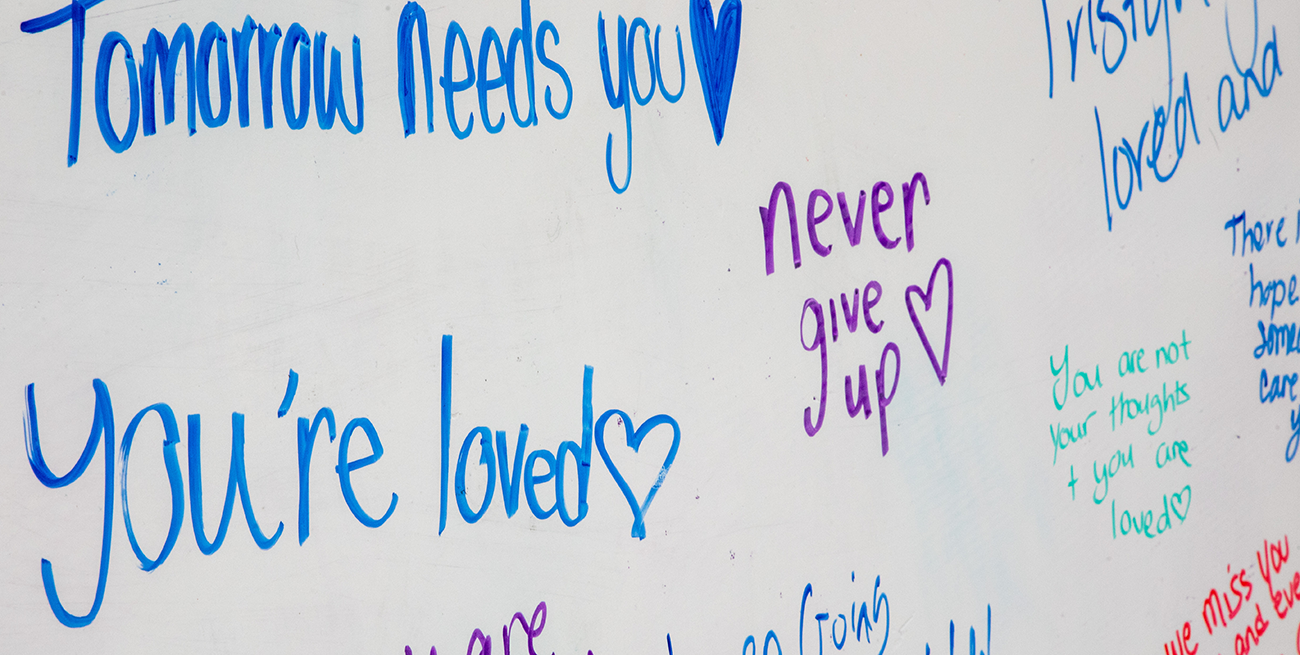
Helping Students in Distress
When faced with challenges, some students may feel alone, overwhelmed and hopeless. These feelings can easily disrupt academic performance and daily functions.
Faculty and staff members who frequently interact with students may be the first to notice a student in distress. Sometimes students aren’t able or comfortable sharing their struggles with family and friends, but they may feel comfortable sharing with you.
By expressing concern and having a non-judgmental, empathetic conversation, you can make a difference. Trust your instincts.
If a student leaves you feeling worried, alarmed or threatened, refer to our Response Protocol for next steps.
Identifying a student in distress
The following are signs that a student may be in distress. Look for sudden change or high frequency, duration or severity of these indicators.
helping-students
Academic Distress Indicators
Academic Distress Indicators
- Sudden decline in quality of work or grades
- Repeated absences
- Missing exams or not handing in assignments
- Making multiple requests for extensions
- Including unusual content in writing or presentations
- You find yourself providing more personal than academic support
Physical Distress Indicators
Physical Distress Indicators
- Marked changes in physical appearance, such as deterioration in grooming or hygiene
- Excessive fatigue or sleep disturbance
- Increased substance use and/or signs of intoxication in inappropriate settings
Psychological Distress Indicators
Psychological Distress Indicators
- The student discloses personal distress
- Unusual or disproportionate emotional response
- Displays of irritability or unusual apathy
- Aggressive speech such as taunting, badgering or intimidation
- Delusions and paranoia, including bizarre behavior or speech
Safety Risk Distress Indicators
Safety Risk Distress Indicators
- The student communicates thoughts of suicide
- Implying or directly threatening to harm self or others
- Displays of unprovoked anger or hostility
- Physical violence, stalking or harassing
- Academic assignments dominated by themes of hopelessness, worthlessness, isolation, suicidal ideation or violent behavior
Talking with a student in distress
Notice
Be observant and curious. If a student is struggling academically or personally, consider that they may be in need of support.
Remember that you are in a unique position to notice students experiencing distress.
Communicate
If you are concerned about a student’s mental health, talk to the them. Share what you’ve observed, using language such as “I’ve noticed that...” and “I’m concerned about you.”
Use calm, non-judgmental, and non-confrontational language. Listen to understand.
Connect
Use your understanding of the student’s situation to determine what type of support may be needed.
The Response Protocol can help guide you to the right level of support.
Connect the student to the resource that best fits their needs. Make sure they know how to access the resource. Consider calling the office with the student or walking them through the process, if appropriate.
Responding to a student in distress
Use this Response Protocol to guide your response to a student in distress.
Ask yourself: Is the student a danger to self or others? Do they need immediate assistance for any reason? Then, use your answers to decide what to do next:
response-protocol
Yes
If the student’s behavior is dangerous or threatening to themselves or others (including taking action to hurt themselves or others), or the student needs immediate medical attention, get emergency help.
Call the University Police Department (UPD) by dialing 911 on a campus landline or 518-442-3131 on a cell phone.
Not Sure
If the student shows signs of distress, but you’re unsure how serious it is, continue the conversation with the student to get more information and then consult with a professional on next steps.
Call Counseling & Psychological Services (CAPS) at 518-442-5800 any time of day or night.
No
If you are not concerned for the student’s immediate safety or the safety of others, and you believe the student could benefit from support and can wait to connect, please refer the student to the appropriate resource(s).
Consulting with Counseling and Psychological Services (CAPS)
Consulting with Counseling and Psychological Services (CAPS)
CAPS’ mental health professionals are available to consult with faculty and staff at any point regarding concerns about a student.
They can talk with you about what you have been noticing and what may be the best next steps to support the student.
Call CAPS at 518-442-5800 any time of day or night:
- During clinic hours, please ask to speak to a CAPS psychologist and let us know it’s urgent.
- After hours, please select Option 2 to speak with a mental health professional.
For non-urgent needs, please email [email protected].
Asking about suicide
Asking about suicide
If you are concerned about a student, it is important to ask if they are thinking about suicide. Asking about suicide does not “put the thought in their head” or encourage someone to act on these thoughts. Instead, asking gives those who are having these thoughts an opportunity to talk about their experience and get support.
Ask directly by saying something like “Are you having thoughts of ending your life?” or “Have you thought about suicide?” Be sure to stay away from judgmental or leading questions like “You’re not thinking about suicide, are you?” or “How could you think that way?”
- If someone isn’t having these thoughts, you can continue the conversation and provide support and referrals.
- If someone is having thoughts of suicide, connect them with a professional as soon as possible so they can assess and help the student.
- If someone is having thoughts of suicide and has taken action or will take action in the immediate future, get them emergency help as soon as possible.
Please review the Response Protocol for more information.