



UAlbany Atmospheric Scientist Discusses Hurricane Forecasting Ahead of 2026 Season
Brian Tang recently published an article in The Conversation that explores how hurricane forecasts have improved in recent decades and why those improvements should not be taken for granted.
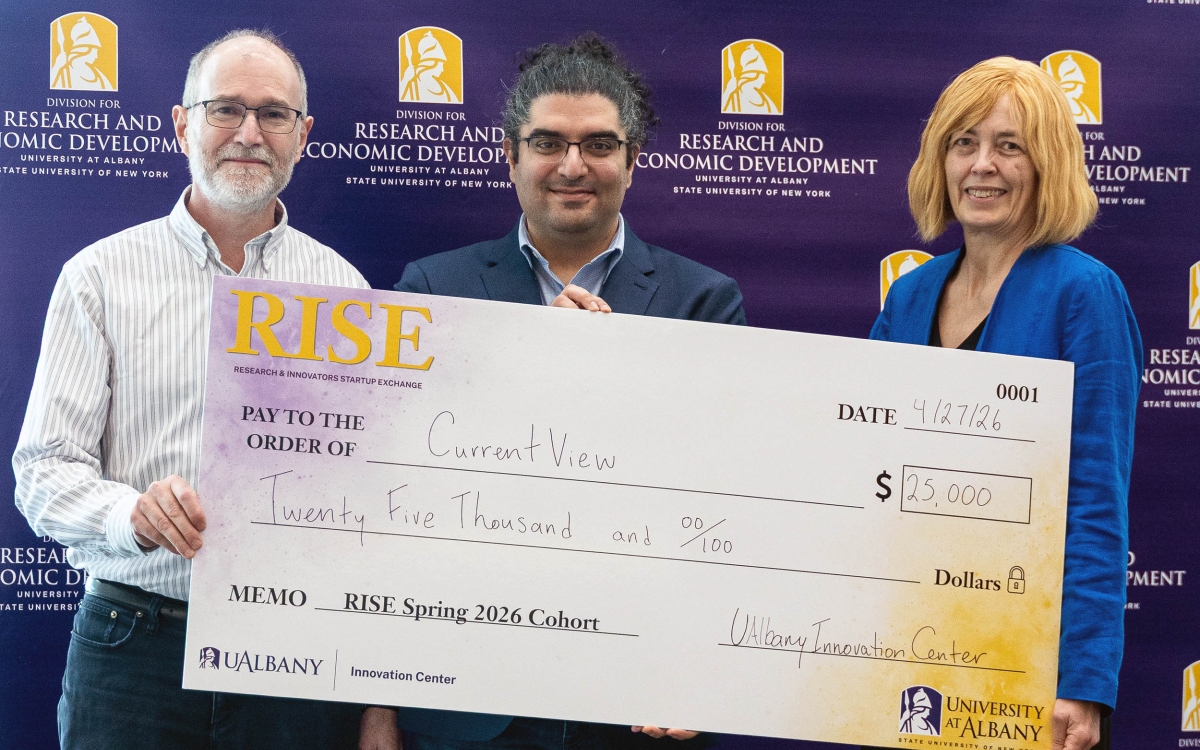
RISE Program Helps UAlbany Innovators Turn Ideas Into Impact
In just over a year, four groups of UAlbany researchers, students and Capital Region startups have moved through the Research & Innovators Startup Exchange (RISE), exploring what it takes to bring ideas beyond the lab and into the marketplace.

Tracking Storms from Above: UAlbany Students Launch Weather Balloons in Puerto Rico
A team of University at Albany atmospheric science undergraduates recently traded Albany’s chilly start to spring for weather balloon launches in Puerto Rico’s tropical heat.
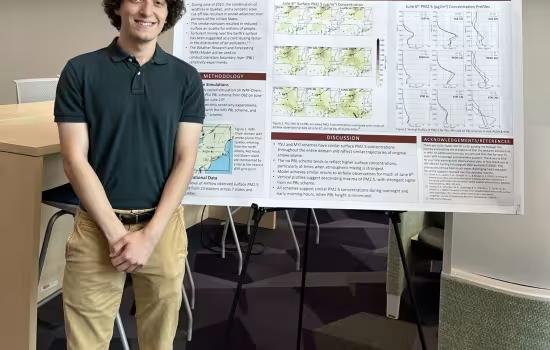
Grads at a Glance: A Meteorology Career Sparked by Hurricane Sandy
Atmospheric science major Ryan Sontarp’s path to meteorology began with a historic storm.

College of Arts and Sciences Honors Faculty for Public Engagement, Service Excellence
The College of Arts and Sciences is recognizing three faculty members whose work reflects the College’s commitment to public engagement and service.

Five UAlbany Graduate Researchers Receive SUNY GREAT Awards for Research Excellence
Five graduate students from the University at Albany have been named recipients of the State University of New York’s Graduate Research Empowering and Accelerating Talent (GREAT) Award. The recognition celebrates their achievements and contributions to their fields while addressing real-world challenges and reinforcing UAlbany’s commitment to impactful research and innovation.
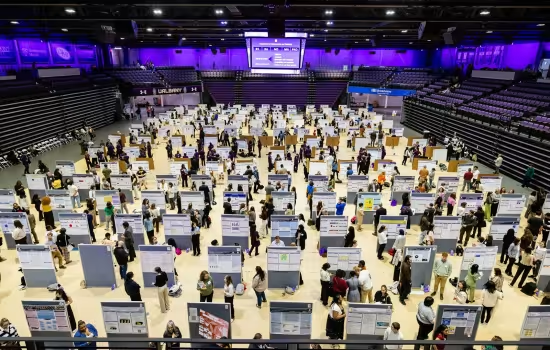
Celebrating Student Research and Creativity at Showcase 2026
Showcase 2026 included more than 1,700 presentations from over 2,600 students, supported by more than 400 faculty advisors.

Ask an Expert: What is El Niño and why is everyone talking about it?
Atmospheric Science Professor Paul Roundy studies how interactions between the tropical ocean and atmosphere influence global weather, including El Niño.