


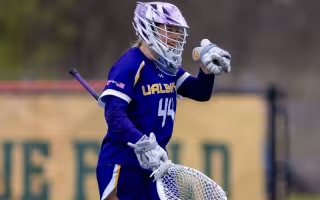
Great Danes Sweep America East Titles, Move on to NCCA Tournament
UAlbany’s men’s and women’s lacrosse teams swept the America East championships over the weekend to secure NCAA Tournament bids and continue a dominant run for the Great Danes.
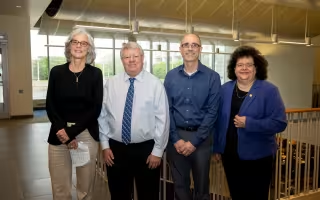
College of Arts and Sciences Honors Faculty for Public Engagement, Service Excellence
The College of Arts and Sciences is recognizing three faculty members whose work reflects the College’s commitment to public engagement and service.

From Classroom to Ballpark: UAlbany Students Bring Game Design Skills to the Tri-City ValleyCats
This semester, undergraduate students in the University at Albany’s Department of Information Sciences & Technology put their game design skills to the test—on the baseball field.
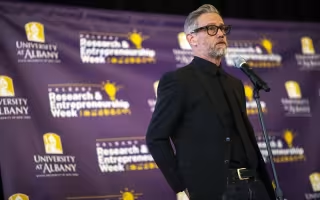
The Short Version: AI, photography and your lyin' eyes
The spring semester season finale of The Short Version podcasts features Danny Goodwin, professor and chair of the Department of Art and Art History, exploring our foolhardy pursuit of truth from images "that can only lie" — and why it's wrong to blame photography for the ways humans deceive themselves with technology.
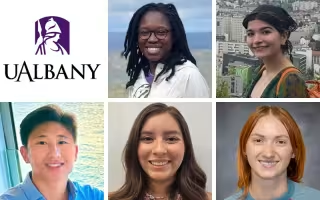
Five UAlbany Graduate Researchers Receive SUNY GREAT Awards for Research Excellence
Five graduate students from the University at Albany have been named recipients of the State University of New York’s Graduate Research Empowering and Accelerating Talent (GREAT) Award. The recognition celebrates their achievements and contributions to their fields while addressing real-world challenges and reinforcing UAlbany’s commitment to impactful research and innovation.
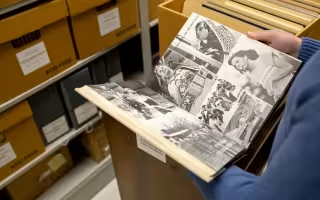
UAlbany Digitizes More Than a Century of Yearbooks, Now Available Online
The University at Albany has digitized more than 100 years of yearbooks, making campus history now available online.
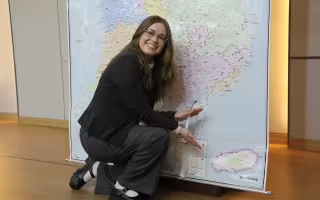
From UAlbany to South Korea: Kate Bucek ’24’s Journey
Kate Bucek ’24’s path has taken her from UAlbany to South Korea. She now lives and teaches on Jeju Island as a Fulbright English Teaching Assistant.