


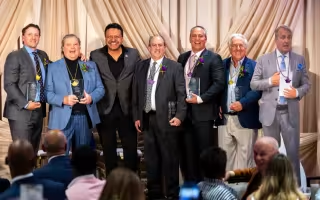
Outstanding UAlbany Alumni Honored with Excellence Awards
Seventeen members of the University at Albany community were honored at the Alumni Association’s annual Excellence Awards Gala.
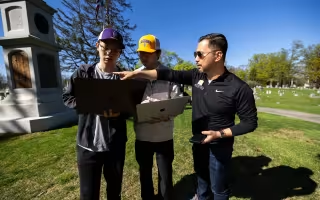
Connecting Visitors with History at Albany Rural Cemetery
At Albany Rural Cemetery, where nearly two centuries of history stretch across 467 acres, two University at Albany students are putting interdisciplinary training into practice — developing mapping tools that help visitors navigate the past.
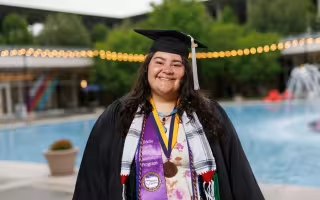
Grads at a Glance: 2026 Class Speaker Finds Community Through Service
Senior Amaya Neuwirth came to UAlbany from Orchard Park, N.Y., drawn by the promise of a diverse campus community. Now on the brink of graduating with double majors in Psychology and English, Neuman will leave a proven campus leader, with a clearer sense of self.
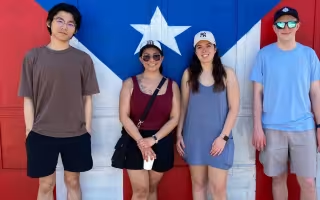
Tracking Storms from Above: UAlbany Students Launch Weather Balloons in Puerto Rico
A team of University at Albany atmospheric science undergraduates recently traded Albany’s chilly start to spring for weather balloon launches in Puerto Rico’s tropical heat.
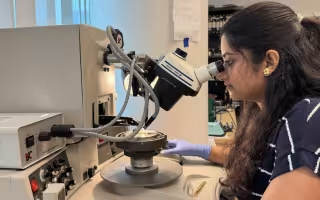
Grads at a Glance: Passion for Tiny Materials Leaves Big Impact
Soumya Kollipara will graduate this summer from UAlbany’s College of Nanotechnology, Science, and Engineering with a PhD in Nanoscale Engineering — a journey that began six years ago when she left her hometown of Hyderabad, India with a master’s degree in nanotechnology, drawn by UAlbany’s global renown in nanotechnology and semiconductors.
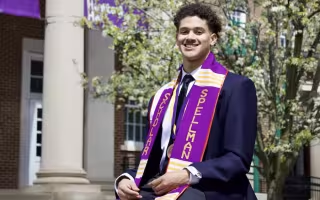
Grads at a Glance: Falling in Love With Public Service
Drawn to the Capital Region’s proximity to state government and UAlbany’s nationally recognized Rockefeller College of Public Affairs & Policy, Hansel Ortiz-Rosario honed his love for public service at UAlbany.
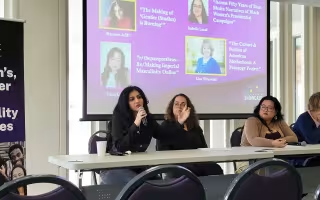
Grads at a Glance: Exploring Global Backlash on Gender Studies
For master’s candidate Raneem Afifi, journalism is more than storytelling — it’s a form of resistance. This spring, Afifi produced a documentary, Gender (Studies) is Burning, examining the global rise of political attacks on gender studies and what they signal about academic freedom.