





UAlbany to Lead Empire AI SUNY Partnerships, Advancing AI for the Public Good
By Amy Geduldig
Albany, N.Y. (Feb. 3, 2026) — The University at Albany will partner with SUNY Oneonta, SUNY Cobleskill and Hudson Valley Community College to strengthen AI teaching and research across the region as part of new Empire AI campus partnerships.
The partnerships, announced last week by Gov. Kathy Hochul, prioritize hands-on opportunities for students and faculty to advance artificial intelligence research and education for the public good.
The campus partnerships build on UAlbany’s existing AI Plus initiative and the recent launch of the AI & Society College and AI & Society Research Center, which aim to infuse teaching and learning about AI across disciplines while examining its effect on societal, ethical and policy challenges. Together, these efforts ensure students are prepared to lead in a world increasingly shaped by AI.
“Students on every SUNY campus deserve the opportunity to learn about and understand how AI will impact their lives,” said Carol H. Kim, UAlbany’s provost and senior vice president for academic affairs. “These new Empire AI campus partnerships give UAlbany the opportunity to share its expertise in the many ways AI is changing our lives while also gaining new insights from colleagues at other SUNY campuses. This program showcases the best of what a university system as large and diverse as SUNY can be while dramatically broadening the positive impact of Gov. Hochul’s landmark investments in AI research, development and teaching.”
Through the Empire AI campus partnerships, UAlbany and its partner campuses will launch several coordinated initiatives, including:
- AI Preparedness Academy and Faculty Learning Community — A collaborative initiative designed to build institutional capacity for AI by equipping faculty with the tools and critical frameworks to teach about and with AI, while fostering interdisciplinary dialogue, hands-on learning and exchange of practices
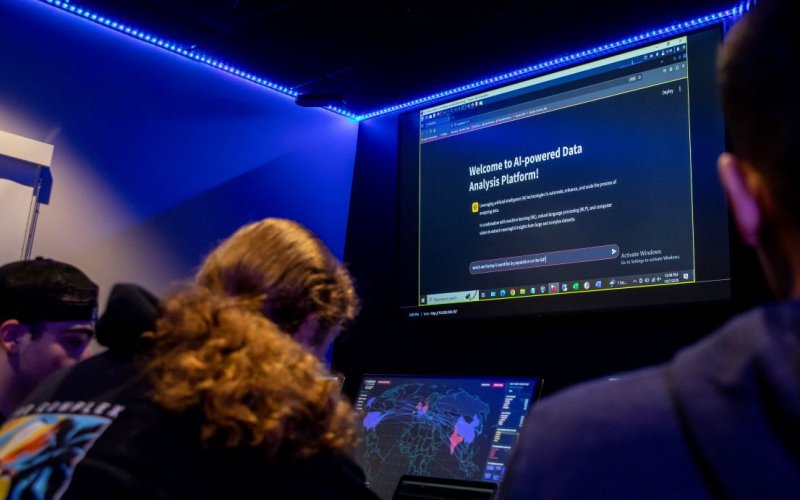
- “AI for Good” Challenge — An annual cross-campus hackathon bringing together interdisciplinary teams of students and faculty to develop AI-powered solutions to real-world community challenges
- AI Plus Collaborative Research Experience (CORE) — A hands-on research and mentorship program connecting undergraduate students, graduate assistants and faculty in cross-campus teams, culminating in a Summer Research Intensive hosted by UAlbany
- Visiting/Affiliated Faculty Program — A collaborative effort supporting faculty in co-developing AI-infused microcredentials, courses and instructional materials, expanding interdisciplinary learning opportunities for students across institutions.
“The AI Plus Collaborative Research Experience is a powerful example of how SUNY can align research, education and economic development,” said Thenkurussi (Kesh) Kesavadas, vice president for research and economic development. “By bringing faculty and students together in cross-campus research teams addressing meaningful AI-related questions, AI Plus CoRE empowers faculty and gives students direct experience in the research process. This model strengthens our research capacity across campuses and helps students build the technical fluency and creative and collaborative problem-solving skills that prepare them for evolving careers. At the same time, it contributes to the region’s innovation ecosystem by connecting emerging talent with faculty expertise and applied research opportunities.”
Empire AI to advance research for the public good
Empire AI is Hochul’s nation-leading initiative to advance AI research for the public good, led by a consortium of higher education institutions, including SUNY, and backed by more than $500 million in public and private funding.
Under Empire AI’s umbrella, SUNY’s four research centers — UAlbany, Binghamton University, the University at Buffalo, and Stony Brook University — are sharing their expertise, infrastructure and other resources with campuses throughout the system.
“Through Empire AI, New York is ensuring the power of AI is harnessed responsibly,” Gov. Hochul said. “By bringing together SUNY institutions through these campus partnerships, we are furthering the use of AI for the public good and shaping a brighter future for all New Yorkers.”
SUNY Chancellor John B. King Jr. said, “Gov. Hochul’s continued leadership has placed SUNY and New York State at the forefront of harnessing AI for the public good. SUNY is proud to leverage the largest statewide comprehensive system of public higher education in the country to ensure that more students are able to drive research and move innovation forward. We are grateful to Gov. Hochul for her leadership and investment to advance AI in New York State.”
Advancing UAlbany’s Work in AI
The new Empire AI campus partnerships build on a series of significant AI investments at UAlbany over the last half-decade.
The University launched AI Plus in 2022, followed in 2023 by the $20 million UAlbany-IBM Center for Emerging Artificial Intelligence Systems, in 2024 by a new on-campus supercomputer and in 2025 by new Empire AI research projects led by UAlbany’s RNA Institute.
At the same time that researchers are taking innovative approaches to applying AI to fields like atmospheric science, public health, RNA precision medicine and nanotechnology to help communities become more resilient, healthier and equitable, faculty are increasingly incorporating foundational concepts and principles of AI into coursework, microcredentials and degree programs available to every student.
Last year, UAlbany launched the AI & Society College and the AI & Society Research Center to expand interdisciplinary AI education and research with a specific focus on how artificial intelligence shapes society, policy and ethics. The college and research center are supported by $2.5 million in seed funding from SUNY and, most recently, led to the creation of a new minor in the Ethics and Philosophy of Artificial Intelligence.
In March, UAlbany will host a three-day AI Plus Symposium focused on AI’s implications for the future of education. The event will have three main focuses:
- Teaching, learning and workforce Development
- Research, creative arts and practice
- Ethics, governance and academic administration