


Cristian Lenart
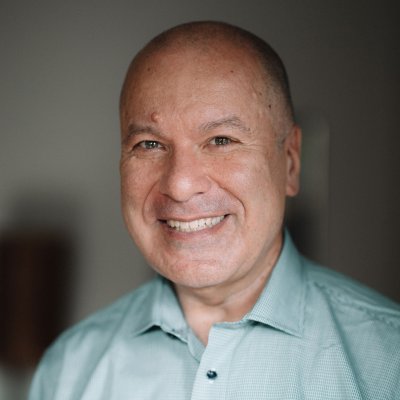
PhD, Mathematics, University of Manchester (UK), 1996
Advanced Studies, Mathematics, University of Cambridge (UK), 1993
PhD, Computer Science, University of Cluj-Napoca (Romania), 1992
BS, Mathematics and Computer Science, University of Cluj-Napoca (Romania), 1988
About
I have been the Chair of the Department of Mathematics and Statistics since Fall 2021 and was recently celebrated for 25 years at the University at Albany.
My area is algebraic combinatorics, and my research focuses on developing combinatorial models for computations in pure mathematics (representation theory and algebraic geometry). I also have a PhD in computer science, with a focus on unsupervised learning.
My work has been funded by seven grants from the National Science Foundation, totaling over $1 million. I have been the recipient of the SUNY Chancellor's Award for Excellence in Scholarship and Creative Activities. And I have published 67 papers in top mathematical journals, which have been cited 1,507 times.
My research was presented in conferences, universities, and mathematics institutes worldwide. Most recently, I presented in the conference "Combinatorial Representation Theory and Geometry – In Honor of Satoshi Naito's 60th Birthday" (Tokyo Institute of Technology, June 2024), and the Special Year Seminar at the Institute for Advanced Study (Princeton University, May 2025).
I also organized several conferences, such as the Fall Eastern Sectional Meeting of the American Mathematical Society (October 2024), and the conference "Women in Algebra and Combinatorics. Northeast Conference Celebrating the Association for Women in Mathematics: 50 Years and Counting" (April 2023, with NSF funding), both at the University at Albany.
I advised nine PhD students, as well as several Master's and undergraduate students.
Research
Cristian Lenart on Google Scholar
Research Interests
Dr. Lenart's research is concerned with the development of new computational models, based on combinatorial structures, for various areas in algebra and geometry. This type of research is at the forefront of current mathematical research, being related to developments within mathematics itself (the current emphasis is more on computation than on generality and abstraction), to the advent of computers, as well as to recent applications to theoretical physics.
At the very heart of mathematics lies the study of certain geometric objects, such as algebraic varieties and topological spaces. Since this study is usually very hard, mathematicians associate certain algebraic structures to the geometric ones, such as symmetry groups and homology groups; the latter capture the essence of the geometric information.
Various tools have been developed for studying these algebraic structures, such as representation theory, which is a fundamental tool for studying group symmetry by means of linear algebra (i.e., matrices). Although the passage to algebra is an important simplification, even calculations in this setup are usually very hard. It is here that combinatorics comes into the picture.
Combinatorics could be described as the study of arrangements of objects according to specified rules; usually, simple rules can give rise to complex discrete structures, such as various types of puzzles. It turns out that combinatorial objects are particularly well suited for encoding complex algebraic or geometrical objects, while combinatorial methods are well suited for related computations. Combinatorial structures are also well suited for experiments using computer algebra systems; such experiments play an important part in my research, particularly during the stage of discovering certain formulas, properties etc.
Dr. Lenart's work is concerned with all the aspects mentioned above. More precisely, he is using combinatorial structures/methods to study certain algebraic varieties, certain topological spaces, and the representation theory of certain Lie algebras.
He is particularly interested in flag varieties and Schubert varieties, which have many applications to representation theory and enumerative problems in geometry, being also a very useful testbed for a much larger class of varieties. His work involving representation theory is related to several recent developments, such as those involving quantum groups and their applications to theoretical physics.
A recent breakthrough (which started as a joint project with a colleague at MIT, and was continued with other collaborators, including PhD students) consists of developing a new combinatorial model with many applications to algebra and geometry.
For more details, please read Dr. Lenart's research statement.
Grants/Funding
Amounts included below total $1,045,536.
- 2024-2027: National Science Foundation grant DMS-2401755, PI, New Perspectives in Combinatorics for Lie Algebra Representations and Schubert Calculus, award amount: $180,000.
- 2023-2024: National Science Foundation grant DMS-2305413, Conference: Women in Algebra and Combinatorics. Northeast Conference Celebrating the Association for Women in Mathematics: 50 Years and Counting, Co- PIs: L. Colmenarejo, K. Reinhold, L. Rose, and C. Zhong, award amount: $43,309.00.
- 2019-2024: National Science Foundation grant DMS-1855592, New Applications of Combinatorics to Representation Theory and Schubert Calculus (Combinatorics Program, co-funded by Algebra and Number Theory Program), award amount: $227,612; includes one-year support for two Postdoctoral Associates.
- 2018: Raymond and Beverly Sackler Foundation fellow at Institut des Hautes ´Etudes Scientifiques (IH´ES), France.
- 2018-2019: Simons Foundation Collaboration Grant for Mathematicians, award amount: $8,400.
- 2014-2018: National Science Foundation grant DMS-1362627, Representation Theory and Schubert Calculus: Combinatorics and Interactions (Combinatorics Program), award amount: $160,000; includes support for a Postdoctoral Associate, and 20 weeks summer support for a graduate student in 2016 and 2017.
- 2011-2014: National Science Foundation grant DMS-1101264, Combinatorics of Crystals, Macdonald Polynomials, and Schubert Calculus (Combinatorics Program), award amount: $150,000; includes two-year support for graduate students.
- 2007-2010: National Science Foundation grant DMS-0701044, Combinatorial Studies in Algebra, Geometry, and Topology (Algebra, Number Theory, and Combinatorics Program), award amount: $168,807; includes three-year support for graduate students.
- 2004-2007: National Science Foundation grant DMS-0403029, Combinatorial Models in Algebra, Geometry, and Topology (Algebra, Number Theory, and Combinatorics Program), award amount: $107,408; includes summer support for a graduate student in 2006.
- 2004-2005: Faculty Research Award, UAlbany.
- 2003-2004: Faculty Research Award, UAlbany.
- 2001-2011: Individual Development Awards Program, four grants, UAlbany.
- 2000-2005: Travel awards, UAlbany.
Publications
Papers on Modern Schubert Calculus
- Parabolic Kazhdan-Lusztig basis, Schubert classes and equivariant elliptic cohomology, C. Lenart, K. Zainoulline and C. Zhong, Preprint, 2016, arXiv:1608.06554.
- We study the equivariant oriented cohomology ring of partial flag varieties G/P using the moment map approach. We define the right Hecke action on this cohomology ring, and then prove that the respective Bott-Samelson classes in cohomology can be obtained by applying this action to the fundamental class of the identity point, hence generalizing previously known results by Brion, Knutson, Peterson, Tymoczko and others. We then focus on the equivariant oriented cohomology theory corresponding to the 2-parameter Todd genus. We give a new interpretation of Deodhar's construction of the parabolic Kazhdan-Lusztig basis. Based on it, we define the parabolic Kazhdan-Lusztig (KL) Schubert classes independently of a reduced word. We make a positivity conjecture, and a conjecture about the relationship of such classes with smoothness of Schubert varieties. We then prove several special cases.
- A Schubert basis in equivariant elliptic cohomology, C. Lenart and K. Zainoulline, New York J. Math. 23 (2017), 711-737 (MR 3665585).
- We address the problem of defining Schubert classes independently of a reduced word in equivariant elliptic cohomology, based on the Kazhdan-Lusztig basis of a corresponding Hecke algebra. We study some basic properties of these classes, and make two important conjectures about them: a positivity conjecture, and the agreement with the topologically defined Schubert classes in the smooth case. We prove some special cases of these conjectures.
- Towards generalized cohomology Schubert calculus via formal root polynomials, C. Lenart and K. Zainoulline, Math. Res. Lett. 24 (2017), 839-877.
- An important combinatorial result in equivariant cohomology and K-theory Schubert calculus is represented by the formulas of Billey and Willems for the localization of Schubert classes at torus fixed points. These formulas work uniformly in all Lie types, and are based on the concept of a root polynomial. In this paper we define formal root polynomials associated with an arbitrary formal group law (and thus a generalized cohomology theory). We focus on the case of the hyperbolic formal group law (corresponding to elliptic cohomology). We study some of the properties of formal root polynomials. We give applications to the efficient computation of the transition matrix between two natural bases of the formal Demazure algebra in the hyperbolic case. As a corollary, we rederive in a simpler and uniform manner the formulas of Billey and Willems. Other applications, including some related to Bott-Samelson classes (particularly in elliptic cohomology), are also discussed.
- Equivariant K-Chevalley rules for Kac-Moody flag manifolds, C. Lenart and M. Shimozono, Amer. J. Math. 136 (2014), pp. 1175-1213 (MR 3263896).
- Explicit combinatorial cancellation-free rules are given for the product of an equivariant line bundle class with a Schubert class in the torus-equivariant K-theory of a Kac-Moody flag manifold. The weight of the line bundle may be dominant or antidominant, and the coefficients may be described either by Lakshmibai-Seshadri paths or by the alcove model of the first author and Postnikov. For Lakshmibai-Seshadri paths, our formulas are the Kac-Moody generalizations of results of Griffeth-Ram and Pittie-Ram for finite dimensional flag manifolds. A gap in the proofs of the mentioned results is addressed.
- Growth Diagrams for the Schubert Multiplication, C. Lenart, J. Combin. Theory Ser. A 117 (2010), pp. 842-856 (MR 2652098).
- We present a partial generalization to Schubert calculus on flag varieties of the classical Littlewood-Richardson rule, in its version based on Schuetzenberger's jeu de taquin. More precisely, we describe certain structure constants expressing the product of a Schubert and a Schur polynomial. We use a generalization of Fomin's growth diagrams (for chains in Young's lattice of partitions) to chains of permutations in the so-called k-Bruhat order. Our work is based on the recent thesis of Beligan, in which he generalizes the classical plactic structure on words to chains in certain intervals in k-Bruhat order. Potential applications of our work include the generalization of the S3-symmetric Littlewood-Richardson rule due to Thomas and Yong, which is based on Fomin's growth diagrams.
- Quantum Grothendieck polynomials, C. Lenart and T. Maeno, Preprint, 2006, math.CO/0608232.
- Quantum K-theory is a K-theoretic version of quantum cohomology, which was recently defined by Y.-P. Lee. Based on a presentation for the quantum K-theory of the classical flag variety, we define and study quantum Grothendieck polynomials. We conjecture that they represent Schubert classes (i.e., the natural basis elements) in the quantum K-theory of the flag variety, and present strong evidence for this conjecture. We describe an efficient algorithm which, if the conjecture is true, computes the quantum K-invariants of Gromov-Witten type for the flag variety. Two explicit constructions for quantum Grothendieck polynomials are presented. The natural generalizations of several properties of Grothendieck polynomials and of the quantum Schubert polynomials due to Fomin, Gelfand, and Postnikov are proved for our quantum Grothendieck polynomials. For instance, we use a quantization map satisfying a factorization property similar to the cohomology quantization map, and we derive a Monk-type multiplication formula. We also define quantum double Grothendieck polynomials and derive a Cauchy identity. Our constructions are considerably more complex than those for quantum Schubert polynomials. In particular, a crucial ingredient in our work is the Pieri formula for Grothendieck polynomials due to myself and Sottile.
- Alcove path and Nichols-Woronowicz model of the equivariant K-theory of generalized flag varieties, C. Lenart and T. Maeno, Int. Math. Res. Not., 2006, article ID 78356, 14pp. (MR 2264711).
- Fomin and Kirillov initiated a line of research into the realization of the cohomology and K-theory of generalized flag varieties G/B as commutative subalgebras of certain noncommutative algebras. This approach has several advantages, which we discuss. This paper contains the most comprehensive result in a series of papers related to the mentioned line of research. More precisely, we give a model for the T-equivariant K-theory of a generalized flag variety G/B in terms of a certain braided Hopf algebra called the Nichols-Woronowicz algebra. Our model is based on the Chevalley-type multiplication formula for the T-equivariant K-theory of G/B due to myself and Postnikov; this formula is stated using certain operators defined in terms of so-called alcove paths (and the corresponding affine Weyl group). Our model is derived using a type-independent and concise approach.
- Affine Weyl groups in K-theory and representation theory, C. Lenart and A. Postnikov, Int. Math. Res. Not., Art. ID rnm038, 2007, 1-65 (MR 2344548).
- We present a simple model for characters of irreducible representations of semi-simple Lie groups and, more generally, for Demazure characters. This is a combinatorial counterpart of the Littelmann path model. We give an explicit combinatorial Chevalley-type formula for equivariant K-theory of generalized flag manifolds G/B. The construction is given in terms of alcove paths, which correspond to decompositions of affine Weyl group elements, and saturated chains in the Bruhat order on the usual Weyl group. A key ingredient is a certain R-matrix that satisfies the Yang-Baxter equation.
- The K-theory of the flag variety and the Fomin-Kirillov quadratic algebra, C. Lenart, J. Algebra 285 (2005), 120-135 (MR 2119107).
- We propose a new approach to the multiplication of Schubert classes in the K-theory of the flag variety. This extends the work of Fomin and Kirillov in the cohomology case, and is based on the quadratic algebra defined by them. More precisely, we define K-theoretic versions of the Dunkl elements considered by Fomin and Kirillov, show that they commute, and use them to describe the structure constants of the K-theory of the flag variety with respect to its basis of Schubert classes.
- A Pieri-type formula for the K-theory of a flag manifold, C. Lenart and F. Sottile, Trans. Amer. Math. Soc. 359 (2007), 2317-2342 (MR 2276622).
- We derive explicit formulas, with no cancellations, for expanding in the basis of Grothendieck polynomials the product of two such polynomials, one of which is indexed by an arbitrary permutation, and the other by a cycle of the form (k-p+1,k-p+2,...,k+1) or (k+p,k+p-1,...,k). These are Pieri-type formulas, expressing the product in the Grothendieck ring of the flag variety between an arbitrary Schubert class and certain special Schubert classes, pulled back from Grassmannian projections. Our formulas are in terms of certain labeled chains in the k-Bruhat order on the symmetric group.
- Grothendieck polynomials via permutation patterns and chains in the Bruhat order, C. Lenart, S. Robinson, and F. Sottile, Amer. J. Math. 128 (2006), 805-848 (MR 2251587).
- We give new formulas for Grothendieck polynomials of two types. One type expresses any specialization of a Grothendieck polynomial in at least two sets of variables in terms of the Grothendieck polynomials in each set of variables, with the coefficients certain Littlewood-Richardson coefficients for Grothendieck polynomials. The other type is a geometric construction of Grothendieck polynomials in terms of chains in the Bruhat order. We compare this construction to other constructions of Grothendieck polynomials within the more general context of double Grothendieck polynomials and the closely related H-polynomials. Our methods are based upon the geometry of permutation patterns.
- A unified approach to combinatorial formulas for Schubert polynomials, C. Lenart, J. Algebraic. Combin. 20 (2004), 263-299.
- This paper investigates some of the connections not yet understood between several combinatorial structures for the construction of Schubert polynomials; we also present simplifications in some of the existing approaches to this area. We designate certain line diagrams known as rc-graphs as the main structure. The other structures in the literature we study include: semistandard Young tableaux, Kohnert diagrams, and balanced labelings of the diagram of a permutation. The main tools in our investigation are certain operations on rc-graphs, which correspond to the coplactic operations on tableaux, and thus define a crystal graph structure on rc-graphs; a new definition of these operations is presented. One application of these operations is a straightforward, purely combinatorial proof of a recent formula (due to Buch, Kresch, Tamvakis, and Yong), which expresses Schubert polynomials in terms of products of Schur polynomials. In spite of the fact that it refers to many objects and results related to them, the paper is mostly self-contained.
- A K-theory version of Monk's formula and some related multiplication formulas, C. Lenart, J. Pure Appl. Algebra 179 (2003), 137-158.
- We derive an explicit formula, with no cancellations, for expanding in the basis of Grothendieck polynomials the product of two such polynomials, one of which is indexed by an arbitrary permutation, and the other by a simple transposition; hence, this is a Monk-type formula, expressing the hyperplane section of a Schubert variety in K-theory. Our formula is in terms of increasing chains in the k-Bruhat order on the symmetric group with certain labels on its covers. An intermediate result concerns the multiplication of a Grothendieck polynomial by a single variable. As applications, we rederive some known results, such as Lascoux's transition formula for Grothendieck polynomials. Our results are reformulated in the context of recently introduced Pieri operators on posets and combinatorial Hopf algebras. In this context, we derive an inverse formula to the Monk-type one, which immediately implies a new formula for the restriction of a dominant line bundle to a Schubert variety.
- Skew Schubert polynomials, C. Lenart and F. Sottile, Proc. Amer. Math. Soc. 131 (2003), 3319-3328.
- We define skew Schubert polynomials to be normal form (polynomial) representatives of certain classes in the cohomology of a flag manifold. We show that this definition extends a recent construction of Schubert polynomials due to Bergeron and Sottile in terms of certain increasing labeled chains in Bruhat order of the symmetric group. These skew Schubert polynomials expand in the basis of Schubert polynomials with nonnegative integer coefficients that are precisely the structure constants of the cohomology of the complex flag variety with respect to its basis of Schubert classes. We rederive the construction of Bergeron and Sottile in a purely combinatorial way, relating it to the construction of Schubert polynomials in terms of rc-graphs.
- A Robinson-Schensted-Knuth type correspondence related to Schubert polynomials and its applications, C. Lenart, In Proceedings of the 11th International Conference on Formal Power Series and Algebraic Combinatorics,
- Marc Noy and Oriol Serra, editors, Universitat Politecnica de Catalunya, Barcelona, 1999, 287-298.
We present an analog of the Robinson-Schensted-Knuth correspondence which bijectively proves the Cauchy identity for Schubert polynomials; thus, it generalizes the classical correspondence, which proves the similar identity for Schur functions. Our correspondence is based on a new insertion procedure for certain binary tableaux of staircase shape, which are the analogs of semistandard Young tableaux in the theory of Schubert polynomials. Other applications to the theory of Schubert and Grothenideck polynomials are given.
- Marc Noy and Oriol Serra, editors, Universitat Politecnica de Catalunya, Barcelona, 1999, 287-298.
- Noncommutative Schubert calculus and Grothendieck polynomials, C. Lenart, Adv. Math. 143 (1999), 159-183 (MR 00m:05232).
- In this paper we extend the work of Fomin and Greene on noncommutative Schur functions by defining noncommutative analogs of Schubert polynomials. If the variables satisfy certain relations (essentially the same as those needed in the theory of noncommutative Schur functions), we prove a Pieri-type formula and a Cauchy identity for our noncommutative polynomials. Our results imply the conjecture of Fomin and Kirillov concerning the expansion of an arbitrary Grothendieck polynomial in the basis of Schubert polynomials; we also present a combinatorial interpretation for the coefficients of the expansion. We conclude with some open problems related to it.
- Combinatorial aspects of the K-theory of Grassmannians, C. Lenart, Ann. Combin. 4 (2000), 67-82 (MR 01j:05124).
- In this paper we study Grothendieck polynomials indexed by Grassmannian permutations, which are representatives for the classes corresponding to the structure sheaves of Schubert varieties in the K-theory of Grassmannians. These Grothendieck polynomials are nonhomogeneous symmetric polynomials whose lowest homogeneous component is a Schur polynomial. Our treatment, which is closely related to the theory of Schur functions, gives new information about these polynomials. Our main results are concerned with the transition matrices between Grothendieck polynomials indexed by Grassmannian permutations and Schur polynomials on the one hand, and with Pieri formulas for these Grothendieck polynomials on the other hand.
Papers on Representation Theory
- On higher level Kirillov-Reshetikhin crystals, Demazure crystals, and related uniform models, C. Lenart and T. Scrimshaw, arXiv:1809.02908.
- We show that a tensor product of nonexceptional type Kirillov-Reshetikhin (KR) crystals is isomorphic to a direct sum of Demazure crystals; we do this in the mixed level case and without the perfectness assumption, thus generalizing a result of Naoi. We use this result to show that, given two tensor products of such KR crystals with the same maximal weight, after removing certain 0-arrows, the two connected components containing the minimal/maximal elements are isomorphic. Based on the latter fact, we reduce a tensor product of higher level perfect KR crystals to one of single-column KR crystals, which allows us to use the uniform models available in the literature in the latter case. We also use our results to give a combinatorial interpretation of the Q-system relations. Our results are conjectured to extend to the exceptional types.
- Atomic decomposition of characters and crystals, C. Lecouvey and C. Lenart, arXiv:1809.01262.
- Lascoux stated that the type A Kostka-Foulkes polynomials expand positively in terms of so-called atomic polynomials. For any semisimple Lie algebra, the former polynomial is a t-analogue of the multiplicity of the dominant weight in an irreducible representation. We formulate the atomic decomposition in arbitrary type, and view it as a strengthening of the monotonicity of Kostka-Foulkes polynomials. We also define a combinatorial version of the atomic decomposition, as a decomposition of a modified crystal graph. We prove that this stronger version holds in type (which provides a new, conceptual approach to Lascoux's statement), in types B, C, and D in a stable range for t=1, as well as in some other cases, while we conjecture that it holds more generally. Another conjecture stemming from our work leads to an efficient computation of Kostka-Foulkes polynomials. We also give a geometric interpretation.
- Combinatorics of generalized exponents, C. Lecouvey and C. Lenart, arXiv:1707.03314.
- We give a purely combinatorial proof of the positivity of the stabilized forms of the generalized exponents associated to each classical root system. In finite type A, we rederive the description of the generalized exponents in terms of crystal graphs without using the combinatorics of semistandard tableaux or the charge statistic. In finite type A, we obtain a combinatorial description of the generalized exponents based on the so-called distinguished vertices in crystals of type A, which we also connect to symplectic King tableaux. This gives a combinatorial proof of the positivity of Lusztig t-analogues associated to zero weight spaces in the irreducible representations of symplectic Lie algebras. We also present three applications of our combinatorial formula, and discuss some implications to relating two type C branching rules. Our methods are expected to extend to the orthogonal types.
- Whittaker functions and Demazure characters, K.-H. Lee, C. Lenart, and D. Liu (Appendix by D. Muthiah and A. Puskas), J. Inst. Math. Jussieu 2017, 1-23, DOI 10.1017/S1474748017000214.
- In this paper, we consider how to express an Iwahori-Whittaker function through Demazure characters. Under some interesting combinatorial conditions, we obtain an explicit formula and thereby a generalization of the Casselman-Shalika formula. Under the same conditions, we compute the transition matrix between two natural bases for the space of Iwahori fixed vectors of an induced representation of a p-adic group; this generalizes a result of Bump-Nakasuji.
- A uniform model for Kirillov-Reshetikhin crystals III: Nonsymmetric Macdonald polynomials at t=0 and Demazure characters, C. Lenart, S. Naito, D. Sagaki, A. Schilling, and M. Shimozono, Transform. Groups 22 (2017), 1041-1079.]
- We establish the equality of the specialization of the nonsymmetric Macdonald polynomial at t=0 with the graded character of a certain Demazure-type submodule of a tensor product of "single-column" Kirillov-Reshetikhin modules for an untwisted affine Lie algebra; this generalizes our previous result, that is, the equality between the specialization of the symmetric Macdonald polynomial at t=0 and the graded character of a tensor product of single-column Kirillov-Reshetikhin modules.
- Affine crystals, Macdonald polynomials, and combinatorial models, C. Lenart, S. Naito, D. Sagaki, A. Schilling, and M. Shimozono, Rev. Roumaine Math. Pures Appl. 62 (2017), 113-135 (MR 3626435).
- Crystals are colored directed graphs encoding information about Lie algebra representations. Kirillov-Reshetikhin (KR) crystals correspond to certain finite-dimensional representations of affine Lie algebras. We present a combinatorial model which realizes tensor products of (column shape) KR crystals uniformly across untwisted affine types. A corollary states that the Macdonald polynomials (which generalize the irreducible characters of simple Lie algebras), upon a certain specialization, coincide with the graded characters of tensor products of KR modules. Some computational applications, as well as related work based on the present one, are also discussed.
- From the weak Bruhat order to crystal posets, P. Hersh and C. Lenart, Math. Z. 286 (2017) 1435-1464 (MR 3671583).
- We investigate the ways in which fundamental properties of the weak Bruhat order on a Weyl group can be lifted (or not) to a corresponding highest weight crystal graph, viewed as a partially ordered set; the latter projects to the weak order via the so-called key map. First, a crystal theoretic analogue of the statement that any two reduced expressions for the same Coxeter group element are related by Coxeter moves is proven for all lower intervals in a simply or doubly laced crystal. On the other hand, it is shown that no finite set of moves exists, even in type A, for arbitrary crystal graph intervals. In fact, it is shown that there are relations of arbitrarily high degree amongst crystal operators that are not implied by lower degree relations. Second, in finite types, it is shown for lower and upper intervals that the Mobius function is always 0 or plus/minus 1, and a precise description is given. Moreover, the order complex for these intervals is proven to be homotopy equivalent to a ball or to a sphere of some dimension, despite often not being shellable. For general intervals, examples are constructed with arbitrarily large Mobius function, again even in type A. New properties of the key map are also derived. The key is shown to be determined entirely by the edge-colored poset-theoretic structure of the crystal, and a recursive algorithm is given for calculating it. In finite types, the fiber of the longest element of any parabolic subgroup of the Weyl group is also proven to have a unique minimal and a unique maximal element; this property fails for more general elements of the Weyl group.
- A uniform realization of the combinatorial R-matrix, C. Lenart and A. Lubovsky, Preprint, 2015, arXiv:1503.01765; 27th International Conference on Formal Power Series and Algebraic Combinatorics (FPSAC 2015), 571-582, Discrete Math. Theor. Comput. Sci. Proc., AR, Assoc. Discrete Math. Theor. Comput. Sci., Nancy, 2015.
- Kirillov-Reshetikhin crystals are colored directed graphs encoding the structure of certain finite-dimensional representations of affine Lie algebras. A tensor products of column shape Kirillov-Reshetikhin crystals has recently been realized in a uniform way, for all untwisted affine types, in terms of the quantum alcove model. We enhance this model by using it to give a uniform realization of the {combinatorial R-matrix, i.e., the unique affine crystal isomorphism permuting factors in a tensor product of KR crystals. As in type A the combinatorial R-matrix is realized by Schuetzenberger's sliding game (jeu de taquin) on Young tableaux, our algorithm generalizes the type A one. Our construction is in terms of certain combinatorial moves, called quantum Yang-Baxter moves, which are explicitly described by reduction to the rank 2 root systems. We also show that the quantum alcove model does not depend on the choice of a sequence of alcoves joining the fundamental one to a translation of it.
- A uniform model for Kirillov-Reshetikhin crystals II: Alcove model, path model, and P=X, C. Lenart, S. Naito, D. Sagaki, A. Schilling, and M. Shimozono, Int. Math. Res. Not., no. 14, 2017, 4259-4319 (MR 3674171).
- We establish the equality of the specialization of a Macdonald polynomial at t=0, with the corresponding graded character of a tensor product of "single-column" Kirillov-Reshetikhin (KR) modules for untwisted affine Lie algebras. This is achieved by providing an explicit crystal isomorphism between the quantum alcove model, which is naturally associated to Macdonald polynomials, and the projected level-zero affine Lakshmibai-Seshadri path model, which is intimately related to KR crystals.
- Explicit description of the degree function in terms of quantum Lakshmibai-Seshadri paths, C. Lenart, S. Naito, D. Sagaki, A. Schilling, and M. Shimozono, Tsukuba Workshop on Infinite Dimensional Lie Theory and Related Topics - History and Development, October 20-23, 2014, University of Tsukuba, Ibaraki, Japan; Toyama Math. J. 37 (2015), 107-130 (MR 3468993).
- We give an explicit and computable description, in terms of the parabolic quantum Bruhat graph, of the degree function defined for quantum Lakshmibai-Seshadri paths, or equivalently, for "projected" (affine) level-zero Lakshmibai-Seshadri paths. This, in turn, gives an explicit and computable description of the global energy function on tensor products of Kirillov-Reshetikhin crystals of one-column type, and also of (classically restricted) one-dimensional sums.
- A uniform model for Kirillov-Reshetikhin crystals I: Lifting the parabolic quantum Bruhat graph, C. Lenart, S. Naito, D. Sagaki, A. Schilling, and M. Shimozono, Int. Math. Res. Not., no. 7 (2015), 1848-1901 (MR 3335235).
- We lift the parabolic quantum Bruhat graph into the Bruhat order on the affine Weyl group and into Littelmann's poset on level-zero weights. We establish a quantum analogue of Deodhar's Bruhat-minimum lift from a parabolic quotient of the Weyl group. This result asserts a remarkable compatibility of the quantum Bruhat graph on the Weyl group, with the cosets for every parabolic subgroup. Also, we generalize Postnikov's lemma from the quantum Bruhat graph to the parabolic one; this lemma compares paths between two vertices in the former graph. The results in this paper will be applied in a second paper to establish a uniform construction of tensor products of one-column Kirillov-Reshetikhin (KR) crystals, and the equality, for untwisted affine root systems, between the Macdonald polynomial with t set to zero and the graded character of tensor products of one-column KR modules.
- A generalization of the alcove model and its applications, C. Lenart and A. Lubovsky, J. Algebraic Combin. 41 (2015), 751-783 (MR 3328179).
- The alcove model of the first author and A. Postnikov uniformly describes highest weight crystals of semisimple Lie algebras. We construct a generalization, called the quantum alcove model. In joint work of the first author with S. Naito, D. Sagaki, A. Schilling, and M. Shimozono, this was shown to uniformly describe tensor products of column shape Kirillov-Reshetikhin crystals in all untwisted affine types; moreover, an efficient formula for the corresponding energy function is available. In the second part of this paper, we specialize the quantum alcove model to types A and C. We give explicit affine crystal isomorphisms from the specialized quantum alcove model to the corresponding tensor products of column shape Kirillov-Reshetikhin crystals, which are realized in terms of Kashiwara-Nakashima columns.
- Explicit description of the action of root operators on quantum Lakshmibai-Seshadri paths, C. Lenart, S. Naito, D. Sagaki, A. Schilling, and M. Shimozono, 5th Mathematical Society of Japan Seasonal Institute. Schubert Calculus, Osaka, Japan, 2012; Advanced Studies in Pure Mathematics 71 (2016), 267-294 (MR 3644827).
- We give an explicit description of the image of a quantum LS path, regarded as a rational path, under the action of root operators, and show that the set of quantum LS paths is stable under the action of the root operators. As a by-product, we obtain a new proof of the fact that a projected level-zero LS path is just a quantum LS path.
- A uniform model for Kirillov-Reshetikhin crystals (Extended abstract), C. Lenart, S. Naito, D. Sagaki, A. Schilling, and M. Shimozono, 25th International Conference on Formal Power Series and Algebraic Combinatorics (FPSAC 2013), 57-68, Discrete Math. Theor. Comput. Sci. Proc., AS, Assoc. Discrete Math. Theor. Comput. Sci., Nancy, 2013 (MR 3090977).
- We present a uniform construction of tensor products of one-column Kirillov-Reshetikhin (KR) crystals in all untwisted affine types, which uses a generalization of the Lakshmibai-Seshadri paths (in the theory of the Littelmann path model). This generalization is based on the graph on parabolic cosets of a Weyl group known as the parabolic quantum Bruhat graph. A related model is the so-called quantum alcove model. The proof is based on two lifts of the parabolic quantum Bruhat graph: to the Bruhat order on the affine Weyl group and to Littelmann's poset on level-zero weights. Our construction leads to a simple calculation of the energy function. It also implies the equality between a Macdonald polynomial specialized at t=0 and the graded character of a tensor product of KR modules.
- Combinatorial representation theory of Lie algebras. Richard Stanley's work and the way it was continued, C. Lenart, in The Mathematical Legacy of Richard Stanley, edited by P. Hersh, T. Lam, P. Pylyavskyy, and V. Reiner, 263-277, Amer. Math. Soc., Providence, RI, 2016 (MR 3618038).
- Richard Stanley played a crucial role, through his work and his students, in the development of combinatorial representation theory. In the early stages, he has the merit to have pointed out to combinatorialists the potential that representation theory has for applications of combinatorial methods. Throughout his distinguished career, he wrote significant articles which touch upon various combinatorial aspects related to representation theory (of Lie algebras, the symmetric group, etc.). I will describe some of Richard's contributions involving Lie algebras, as well as recent developments inspired by them (including some open problems), which attest the lasting impact of his work.
- Crystal Energy Functions via the Charge in Types A and C, C. Lenart and A. Schilling, Math. Z. 273 (2013), 401-426 (MR 3010167).
- The Ram-Yip formula for Macdonald polynomials (at t=0) provides a statistic which we call charge. In types A and C it can be defined on tensor products of Kashiwara-Nakashima single column crystals. In this paper we prove that the charge is equal to the (negative of the) energy function on affine crystals. The algorithm for computing charge is much simpler and can be more efficiently computed than the recursive definition of energy in terms of the combinatorial R-matrix.
- From Macdonald Polynomials to a Charge Statistic beyond Type A, C. Lenart, J. Combin. Theory Ser. A 119 (2012), 683--12 (MR 2871757).
- The charge is an intricate statistic on words, due to Lascoux and Schutzenberger, which gives positive combinatorial formulas for Lusztig's q-analogue of weight multiplicities and the energy function on affine crystals, both of type A. As these concepts are defined for all Lie types, it has been a long-standing problem to express them based on a generalization of charge. I present a method for addressing this problem in classical Lie types, based on the recent Ram-Yip formula for Macdonald polynomials and the quantum Bruhat order on the corresponding Weyl group. The details of the method are carried out in type A (where we recover the classical charge) and type C (where we define a new statistic).
- Haglund-Haiman-Loehr Type Formulas for Hall-Littlewood Polynomials of Type B and C, C. Lenart, Algebra Number Theory 4 (2010), 887-917 (MR 2776877).
- In previous work we showed that two apparently unrelated formulas for the Hall-Littlewood polynomials of type A are, in fact, closely related. The first is the tableau formula obtained by specializing q=0 in the Haglund-Haiman-Loehr formula for Macdonald polynomials. The second is the type A instance of Schwer's formula (rephrased and rederived by Ram) for Hall-Littlewood polynomials of arbitrary finite type; Schwer's formula is in terms of so-called alcove walks, which originate in the work of Gaussent-Littelmann and of the author with Postnikov on discrete counterparts to the Littelmann path model. We showed that the tableau formula follows by "compressing" Ram's version of Schwer's formula. In this paper, we derive tableau formulas for the Hall-Littlewood polynomials of type B and C by compressing the corresponding instances of Schwer's formula.
- On Combinatorial Formulas for Macdonald Polynomials, C. Lenart, Adv. Math. 220 (2009), 324-340 (MR 2462843).
- A recent breakthrough in the theory of (type A) Macdonald polynomials is due to Haglund, Haiman and Loehr, who exhibited a combinatorial formula for these polynomials in terms of a pair of statistics on fillings of Young diagrams. Ram and Yip gave a formula for the Macdonald polynomials of arbitrary type in terms of so-called alcove walks; these originate in the work of Gaussent-Littelmann and of the author with Postnikov on discrete counterparts to the Littelmann path model. In this paper, we relate the above developments, by explaining how the Ram-Yip formula compresses to a formula similar to the Haglund-Haiman-Loehr one.
- Hall-Littlewood Polynomials, Alcove Walks, and Fillings of Young Diagrams, C. Lenart (Appendix with A. Lubovsky), Discrete Math. 311 (2011), 258-275 (MR 2739912).
- A recent breakthrough in the theory of (type A) Macdonald polynomials is due to Haglund, Haiman and Loehr, who exhibited a combinatorial formula for these polynomials in terms of a pair of statistics on fillings of Young diagrams. The inversion statistic, which is the more intricate one, suffices for specializing a closely related formula to one for the type A Hall-Littlewood polynomials (spherical functions on p-adic groups). An apparently unrelated development, at the level of arbitrary finite root systems, led to Schwer's formula (rephrased and rederived by Ram) for the Hall-Littlewood polynomials of arbitrary type. The latter formulas are in terms of so-called alcove walks, which originate in the work of Gaussent-Littelmann and of the author with Postnikov on discrete counterparts to the Littelmann path model. In this paper, we relate the above developments, by explaining how the inversion statistic is the outcome of "compressing" Schwer's formula in type A.
- Combinatorial Constructions of Weight Bases: The Gelfand-Tsetlin Basis, P. Hersh and C. Lenart, Electron. J. Combin. 17 (2010), R33 (MR 2595493).
- This work is part of a project on weight bases for the irreducible representations of semisimple Lie algebras with respect to which the representation matrices of the Chevalley generators are given by explicit formulas. In the case of sl_n, the celebrated Gelfand-Tsetlin basis is the only such basis known. Using the setup of supporting graphs developed by Donnelly, we present a simple combinatorial proof of the Gelfand-Tsetlin formulas based on a rational function identity.
- The Alcove Path Model and Tableaux, W. Adamczak and C. Lenart, Preprint, 2009.
- The second author and Postnikov have recently constructed a simple combinatorial model for the characters of the irreducible representations of a complex semisimple Lie group, that is referred to as the alcove path model. In this paper we relate the alcove path model to the the semistandard Young tableaux in type A and the Kashiwara-Nakashima tableaux in type C. More explicitly, we construct bijections between the objects in the alcove path model (certain saturated chains in the Bruhat order on the corresponding Weyl group) and the corresponding tableaux. We show that these bijections preserves the corresponding crystal structures, and we give applications to Demazure characters and basis constructions.
- On q-analogs of weight multiplicities for the Lie superalgebras gl(n,m) and spo(2n,M), C. Lecouvey and C. Lenart, J. Algebraic Combin. 30 (2009), 141-163 (MR 2525055).
- The paper is devoted to the generalization of Lusztig's q-analog of weight multiplicities to the Lie superalgebras gl(n,m) and spo(2n,M). We define such q-analogs K_{lambda,mu}(q) for the typical modules and for the irreducible covariant tensor gl(n,m)-modules of highest weight lambda. For gl(n,m), the defined polynomials have nonnegative integer coefficients if the weight mu is dominant. For spo(2n,M), we show that the positivity property holds when mu is dominant and sufficiently far from a specific wall of the fundamental chamber. We also establish that the q-analog associated to an irreducible covariant tensor gl(n,m)-module of highest weight lambda and a dominant weight mu is the generating series of a simple statistic on the set of semistandard hook-tableaux of shape lambda and weight mu. This statistic can be regarded as a super analog of the charge statistic defined by Lascoux and Schutzenberger.
- On the Combinatorics of Crystal Graphs II. The Crystal Commutor, C. Lenart, Proc. Amer. Math. Soc. 136 (2008), 825-837 (MR 2361854).
- Henriques and Kamnitzer defined a commutator in the category of crystals for complex semisimple Lie algebras based on Lusztig's involution on a crystal. More recently, Kamnitzer and Tingley proved that the action of this commutator on the highest weight elements (which determines it) is given by Kashiwara's involution on the Verma crystal. Both of these definitions depend on some maps of crystals whose explicit construction is nontrivial. In this paper, we present an explicit combinatorial realization of the mentioned commutator, which is based on certain local moves defined by van Leeuwen.
- A New Combinatorial Model in Representation Theory, C. Lenart, Preprint, 2005.
- The present paper is a survey of a simple combinatorial model for the irreducible characters of complex semisimple Lie algebras, and, more generally, of complex symmetrizable Kac-Moody algebras. This model, which will be referred to as the alcove path model, can be viewed as a discrete counterpart to the Littelmann path model. It allows us to give character formulas and a Littlewood-Richardson rule for decomposing tensor products of irreducible representations; it also leads to a nice description of crystal graphs, including a combinatorial realization of them as self-dual posets via a generalization of Schutzenberger's involution. Overall, we can say that the alcove path model leads to an extensive generalization of the combinatorics of irreducible characters from Lie type A (where the combinatorics is based on Young tableaux, for instance) to arbitrary type.
- A software package based on the alcove path model for investigating the combinatorics of crystals is available.
- On the Combinatorics of Crystal Graphs, I. Lusztig's Involution, C. Lenart, Adv. Math. 211 (2007), 204-243 (MR 2313533).
- In this paper, we continue the development of a new combinatorial model for the irreducible characters of a complex semisimple Lie group. This model, which will be referred to as the alcove path model, can be viewed as a discrete counterpart to the Littelmann path model. It leads to an extensive generalization of the combinatorics of irreducible characters from Lie type A (where the combinatorics is based on Young tableaux, for instance) to arbitrary type. The main results of this paper are: (1) a combinatorial description of the crystal graphs corresponding to the irreducible representations (this result includes a transparent proof, based on the Yang-Baxter equation, of the fact that the mentioned description does not depend on the choice involved in our model); (2) a combinatorial realization of Lusztig's involution on the canonical basis (this involution exhibits the crystals as self-dual posets, corresponds to the action of the longest Weyl group element on an irreducible representation, and generalizes Schutzenberger's involution on tableaux); (3) an analog for arbitrary root systems, based on the Yang-Baxter equation, of Schutzenberger's sliding algorithm, which is also known as jeu de taquin (this algorithm has many applications to the representation theory of the Lie algebra of type A).
- A Combinatorial Model for Crystals of Kac-Moody Algebras, C. Lenart and A. Postnikov, Trans. Amer. Math. Soc. 360 (2008) (MR 2395176).
- We present a simple combinatorial model for the characters of the irreducible integrable highest weight modules for complex symmetrizable Kac-Moody algebras. This model can be viewed as a discrete counterpart to the Littelmann path model alongside the one due to Gaussent-Littelmann in terms of LS-galleries; however, the latter only works for finite root systems. In addition, our model leads to an extensive generalization of the combinatorics of irreducible characters from Lie type A (where the combinatorics is based on Young tableaux, for instance) to arbitrary type. In this paper we describe crystal graphs and give a Littlewood-Richardson rule for decomposing tensor products of irreducible representations. The new model is based on the notion of a lambda-chain, which is a chain of positive roots defined by certain interlacing conditions; this notion extends that of a reflection ordering.
Papers on Steenrod Operations
- The combinatorics of Steenrod operations on the cohomology of Grassmannians, C. Lenart, Adv. Math. 136 (1998), 251-283; MSRI Preprint No. 1997-079, 28 pp. (MR 99e:55032).
- The study of the action of the Steenrod algebra on the mod p cohomology of spaces has many applications to the topological structure of those spaces. In this paper we present combinatorial formulas for the action of Steenrod operations on the cohomology of Grassmannians, both in the Borel and the Schubert picture. We consider integral lifts of Steenrod operations, which lie in a certain Hopf algebra of differential operators. The latter has been considered recently as a realization of the Landweber-Novikov algebra in complex cobordism theory; it also has connections with the action of the Virasoro algebra on the boson Fock space. Our formulas for Steenrod operations are based on combinatorial methods which have not been used before in this area, namely Hammond operators and the combinatorics of Schur functions. We also discuss several applications of our formulas to the geometry of Grassmannians.
- Access the original postscript for The combinatorics of Steenrod operations on the cohomology of Grassmannians.
Papers on Formal Group Laws
- Symmetric functions, formal group laws, and Lazard's theorem, C. Lenart, Adv. Math. 134 (1998), 219-239; extended abstract in C. Krattenthaler, editor, Ninth International Conference on Formal Power Series and Algebraic Combinatorics, 361-372, University of Vienna, 1997 (MR 99i:05203).
- Lazard's theorem is a central result in formal group theory; it states that the ring over which the universal formal group law is defined (known as the Lazard ring) is a polynomial algebra over the integers with infinitely many generators. This ring also shows up in algebraic topology as the complex cobordism ring. The main aim of this paper is to show that the polynomial structure of the Lazard ring follows from the polynomial structure of a certain subalgebra of symmetric functions with integer coefficients. The connection between symmetric functions and the Lazard ring is provided by a certain Hopf algebra map from symmetric functions to the covariant bialgebra of a formal group law. We study this map by deriving formulas for the images of certain symmetric functions; in passing, we use this map to prove some symmetric function and Catalan number identities. Based on the above results, we prove Lazard's theorem, and present an application to the construction of certain p-typical formal group laws over the integers. Combinatorial methods play a major role throughout this paper.
- Formal group-theoretic generalizations of the necklace algebra, including a q-deformation, C. Lenart, J. Algebra 199 (1998), 703-732; extended abstract in D. Stanton, editor, Eighth International Conference on Formal Power Series and Algebraic Combinatorics, 317-329, University of Minnesota, Minneapolis, 1996 (MR 99b:05013).
- N. Metropolis and G.-C. Rota [Adv. Math 50, 1983, 95-125] studied the necklace polynomials, and were lead to define the necklace algebra as a combinatorial model for the classical ring of Witt vectors (which corresponds to the multiplicative formal group law X+Y-XY). In this paper, we define and study a generalized necklace algebra, which is associated with an arbitrary formal group law F over a torsion free ring A. The map from the ring of Witt vectors associated with F to the necklace algebra is constructed in terms of certain generalizations of the necklace polynomials. We present a combinatorial interpretation for these polynomials in terms of words on a given alphabet. The actions of the Verschiebung and Frobenius operators, as well as of the p-typification idempotent are described and interpreted combinatorially. A q-analogue and other generalizations of the cyclotomic identity are also presented. In general, the necklace algebra can only be defined over the rationalization of A. Nevertheless, we show that for the family of formal group laws over the integers F_q(X,Y)=X+Y-qXY, q in Z, we can define the corresponding necklace algebras over Z. We classify these algebras, and define isomorphic ring structures on the groups of Witt vectors and the groups of curves associated with the formal group laws F_q. The q-necklace polynomials, which turn out to be numerical polynomials in two variables, can be interpreted combinatorially in terms of so-called q-words, and they satisfy an identity generalizing a classical one.
Papers on Incidence Hopf Algebras
- Hopf algebras of set systems, C. Lenart and N. Ray, Discrete Math. 180 (1998), 255-280; extended abstract in B. Leclerc and J.-Y. Thibon, editors, Proceedings of the 7th International Conference on Formal Power Series and Algebraic Combinatorics, 387-398, Université de Marne-la-Vallée, 1995 (MR 99m:16062).
- In this paper, we construct several Hopf algebras of set systems with an automorphism group. The polynomial invariants of set systems studied in a previous paper are realized as Hopf algebra maps onto certain binomial and divided power Hopf algebras. An extended version of Stanley's symmetric function generalization of the chromatic polynomial is also realized as a Hopf algebra map. One of the main themes of this paper is that passage from a binomial to a divided power algebra corresponds, in the combinatorial setting, to the association of a group of automorphisms with a given set system. Several properties of binomial and divided power Hopf algebras have their origins in the combinatorial Hopf algebras; thus, we define delta operators, binomial sequences, divided power sequences, and investigate their properties. This paper is also relevant to the theory of formal groups and algebraic topology, by presenting a combinatorial proof of a familiar formal group law identity, and a combinatorial model for the covariant bialgebra of the universal formal group law.
- Chromatic polynomials of partition systems, C. Lenart and N. Ray, Discrete Math. 167/168 (1997), 419-444 (MR 98c:05063).
- In this paper, we investigate the umbral chromatic polynomial of a set system. This invariant was first defined for graphs by N. Ray and C. Wright [Ars Combin. 25B, 1988, 277-286], and it encodes the same information about the graph as R. Stanley's symmetric function generalization of the chromatic polynomial [Adv. Math. 111, 1995, p. 166]. We prove several identities for these two polynomials. Automorphism groups of set systems are also considered, and combinatorial interpretations and new formulas are given for the normalized versions of the polynomials.
- Some applications of incidence Hopf algebras to formal group theory and algebraic topology, C. Lenart and N. Ray, preprint, University of Manchester, 1995, 18 pp.
- In this preprint, we show that incidence Hopf algebras of partition lattices provide an efficient combinatorial framework for formal group theory and algebraic topology. We start by showing that the universal Hurwitz group law (respectively universal formal group law) are generating functions for certain trees. A formal group law identity with a combinatorial proof is also presented. We then illustrate the way in which several computations in algebraic topology can be carried out efficiently by using the incidence Hopf algebra framework; such computations include: expressing certain coactions, computing the images of the coefficients of the universal formal group law under the K-theory Hurewicz homomorphism, and proving certain congruences in the Lazard ring. We conclude by presenting two combinatorial models for the dual of the polynomial part of the modulo p Steenrod algebra, for a given prime p.
Papers on the Symmetric Functions
- Lagrange Inversion and Schur Functions, C. Lenart, J. Algebraic Combin. 11 (2000), 69-78 (MR 01a:05149).
- Macdonald defined an involution on symmetric functions by considering the Lagrange inverse of the generating function of the complete homogeneous symmetric functions. The main result we prove in this note is that the images of Schur functions under this involution are either Schur positive or Schur negative symmetric functions. The proof relies on the combinatorics of Lagrange inversion. We also discuss some combinatorial aspects concerning existing formulas for the images of the complete homogeneous and the elementary symmetric functions under the involution.
Papers on Cluster Analysis
References:
- C. Lenart, A generalized distance in graphs and centered partitions, SIAM J. Discrete Math. 11 (1998), 293-304 (MR 99g:05067).
- C. Lenart, Defining separability of two fuzzy clusters by a fuzzy decision hyperplane, Pattern Recognition 26 no. 9 (1993), 1351-1356.
- C. Lenart, Clustering and Learning in Pattern Recognition, Ph.D. thesis, University of Cluj, 1992.
- I. Haidu, I. Lazar, C. Lenart, and A. Imbroane, Modelling of natural hydroenergy organization of the small basins, in Proceedings of World Renewable Energy Congress, Reading, UK, 3159-3167, 1990.
- L. Ghergari, C. Lenart, I. Mârza, and D. Pop, Anorthitic composition of plagioclases, criterion for parallelizing tuff horizons in the Transylvanian basin, Studia Univ. "Babes-Bolyai", Geologia 37 no. 1 (1992), 31-40.
- C. Lenart, Method for improving the results of certain clustering procedures, Studia Univ. "Babes-Bolyai", Mathematica 35 no. 3 (1990), 55-63 (MR 94a:68115).
- C. Lenart, A classification algorithm for ellipsoid form clusters, Univ. of Cluj-Napoca Research Seminars, Preprint no. 9 (1989), 93-102.
- C. Lenart, Classification with fuzzy relations II, Studia Univ. "Babes-Bolyai", Mathematica 34 no. 3 (1989), 63-67 (MR 91i:04009).
- C. Lenart, Classification with fuzzy relations I, Studia Univ. "Babes-Bolyai", Mathematica 33 no. 3 (1988), 52-55 (MR 90j:03103).
- D. Dumitrescu and C. Lenart, Divisive hierarchical classification for linear clusters, Studia Univ. "Babes-Bolyai", Mathematica 33 no. 3 (1988), 48-51 (CMP 1 027 357).
- C. Lenart and D. Dumitrescu, Convex decomposition of fuzzy partitions, Univ. of Cluj-Napoca Research Seminars, Preprint no. 5 (1987), 46-54 (MR 90i:05006).
Abstract:
The main aim of my research in this area was to develop efficient clustering algorithms, based on fuzzy sets and non-linear optimization [2, 7, 10], fuzzy relations and Boolean optimization [8, 9, 11], graphs [1, 6], and graph grammars [3]. In the process of doing this, I addressed several mathematical problems, and I investigated notions having mainly a theoretical interest, such as the generalized distance in graphs defined in [1]. I also developed a package for clustering by implementing several classical algorithms and some of my own; this package was used to process geological, geographical, and biological data [4, 5].
Software Related to My Papers
Bibliography
Reference:
- C. Lenart, A classified bibliography in algebraic combinatorics (1970-present), Univ. of Manchester, 1994.
- C. Lenart, A classified bibliography on Boolean functions and related subjects, RUTCOR Research Report, August 1992.
Abstract:
During my visit to Rutgers Center for Operations Research (RUTCOR) in May-June 1992, I compiled an extensive classified bibliography (in BibTeX format) on Boolean functions and their applications. This bibliography is regularly updated since then, and is available from RUTCOR upon request.
During the first year of my PhD program, I started compiling a classified bibliography with abstracts on various areas of combinatorics, formal group theory, and algebraic topology, close to my interests. I collected approximately 700 titles which were refereed in the Mathematical Reviews between 1970 and 1994.
My PhD Thesis in Mathematics
Reference:
C. Lenart, Combinatorial Models for Certain Structures in Formal Group Theory and Algebraic Topology, Ph.D. thesis, University of Manchester, May 1996.
Abstract:
This work in algebraic combinatorics is concerned with a new, combinatorial approach to the study of certain structures in algebraic topology and formal group theory. Our approach is based on several invariants of combinatorial structures which are associated with a formal group law, and which generalise classical invariants. There are three areas covered by our research, as explained below.
Our first objective is to use the theory of incidence Hopf algebras developed by G.-C. Rota and his school in order to construct and study several Hopf algebras of set systems equipped with a group of automorphisms. These algebras are mapped onto certain algebras arising in algebraic topology and formal group theory, such as binomial and divided power Hopf algebras, covariant bialgebras of formal group laws, as well as the Hopf algebroid of cooperations in complex cobordism. We identify the projection maps as certain invariants of set systems, such as the umbral chromatic polynomial, which is studied in its own right. Computational applications to formal group theory and algebraic topology are also given.
Secondly, we generalise the necklace algebra defined by N. Metropolis and G.-C. Rota, by associating an algebra of this type with every formal group law over a torsion free ring; this algebra is a combinatorial model for the group of Witt vectors associated with the formal group law. The cyclotomic identity is also generalised. We present combinatorial interpretations for certain generalisations of the necklace polynomials, as well as for the actions of the Frobenius operator and of the p-typification idempotent. For an important class of formal group laws over the integers, we prove that the associated necklace algebra is also defined over the integers; this implies the existence of a ring structure on the corresponding group of Witt vectors.
Thirdly, we study certain connections between formal group laws and symmetric functions, such as those concerning an important map from the Hopf algebra of symmetric functions over a torsion free ring to the covariant bialgebra of a formal group law over the same ring. Applications in this area include: generating function identities for symmetric functions which generalise classical ones, generators for the Lazard ring, and a simplified proof of a classical result concerning Witt vectors.
Availability:
Talks & Presentations
Instruction & Advising
Courses
- Math 118, Honors Calculus I
- Math 119, Honors Calculus II
- Math 221, Discrete Mathematics
- Math 327, Elementary Abstract Algebra
- Math 328, Combinatorics
- Math 331, Transformation Geometry
- Math 432, Foundations of Geometry
- Math 570, Combinatorics
- Math 620, Representations of Finite Groups
- Math 621, Lie Algebras and Their Representations
- Math 820, Topics in Algebra - The Symmetric Group
- Math 820, Reflection Groups
- Math 822, Schubert Calculus
Teaching Statement
Additional Information
Awards & Honors
SUNY Chancellor’s Award for Excellence in Scholarship and Creative Activities, 2014
President’s Excellence Award for Research and Creative Activities, UAlbany, 2013
Magdalene College Prize in Mathematics, Magdalene College, Cambridge, UK, 1993
Second prizes at the national competition of undergraduate students in mathematics in Romania (freshman and sophomore years)
First prizes in the Romanian National Mathematical Olympiad in eighth, ninth and twelfth grades; member of the national team for the International Mathematical Olympiad in the tenth, eleventh and twelfth grades
Inclusion in “Who is Who in America” and “Who is Who in the World” (multiple years)
Service & Outreach
Service for the Profession
- National Science Foundation, member on eight review panels (in 2008, 2010, 2011, 2012, 2014, 2019, 2020, 2025)
- Editor for Algebras and Representation Theory, June 2020-present
- Organizer of the InternationalWorkshop on Representation Theory, Schubert Calculus, and Spectral Theory, Chern Institute of Mathematics, Tianjin, China, May 26 to 30, 2025
- Member of the Program Committee of the 37th International Conference on Formal Power Series and Algebraic Combinatorics (FPSAC, 2025)
- Main organizer of the Fall Eastern Sectional Meeting of the American Mathematical Society, University at Albany, October 2024
- Organizer of the conference “Women in Algebra and Combinatorics. Northeast Conference Celebrating the Association for Women in Mathematics: 50 Years and Counting,” online, November 20 to 21, 2021; in-person April 28 to 30, 2023, University at Albany
- Co-organizer of the special session “Recent advances in Schubert calculus and related topics” at the Eastern Sectional Meeting of the AMS (online), March 20 to 21, 2021
- Organizer of an online meeting (originally planned at UAlbany) within the series Discrete Mathematics in the Northeast, April 25 to 26, 2020
- External evaluator for the PhD defense of Sjuvong Chung, Rutgers University, 2017
- Co-organizer of the Fields Institute workshop “Equivariant generalized Schubert calculus and its applications”, University of Ottawa, April 2016
- Referee for the National Science Foundation, the National Security Agency, the FPSAC conference, and several mathematical journals, including: Duke Mathematical Journal, Advances in Mathematics, International Mathematics Research Notices, American Journal of Mathematics, Compositio Mathematica, Transactions of the American Mathematical Society, Proceedings of the American Mathematical Society, Selecta Mathematica, Transformation Groups, Journal of Algebra, Algebras and Representation Theory, Algebra and Number Theory, Canadian Journal of Mathematics, Journal of Pure and Applied Algebra, Mathematical Research Letters, Matematische Zeitschrift, Forum of Mathematics − Sigma, Advances in Applied Mathematics, Pure and Applied Mathematics Quarterly, Journal of Algebraic Combinatorics, Algebraic Combinatorics, Journal of Combinatorial Theory Series A, Electronic Journal of Combinatorics, European Journal of Combinatorics, Journal of Combinatorics, Discrete Mathematics, Annals of Combinatorics,SIAM Journal on Discrete Mathematics, Communications in Algebra, Pacific Journal of Mathematics, Journal of Symbolic Computation, International Journal for Mathematics and Mathematical Sciences, S´eminaire Lotharingien de Combinatoire, Journal of Mathematics of Kyoto University, Houston Journal of Mathematics
- Co-organizer of the workshop “Whittaker Functions, Schubert Calculus and Crystals” (March 4 to 8, 2013) within the Semester Program “Automorphic Forms, Combinatorial Representation Theory and Multiple Dirichlet Series” at the Institute for Computational and Experimental Research in Mathematics (ICERM), Brown University, Providence
- Co-organizer of the special session “Rings, Algebras, and Varieties in Combinatorics” at the Southeastern Sectional Meeting of the AMS, April 4 to 5, 2009, North Carolina State University, Raleigh, NC
- Co-organizer of the special session “Combinatorial Representation Theory, Topological Combinatorics and Interactions Between Them” at the Central Sectional Meeting of the AMS, April 5 to 6, 2008, Indiana University, Bloomington, IN
- Member of the Committee evaluating the HDR thesis (Habilitation `a Diriger les Recherches en Math´ematiques) of C´edric Lecouvey, University of Calais, France (2007)
- Member of the Program Committee of the 19th International Conference on Formal Power Series and Algebraic Combinatorics (2007)
- External evaluator for the PhD defense of Mihai Beligan, York University, Toronto, 2007
- Co-organizer of a Discrete Mathematics and Computer Science Day at UAlbany, September 28, 2002 and March 18, 2006
- Member of the Steering Committee for the series of conferences Discrete Mathematics Days in the Northeast (2003-2009).
- Co-organizer of the special session “Algebraic and Geometric Combinatorics” at the Eastern Sectional Meeting of the AMS, October 8-9, 2005, Bard College, NY
Service for the University at Albany
- Chair of the Department of Mathematics and Statistics, 2021–2027. Among my most notable achievements: doubled the size of the Master’s program in data science, created a new undergraduate program in data science, successfully hired 5 new Assistant Professors (in addition to several other hirings), reorganized the coordination of our calculus courses and started the coordination of the elementary statistics courses, worked closely with Undergraduate Admissions and the Office of Communications and Marketing on enrollment initiatives, established several collaboration agreements with foreign universities, reorganized our tutoring system.
- Panelist on STEM Doctoral Discussion Forums (January 2022, January 2023) and a Discussion Forum on Writing Publishable Research Papers (April 2022)
- Internal Grant Proposal reviewer, University at Albany Seed Funding Program, April 2022
- Member of the departmental Executive Committee, 2005-2008, 2010-2012, 2014-2020
- Represented the department in the Graduate Student Fairs at the Joint Mathematics Meetings in 2020 (Denver, CO) and 2015 (San Antonio, TX)
- Member of several departmental hiring search committees and ad hoc committees
- Member of the Distinguished Doctoral Dissertation Review Committee, College of Arts and Sciences, 2017
- Faculty representative in the University Senate (2008-2010). Member of the University Planning and Policy Council (UPPC), 2008-2012. Member of the President’s 2010 and 2011 Budget Advisory Groups.
- Member of the departmental Graduate Committee, 2009-2011, 2015-2017
- Member in several departmental examination committees (excluding those for my students): PhD defense (11 students), MSc reader (two students), PhD and MSc oral examinations (20 students)
- Departmental research liaison, 2006-present
- Faculty member in charge of the French foreign language exam, 2007-2021
- Member of the departmental Undergraduate Committee, 2002-2005
- Departmental Colloquium Chair, 2001-2005, 2012-2013. Invited several colleagues to give colloquium talks, as well as talks in our Distinguished Lecture Series in Mathematics (one speaker, with support from my NSF grant), and our Maheshwari colloquium (two speakers).
- Student advisement
- Presented several talks in the departmental graduate student seminar and the UAlbany Math Club
- Affiliate member in the Institute for Informatics, Logics and Security Studies (I have been involved in a project related to the development of the computational and applied sciences at the University)
- Member on panels discussing undergraduate research
- Participated in the University’s general recruiting open houses
- My work and achievements featured numerous times in the UAlbany news (such as: “UAlbany Conference Celebrates Women in Mathematics”, April 25, 2023; “5 Questions with Faculty,” November 14, 2019)
Conferences Organized/Co-organized
- Northeast Women in Algebra and Combinatorics Conference Celebrating the 50th Anniversary of the Association for Women in Mathematics, University at Albany, November 2021 and April 2023.
- Two-day virtual meeting in the series Discrete Mathematics in the Northeast, University at Albany, April 2020.
- Fields Institute workshop "Equivariant generalized Schubert calculus and its applications", University of Ottawa, June 2016.
- Whittaker Functions, Schubert Calculus and Crystals, workshop within the Semester Program "Automorphic Forms, Combinatorial Representation Theory and Multiple Dirichlet Series" at the Institute for Computational and Experimental Research in Mathematics (ICERM), Brown University, Providence, March 4-8, 2013.
- Rings, Algebras, and Varieties in Combinatorics, Special session at the Southeastern Section Meeting of the American Mathematical Society, April 4-5, 2009, North Carolina State University, Raleigh.
- Combinatorial Representation Theory, Topological Combinatorics and Interactions Between Them, Special session at the Central Section Meeting of the American Mathematical Society, April 5-6, 2008, Indiana University, Bloomington.
- One-day meeting in the series Discrete Mathematics in the Northeast, University at Albany, March 18, 2006.
- Special session on algebraic combinatorics at the Eastern Section Meeting of the AMS, Bard College, October 8-9, 2005.
- One-day meeting in the series Discrete Mathematics in the Northeast, University at Albany, September 28, 2002.
In the News
UAlbany Conference Celebrates Women in Mathematics (April 25, 2023)
UAlbany Hosts Prestigious AMS Fall Sectional Meeting (November 7, 2024)
Noteworthy: Research grants, awards and publications (August 29, 2024)
UAlbany to Host Conference for 50th Anniversary Celebration of the Association for Women in Mathematics (November 8, 2021)
5 Questions with Faculty: Cristian Lenart (November 14, 2019)