





Living in Languages Explores Translation Across Literature, Culture and Identity

ALBANY, N.Y. (Sept. 10, 2026) — Translation is often understood as the act of carrying words from one language into another.
The newest volume of Living in Languages, an open-access, peer-reviewed journal invites readers to think more broadly about how translation can carry memory, identity, culture and meaning across languages.
Collaboratively managed by UAlbany’s Departments of English and Languages, Literatures and Cultures, and in collaboration with scholars from the University of Massachusetts Amherst and Westfield State University, Living in Languages’ 4th volume brings together translations of poetry and short fiction from Spanish, French, Chinese and Tamil.
The volume features critical essays on translation and Taiwanese divination, and translation’s role in Ursula K. Le Guin’s science fiction novel The Dispossessed.
Among the featured contributors is April Schmidt, a UAlbany alumna whose translation of Venezuelan poet Hanni Ossott’s “Del país de la pena” introduces English-language readers to one of Ossott’s major works.
Translating a Major Venezuelan Poet
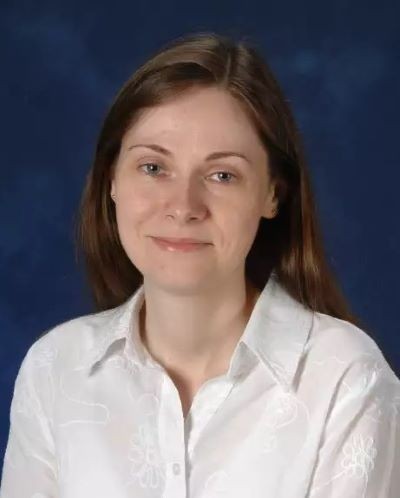
Schmidt, who earned her PhD in Spanish from UAlbany in 2012, is now an instructor of World Languages at Jefferson Community College in Watertown. Her contribution to Living in Languages, “From the Land of Pain,” marks a return to the poet who shaped her doctoral research. Schmidt’s dissertation, Everything and Nothing: The Poetry of Hanni Ossott, examined the central themes of Ossott’s first six books of poetry.
Ossott, who lived from 1946 to 2002, is widely recognized in Venezuela but remains less familiar to many English-language readers. She wrote 10 books of poetry, won major Venezuelan poetry prizes and also published essays and translations.
“Hanni Ossott’s poetry tends to be rather philosophical and esoteric, and she has been called ‘a poet’s poet,’” Schmidt said. “But, when I was leafing through an anthology of her poetry for the first time, one of the poems that caught my attention was ‘La casa, ese depósito de ángeles’ — ‘Home, the angels’ depository.’ Some of the ideas in it reminded me of how I’d felt several years before, when we were leaving the house we had lived in for 20 years.”
In “Del país de la pena,” Ossott repeatedly asks, “Who am I?” For Schmidt, that question is part of what makes Ossott’s work important for new readers.
“I believe Ossott’s poetry is important because it often focuses on ideas and questions that tend to get lost amid the pressures and fast pace of modern life,” Schmidt said. “In ‘Del país de la pena,’ Ossott explores these questions, making us rethink something we usually take for granted: our own existence.”
Meaning Across Languages
For Schmidt, translating poetry means trying to recreate not only the literal meaning of a poem, but also the emotional and imaginative experience of encountering it.
“I often feel like the ideas and emotions expressed in poetry transcend language, existing outside of and beyond it,” Schmidt said. “The writers used one language to try to capture their thoughts and feelings, but I always feel that they are capable of being conveyed in another language as well, if I can only find the right words.”
Translation, according to English Associate Professor Aashish Kaul, “does more than carry or convey. It signals that a given line, sentence or phrase in the original can be rendered in more than one way, and the translator’s task is to understand not what the original means, but how it means.”
Associate Emerita Professor Helen Regueiro Elam added that translation “signals the rich densities of the original, and, ultimately, the way in which language, far from being a mere vehicle of transport, is constitutive of culture, is the force that allows and enables different modes of thinking and being.”
That broader understanding of translation runs throughout the new volume, where works of poetry, fiction and criticism use translation to explore identity, memory, belief, political struggle and belonging.
“This volume continues our conversation about translation as a multilingual engagement with various modes and genres,” said Rumi Coller-Takahashi, lecturer in UAlbany’s Writing and Critical Inquiry Program and co-editor of Living in Languages. “The works explore languages through the lens of a flowing sense of identity, surrealistic entanglement, the locus of divinity and revolutionary force.”
“Translation is such a deep and active engagement with languages. It is empowering, as it allows us to connect the self with the other, and even discover elements of the other in the self,” said Languages, Literatures and Cultures Chair and Associate Professor Ilka Kressner.
In addition to the journal homepage, Living in Languages is also available through UAlbany’s Scholars Archive. Volume four and past issues can also be found online through the journal’s UAlbany Digital Commons page.