


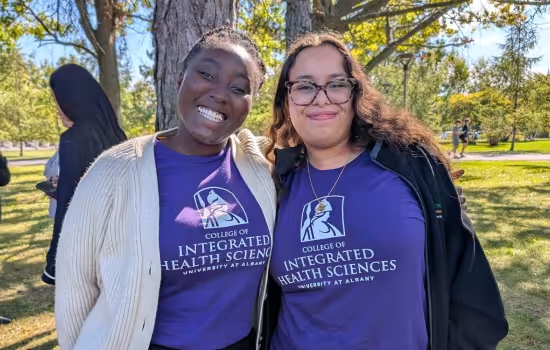
Admissions Open House for Graduate Programs
Whether your interests lie in improving health outcomes, advancing social justice, conducting research, influencing policy, or serving communities, UAlbany's College of Integrated Health Sciences offers graduate programs designed to help you achieve your goals. Join us for Open House on Saturday, November 7 to learn more.

Upcoming Event: Behind the Label – Consumer Product Chemicals & Our Health
Join us on September 25, 2026 from 8:30 a.m. - 3:30 p.m. for the President’s Forum on Health Disparities: Behind the Label – Consumer Product Chemicals & Our Health. This year's forum will feature Dr. Tamarra James-Todd, a leading scholar in environmental reproductive health and exposure science.
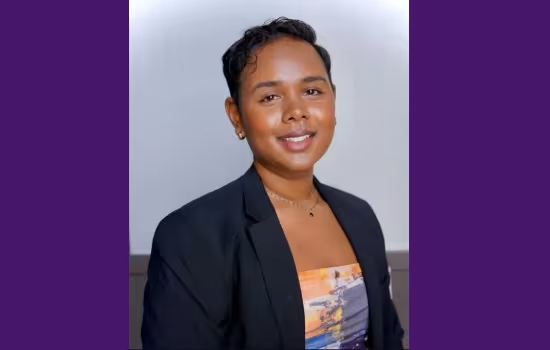
Alumni Spotlight: Avinash Lekram
Avinash Lekram graduated with their Master of Public Health and a Graduate Certificate in Maternal and Child Health in 2022. Now as a public health educator at the New York State’s Division of Vaccine Excellence, we asked Lekram to reflect on their time at UAlbany and share their journey into the public health field.
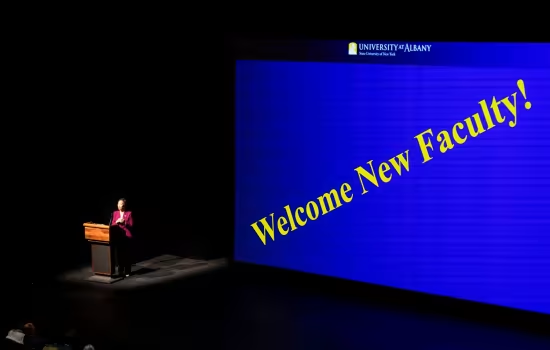
UAlbany Welcomes New Faculty Members
The University at Albany welcomed 32 new tenure-track faculty members this fall. The professors will present one-minute, one-slide presentations at the University’s annual Pecha Kucha to be held on Oct. 5. The University also welcomed 48 non-tenure-track faculty.
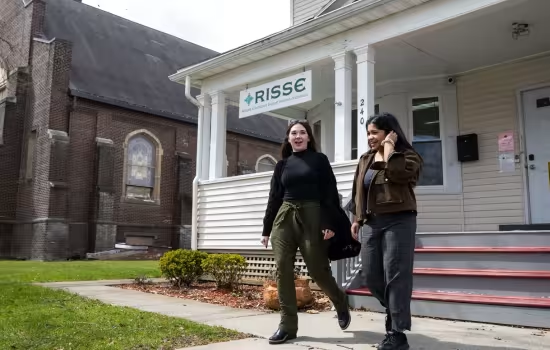
Master of Public Health Students Support Local Community Health at RISSE
As part of their Master of Public Health course, UAlbany’s Nagifa Tabassum and Victoria Buell interned at Refugee & Immigrant Support Services of Emmaus (RISSE) — a local organization with longstanding ties to UAlbany’s public health programs. We caught up with Tabassum and Buell to learn about their experiences working at RISSE.
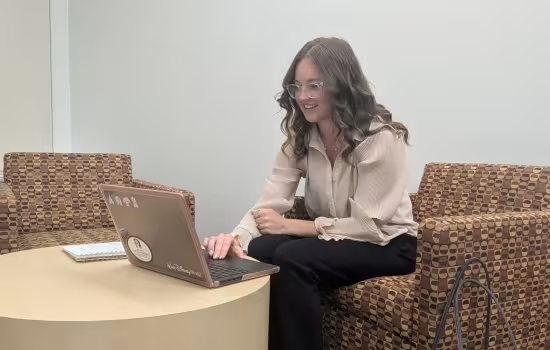
Understanding Health Care Barriers Using Reddit and Artificial Intelligence
Over one million Reddit posts from a subreddit called AskDocs are being examined by PhD student Arissa Spitalny to better understand how people describe the barriers they face with health care.
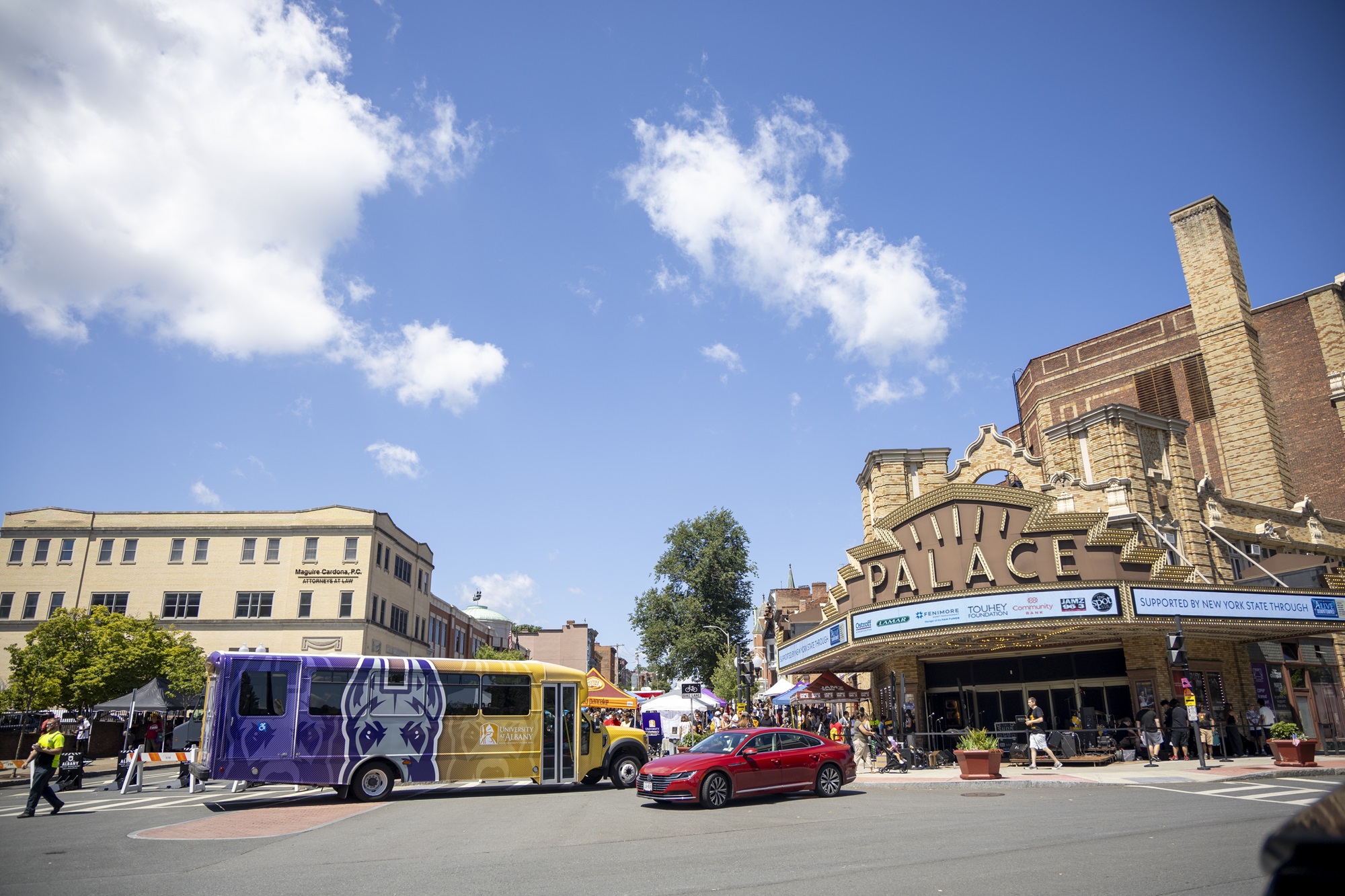
From Mayfield to Chatham, UAlbany Connects with Capital Region Communities
With six stops spanning from Mayfield to Canajoharie to Chatham, community members from across the Capital Region have had a chance to learn more about the area's premier research university and anchor institution.
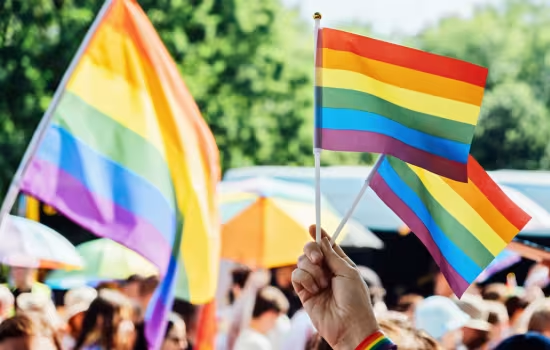
Improving Mental Health and Well-Being for Sexual Minority Women
LGBTQ Support, Opportunities for Learning, And Community Empowerment — or LGBTQ SOLACE for short — aims to build a network of regional peer mental health support and educational initiatives for LGBTQ+ people in upstate New York.