


How UPD uses technology to keep campus safe
The University at Albany Police Department (UPD) uses license plate reader (LPR) technology to support campus safety and authorized law enforcement activities.
The information is used solely by UPD to support investigations, protect vulnerable individuals and/or prevent threats to public safety.
The technology was implemented in 2025, and the system is operated by UPD for public safety purposes and in accordance with New York State law. View the full License Plate Reader Technology policy.
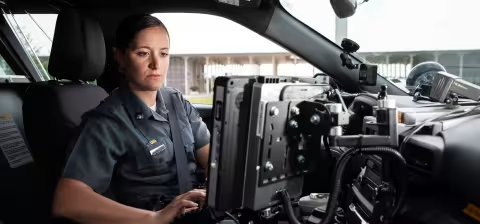
What is a license plate reader (LPR)?
UPD's license plate readers are an internal, camera-based system that captures images of vehicles and uses optical character recognition to read license plate numbers.
The technology is used to support public safety, investigations and other law enforcement purposes.
The LPR system collects information related to vehicles, including:
- License plate numbers
- Images of vehicles and/or license plates
- Make, model and color of vehicle
The LPR system does not collect or store any personally identifiable information about the vehicle, the driver or any passengers.
The LPR system used by UPD is designed to generate possible license plate matches to an authorized law enforcement inquiry and alert UPD if a vehicle enters campus that is a possible match to a law enforcement database of vehicles to be aware of.
Examples of why a vehicle is on this list are:
- The vehicle was reported stolen
- The vehicle is associated with a missing or vulnerable person
- The vehicle was involved in a serious crime that recently occurred
How does UPD use LPR?
UPD uses LPR as a tool to support campus safety and timely investigations involving vehicle information, such as:
- Proactive safety measures:
- Vehicles associated with active threats or serious investigations
- Stolen or wanted vehicles or license plates
- Missing or endangered person
- Investigative support:
- Theft or larceny investigations
- Motor vehicle related incidents
- Vandalism or property crimes
- Stalking, harassment or other serious safety investigations
The use of LPR data is restricted to approved law enforcement and public safety purposes outlined in the official policy.
License plates highlighted by the system are possible matches and must be verified by a department member to ensure the captured image accurately matches the information.
Once verified, a supervisor must review the information and approve any action taken.
Who can access the data?
The LPR data is stored on a closed system that is only accessible to UPD staff and is not connected to other LPR systems outside the University, such as Flock, Axon or Genetec. Any use of LPR data must be associated with a UPD investigative case number.
The data is not available to the public. The data cannot be accessed by other law enforcement agencies or any third party without a formal written agreement with UPD. Currently, the Capital Region Crime Analysis Center is the only agency with such an agreement.
What uses are prohibited?
UPD policy prohibits the use of LPR technology for personal or other non-official purposes.
The technology may not be used to investigate lawful, non-criminal activity or in ways that would violate an individual’s constitutional rights.
UPD conducts monthly audits of access and use of the system, which are reviewed by the Chief of Police. Any misuse of the system or violation of policy will be investigated.
How long is the data stored?
LPR vehicle data is stored in the LPR system for 30 days, after which time it is deleted. Any system reports or audit records are retained as outlined in New York State’s record retention policies.
Note: UAlbany's Parking & Mass Transit Services uses a different LPR system to manage the University's parking spaces. For more information on that system, please visit the License Plate Recognition (LPR) webpage.