


2026-2027 T32 RNA Fellow Article
By Shu Jun Lin, PhD, Training Program Coordinator, The RNA Institute
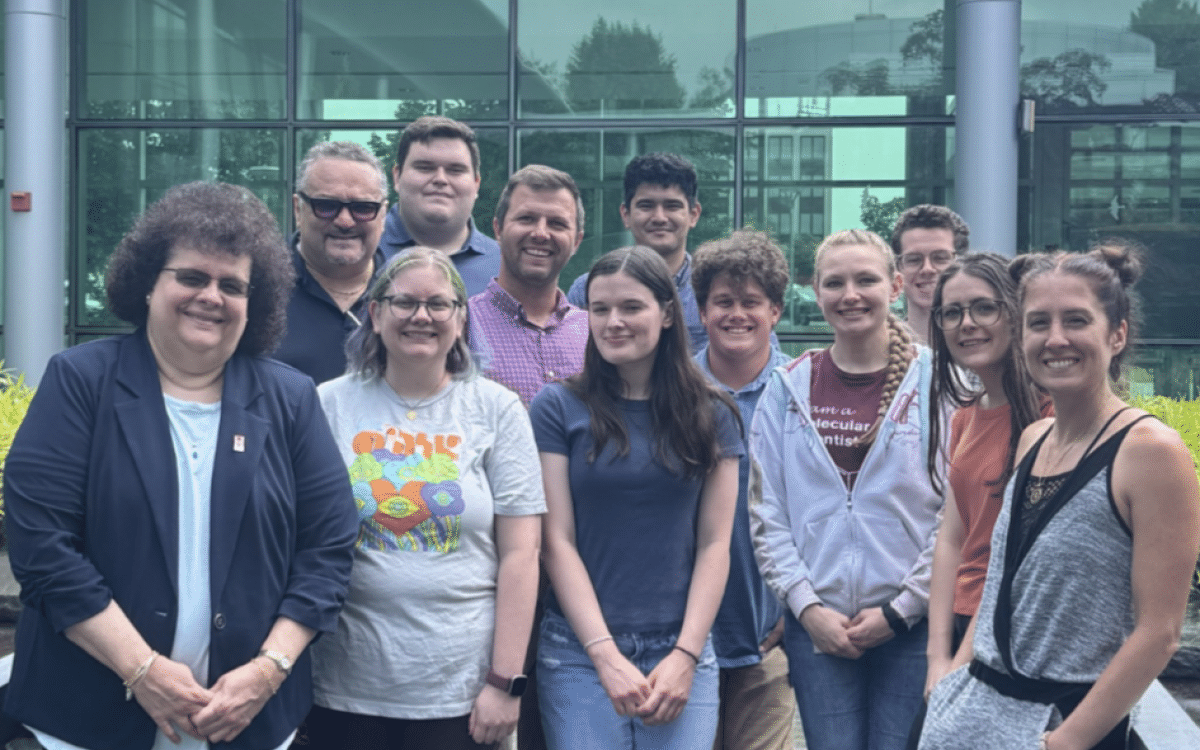
Twelve outstanding graduate students from four doctoral programs across the University at Albany’s scientific disciplines have been selected as 2026-2027 RNA Fellows. The participating students were selected from Ph.D. programs within the UAlbany departments of Biological Sciences, Biomedical Sciences, Chemistry, and Nanoscale Science and Engineering. This Ph.D. training program is funded by a National Institute of Health (NIH) T32 training grant and NY state, via the UAlbany Graduate School. The RNA Fellows program supports a comprehensive, intellectual, rigorous, and individualized Ph.D. training experience, including science communication, entrepreneurship, and journal club components. This year’s selection marks the 12th cohort of RNA Fellow, with training coordinated by The RNA Institute, which is housed in and sponsored by the College of Arts and Sciences.
Nicholas Lane, a Ph.D. student in Biological Sciences mentored by RNA Institute faculty member Dr. Kaalak Reddy was drawn to the program’s professional development and collaborative opportunities. "I applied because I believe this fellowship will be a great opportunity for me to obtain cutting-edge computational and laboratory skills, as well as contribute to the cohort by actively sharing insights during colloquia and seminars.”
To enhance the collaborative opportunities for trainees and mentors, the 2026-2027 RNA Fellows will participate in a new monthly Journal Club, coordinated by Mehmet Yigit and Anil Ojha from the Departments of Chemistry and Biomedical Sciences. This new programming will add a collaborative dimension to the RNA Fellows Program by giving trainees the opportunity to engage deeply with research papers selected by faculty mentors from across the RNA field. Through peer teaching and discussion, fellows will gain exposure to different research areas, learn about their mentors' expertise, and build a stronger sense of community within the cohort. Alan Chen, Ph.D., Associate Professor & Chair of Department of Chemistry emphasize the importance of collaboration – “I'm a huge proponent of the RNA Fellows program, because the fellows are in a cohort with similar-career-stage students from different disciplines like Chemistry, Biology, Nanobioscience, and Biomedical sciences. Really hard problems in science require multi-disciplinary collaborations to tackle them, and RNA Fellows are well-positioned to be making these connections and seeding new collaborations themselves, learning from each other's diverse viewpoints, and steering their projects in directions they would not have thought of otherwise. I'm very excited to see what this new class of RNA Fellows, are able to achieve together.”
Elijah Feret, a Ph.D. student in the Department of Nanoscale Science & Engineering (DNSE) mentored by Professor Susan Sharfstein was drawn to the program’s professional training and science communication opportunities. “My goal in applying for the RNA Fellowship was to find a pathway to integrate RNA technology into my current research in biosensor development. The program’s structured mentorship and focused training in RNA science and scientific communication will provide valuable skills and guidance as I complete my graduate studies and prepare for future research and career opportunities that interface RNA science with biomedical engineering.”
Arun Richard Chandrasekaran, Ph.D., co-director of the RNA Fellows Program and Assistant Professor in the College of Nanotechnology, Science, and Engineering highlighted the program’s unique training design: "One of the highlights of the RNA Fellows Program is the training tracks offered to fellows. Through the Publicizing Science and Entrepreneurship and Industry workshops, the RNA fellows gain first-hand insight into communicating their research and translating their work into applications that benefit the community."
Former RNA Fellows who have participated in and received professional training and development through the program have secured internships and positions in academia and industry including Pfizer, 10X Genomics, Novo Nordisk, Ionis and Regeneron Pharmaceuticals. Driven by the opportunity to expand her career options, Katherine McCown, a Ph.D. student in Chemistry, mentored by Professor Jia Sheng applied to the training program to explore career development opportunities. “I applied for the NIH RNA Fellowship seeking opportunities to strengthen my professional skills alongside my research training and expand my career options.”
Scott Tenenbaum, Ph.D., Professor in the College of Nanotechnology, Science, and Engineering emphasized the importance of the Entrepreneurship & Industry track, a key component of the fellowship training. “Throughout the year, we conduct an in-depth analysis of your research's commercialization potential and explore what that process entails. The primary focus is on differentiating between business and scientific perspectives, encouraging you to critically evaluate your research from a commercial viability standpoint. If commercializing technology is something you think you might be interested in, consider joining us this year.”
One key event of the fellowship is the Hudson Valley RNA Club (HVRC), a regional scientific forum that meets monthly during the academic year organized by Gabriele Fuchs, Ph.D., Associate Professor in Biology and Kaalak Reddy, Ph.D., Senior Principal Investigator of The RNA Institute. Approximately 30-50 researchers participate in each of seven annual meetings, bringing together the RNA research community from institutions across New York's Capital Region, including the University at Albany, New York State Department of Health Wadsworth Center, Albany Medical College, Albany College of Pharmacy, Siena College, the Neural Stem Cell Institute, Skidmore College, and other regional partners. Supported by the RNA Society, the HVRC provides a unique interdisciplinary environment for scientific exchange, networking, and professional development. RNA Fellows participates actively in the program, presenting 3-minute thesis-style talks during the first year of their fellowship and 25-minute research seminars during the third year. Fellows also have opportunities to interact directly with invited speakers and receive feedback from a diverse audience of faculty, postdoctoral fellows, trainees, and research staff. Regular presentations by invited speakers and members of the regional RNA community expose fellows to a broad range of RNA-focused research questions, methodologies, and career paths. The HVRC has fostered cross-institutional collaborations, mentoring relationships, and scholarly interactions across the Capital Region RNA community while providing trainees with valuable experience in scientific communication, professional networking, and constructive scientific discourse.
“Great science begins with curiosity, grows through collaboration, and succeeds through perseverance” said Thomas Begley, Director of the Training Program in RNA Science and Technology. “It is my great pleasure to welcome our newest RNA Fellows to the Training Program in RNA Science and Technology. Congratulations to them on earning this distinction and for all their hard work in getting here. We are proud to have them join our community and look forward to supporting their growth, discoveries, and success in the years ahead.”
2026-27 RNA Fellows Cohort
Nathaniel Beam Biological Sciences Mentors: Dr. Thomas Begley and Dr. Andy Berglund Project Title: Mapping Epitranscriptomic Marks in Myotonic Dystrophy Type 1 | 
|
Elijah Feret Nanoscale Science & Engineering (DNSE) Mentor: Dr. Susan Sharfstein Project Title: Hydrogel Photonic Sensors for Noninvasive Neural Organoid Monitoring | 
|
Emily Rennells Chemistry Mentor: Dr. Maksim Royzen Project Title: Bioorthogonal glycan labeling of tRNA | 
|
Hannah Talbot Biological Sciences Mentor: Dr. Arun Richard Chandrasekaran Project Title: Development of a DNA nanostructure delivery platform for the treatment of Myotonic Dystrophy I | 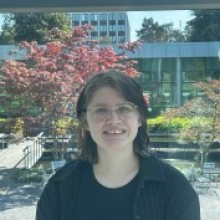
|
Jack Geary Biological Sciences Mentor: Dr. Hannah Shorrock Project Title: Determining the protein networks responsible for regulating non-canonical translation in multiple reading frames | 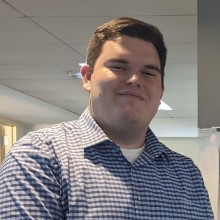
|
Katherine McCown Chemistry Mentor: Dr. Jia Sheng Project Title: RNA Modifications in Neurodegenerative Disease: Investigating tRNA Modification Diversity in Spinocerebellar Ataxias | 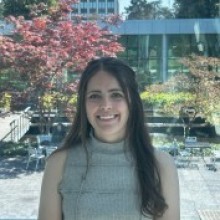
|
Megan Schumacher Biomedical Sciences Mentor: Dr. Jon Paczkowski Project Title: Quorum sensing mutations in Pseudomonas aeruginosa influence antibiotic susceptibility | 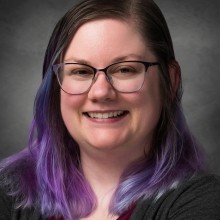
|
Nicholas Lane Biological Sciences Mentor: Dr. Kaalak Reddy Project Title: Investigating the Role of Core Spliceosome Proteins in Modulating Mis-Splicing and Toxic RNA Expression in Myotonic Dystrophy | 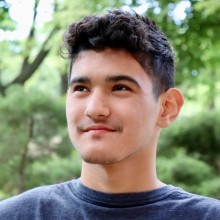
|
Phillip Weeber Biomedical Sciences Mentor: Dr. Joseph T. Wade Project Title: Mapping Epitranscriptomic Marks in Myotonic Dystrophy Type 1 | 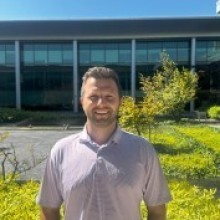
|
Sharon Shaughnessy Biological Sciences Mentor: Dr. Andy Berglund Project Title: Investigating DM1-Induced Dysregulated Immunity in a Mouse Model | 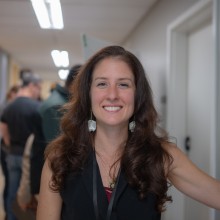
|
Tia Swenty Nanoscale Science & Engineering (DNSE) Mentor: Dr. Scott Tenenbaum Project Title: sxGLO: non-destructive 3D culture characterization method | 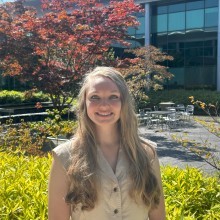
|
Walid Fahssi Chemistry Mentor: Dr. Shenglong Zhang Project Title: Complete Decoding tRNA Modifications and Profiling their Changes in Breast Cancer with Next Generation Mass Spectrometry Sequencing | 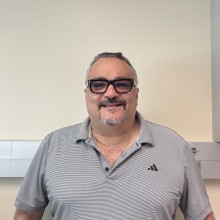
|