


NORDTECH Helps CNSE Nurture Next-Gen Semiconductor Engineers
By Nathaniel Cady and Andrew McMains
The University at Albany’s College of Nanotechnology, Science, and Engineering (CNSE) is a critical pipeline for training the engineers and scientists who will strengthen the U.S. semiconductor and microelectronics workforce.
As a founding member of NORDTECH — a $40 million consortium of universities, defense and semiconductor manufacturing leaders — CNSE educates the talented students needed to meet national priorities for reshoring microchip manufacturing and sustaining U.S. leadership in advanced technologies, including artificial intelligence and quantum computing.
This academic year, UAlbany welcomed a new cohort of 15 students into the NORDTECH-funded Semiconductor and Microelectronics Leadership Program (SMLP). The cohort comprises first-year undergraduates from two CNSE departments: Electrical & Computer Engineering and Nanoscale Science & Engineering.
The program, launched in 2024, focuses on recruiting and retaining students early in their academic careers by pairing scholarship support with exposure to real-world semiconductor research, development and manufacturing environments. Each participant gets a one-time $5,000 scholarship and access to monthly educational, professional development and workforce activities that are designed to introduce the diverse disciplines that fuel innovation in semiconductors and microelectronics.
By lowering financial barriers and providing structured exploration opportunities, SMLP gives students more flexibility to explore their academic and career options.

Direct Access to Semiconductor Leaders
As part of the 2025-26 program, students are exposed to advanced research and manufacturing infrastructure at the NY Creates Albany NanoTech Complex, where CNSE’s Department of Nanoscale Science & Engineering lives with leading semiconductor industry companies, including Applied Materials, TEL, IBM and AIM Photonics.
This proximity enables students to engage directly with industry professionals, learn about emerging workforce needs and explore internship and career paths within the regional semiconductor ecosystem.
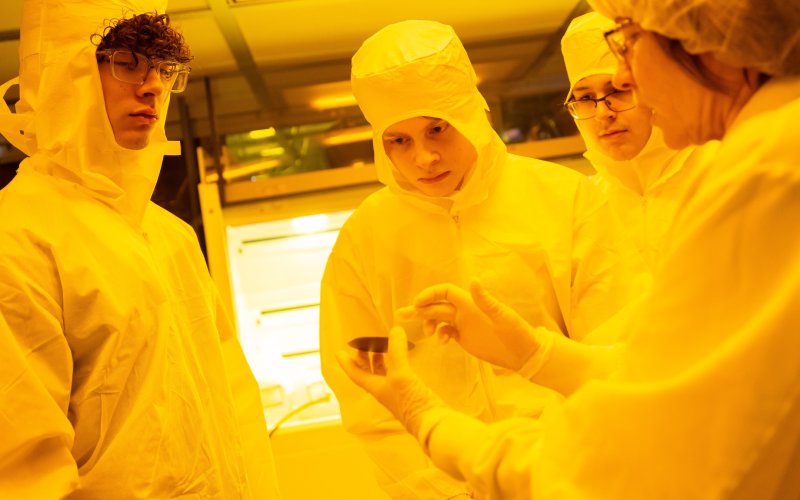
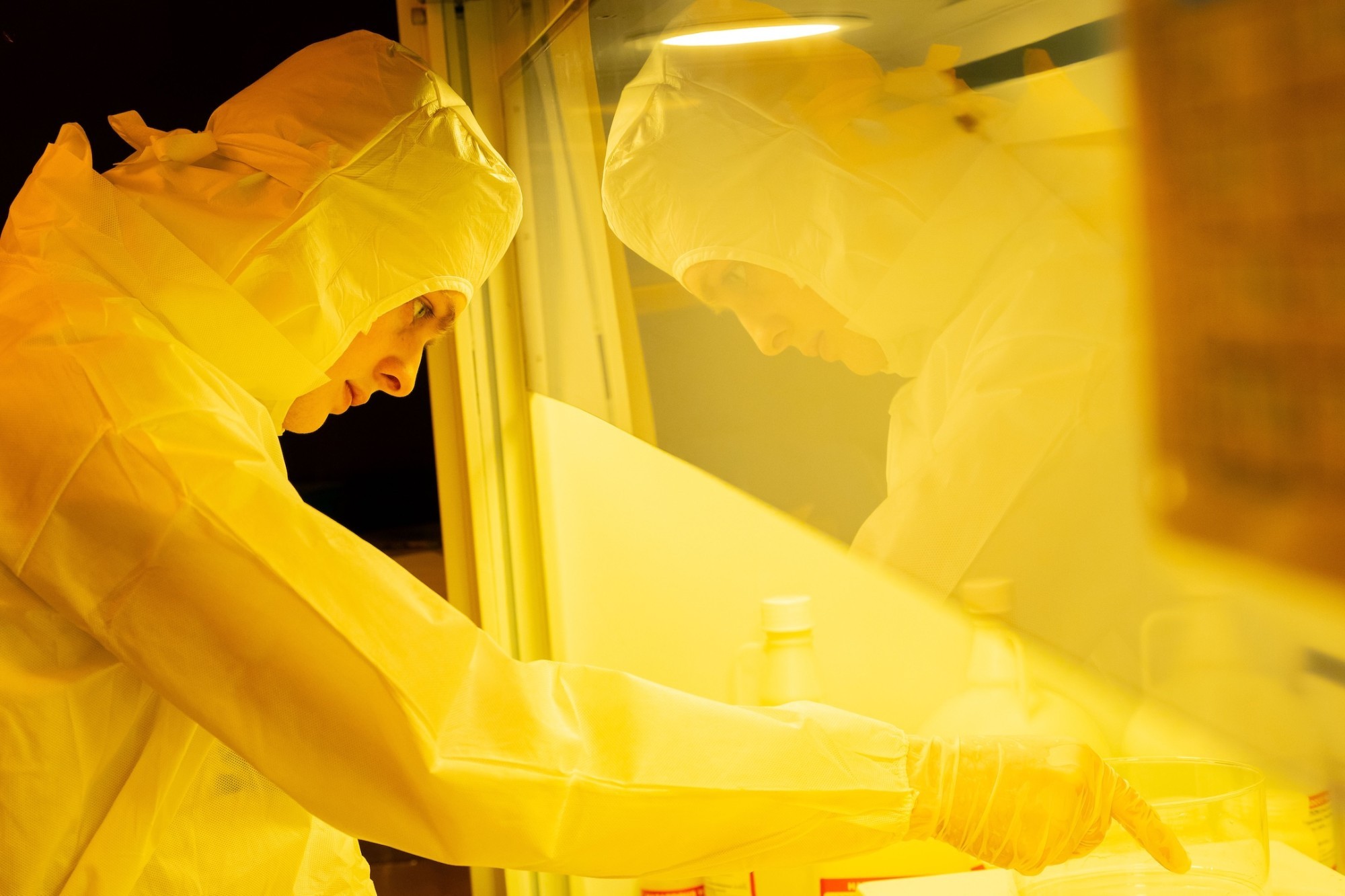
A centerpiece of this year’s experiential learning was a hands-on cleanroom exercise at CNSE’s 200mm Innovation Lab. Students donned full cleanroom “bunny suits” and worked alongside technical staff to perform foundational semiconductor manufacturing processes, including nanoscale thin-film deposition, lithography and etching.
The activity provided students with first-hand exposure to the tools, protocols and precision required in microelectronics fabrication environments, reinforcing classroom concepts through immersive practice.
“It was an eye-opening experience,” said Beckett Loomis, a nanoscale engineering major from Huntington, N.Y. “It was really cool to see how the different steps involved in fabricating a wafer all come together into one process. Also, I was able to use advanced equipment myself and follow the same procedures used in the semiconductor industry.”
Loomis added that the exercise “helped me better understand what day-to-day work in microelectronics can look like and what specific elements of semiconductor manufacturing are most interesting to me.”
Building the Workforce Pipeline
SMLP directly supports the microelectronics strategic priorities of the U.S. Department of War by addressing two critical needs: education and early exposure.
By supporting students in their pursuit of bachelor’s degrees in semiconductor- and microelectronics-related disciplines, the program strengthens the domestic talent pipeline. At the same time, exposing students to the Albany NanoTech Complex and experiences like the cleanroom exercise gives them a practical understanding of the field and its career opportunities.
“Supporting the next generation of the semiconductor and microelectronics workforce starts with programs like SMLP that provide scholarship-based incentives to pursue undergraduate education in relevant fields of study and experiential educational opportunities that enable students to explore career paths in semiconductors and microelectronics,” said Nathaniel Cady, CNSE’s associate dean for research.
Through continued investment in programs such as SMLP, UAlbany and NORDTECH reinforce the Capital Region’s leadership as a national hub for semiconductor innovation and prime students to contribute to one of the most strategically important technology sectors in the U.S.

This Year’s Cohort
Fifteen first-year undergrads from three majors comprise the 2025-26 cohort of SMLP.
Electrical & Computer Engineering
Anamul Haque, Nasir Mohammed, Stani Saldana and Mathis Sule.
Nanoscale Engineering
Joseph Bongiorno, Ziga Bhutia, Caleb Furgang, Tristan Kavanagh, Beckett Loomis, Mason Noto, Samuel Onuoha, Jaylee Ovalle, Jacob Romero and Shreya Sriram.
Nanoscale Science
William Reiman