A caregiver working with a young child.

Master of Science  in
Special Education

Program of Study

programofstudy

You can complete the program either full-time or part-time. The program includes coursework and a full-time internship in local schools, working with students both with and without disabilities. Your work will require professional responsibilities and professional interactions.
 

Core Courses

  • Classroom Literacy Instruction
  • Literature for Children and Young Adults or Academic Literacy Across Instructional Contexts
  • Culturally Responsive Literacy Intervention in the Content Areas
  • Anti-Racist Math and Science Inquiry Instruction
  • Fostering Safe and Supportive Educational Environments
  • Teaching Students with High Support Needs
  • Inclusive Assessment Practices
  • Curriculum and Instruction: Collaboration, Strategies, and Differentiation
  • Educating Students with Emotional Disorders and Challenging Behaviors: Advanced Tiers of Support

Clinical Internship

The Special Education MS program requires a full-time clinical internship working with students with disabilities. This internship is accompanied by a seminar led by a faculty member.


Additional Program/NYSED Requirements

  • Needs of Students with Autism Training
  • Dignity for All Students Act (DASA) Training
  • Child Abuse Identification and Reporting Training (You must complete the new Identification and Reporting of Child Abuse and Maltreatment/Neglect Training as of January 2025)
  • School Violence Prevention and Intervention (SAVE) Training

This program is approved for licensure or certification in New York State.
For more information on Professional Licensure Disclosure, please see the Graduate Bulletin.

Accelerated Undergraduate/Graduate Option

If you’re a current UAlbany undergraduate student with at least a 3.2 GPA, you may be eligible to begin your graduate degree coursework as early as your junior year. Save time and money by applying up to 12 academic credits, billed at the undergraduate rate, towards both degrees. By doing so, you may be able to complete your combined program in only 5 years and spend less than you would if you completed each program separately.

Contact your undergraduate advisor to see if you’re eligible and learn about your combined graduate program options.

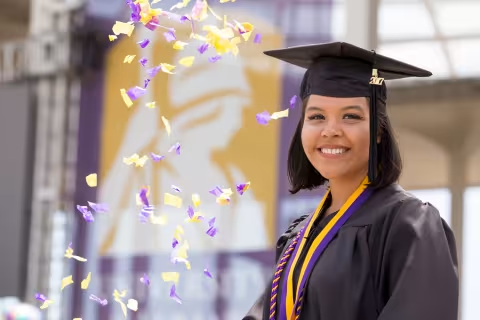
UAlbany graduate with confetti at Commencement.
combined

Admissions Requirements

admissions
Deadlines

Fall: March 15
Spring: Not Available
Summer: Not Available

There is no departmental assistantship consideration for this program.

Required Application Materials
  • Transcripts from all schools attended
  • Three letters of recommendation (one must be from a faculty member attesting to academic ability)
  • Statement of Goals (view questionnaires guideline) 

Supplemental Documents

  • Valid New York Initial or Professional Classroom Teacher Certificate

Available information for applicants.

Special Notes

This program is not available to international applicants. 

Applicants are required to have successfully completed 6 credits in each of the following areas: ELA, Math, Social Studies and Natural Sciences, as well as 3 credits in Arts and 3 credits in a language other than English. Those lacking one or more course may still be considered for admission with the requirement that the missing courses are completed during the program. Applicants to this program should include copies of teaching certifications held. Admission is contingent on proof of valid New York State Teaching Certification. 

Please note: This program requires an internship, field experience, study abroad component, or clinical experience requirement. Students who have previously been convicted of a felony are advised that their prior criminal history may impede their ability to complete the requirements of certain academic programs and/or to meet licensure requirements for certain professions. If applicants have concerns about this matter please contact the Dean’s Office of the intended academic program.

Accreditation

The University at Albany is a member in good standing of the Association for Advancing Quality in Educator Preparation (AAQEP), a national accrediting organization recognized by the Council for Higher Education Accreditation.


Logo for the AAQEP - Association for Advancing Quality in Educator Preparation
Accreditation Details

The programs listed below have been awarded full accreditation by AAQEP through June 30, 2028. Full accreditation acknowledges that a program prepares effective educators who continue to grow as professionals and has demonstrated the commitment and capacity to maintain quality.


AAQEP-Accredited Programs and Annual Reports at the University at Albany


Advanced Graduate Certificate Programs


Master of Science Programs


Bachelor of Science Programs

Student Learning Objectives


Learning objectives that UAlbany students are expected to attain through their course of study within their academic program.

Master of Science

By the end of the program, teacher education candidates will:

1. Learner Development and Individual Learning Differences

  • 1.1 understand how language, culture, ability, intersecting identities, and family background
    influence learning.
  • 1.2 use understanding of development and individual differences to respond to the needs of students.

2. Respectful Learning Environments

  • 2.1 create safe, inclusive, culturally responsive learning environments to engage students in
    meaningful learning activities and social interactions through collaboration with general educators, service providers and other colleagues.
  • 2.2 use motivational and strength-based instructional interventions, approaches, and tools to engage students in a variety of environments.
  • 2.3 use a range of preventive and responsive practices documented as effective to support students’ social, emotional, physical, and educational well-being.
  • 2.4 develop and apply effective, culturally responsive/sustaining procedures and proactive behavior management strategies that provide the differentiated behavioral supports all students need to function successfully in the classroom.
  • 2.5 develop, implement, and evaluate a systematic behavior intervention plan for students who
    require intensive and highly individualized behavioral supports.
  • 2.6 design or select curriculum materials for promoting social and emotional learning.
  • 2.7 take action to mitigate factors that influence the over-representation of Students of Color and Multilingual students in programs for students with disabilities and in disciplinary outcomes (e.g. disaggregated data, specifically disciplinary data).

3. Content Knowledge

  • 3.1 recognize the central concepts, structures, and tools of inquiry of the content areas they teach.
  • 3.2 organize and apply content knowledge and integrate cross-disciplinary skills to develop
    meaningful learning progressions across contexts for all students through a variety of professional roles.
  • 3.3 use general and specialized content knowledge for teaching across curricular content areas to individualize learning.
  • 3.4 modify general curricula and materials, using inclusive practices, to support all students
  • 3.5 use inclusive practices to make the curriculum accessible to students, such as the modification of general and specialized curricula and materials.

4. Assessment

  • 4.1 minimize bias (e.g., racial, linguistic, ability) by selecting and using technically sound equitable formal and informal assessments.
  • 4.2 use knowledge of measurement principles and practices to interpret assessment results (including learning, behavior, transition, and the classroom environment) and guide educational decisions.
  • 4.3 use multiple types of assessment information in making decisions about students in collaboration with colleagues and families.
  • 4.4 use assessment outcomes to provide feedback to meaningfully engage students in high quality learning.

5. Instructional Planning and Strategies

  • 5.1 incorporate an individual’s abilities, interests, funds of knowledge, learning environments, and cultural and linguistic factors in the selection, development, and adaptation of learning experiences for all students.
  • 5.2 use technologies to support instructional assessment, planning, and delivery.
  • 5.3 implement strategies to enhance language development and communication skills.
  • 5.4 utilize augmentative and alternative communication systems and a variety of assistive technologies to support communication and learning.
  • 5.5 develop and implement a variety of education and transition plans across a wide range of settings and different learning experiences in collaboration with students, families, and school-based teams and adult serving community and vocational organizations.
  • 5.6 teach to mastery and promote generalization of learning.
  • 5.7 teach cross-disciplinary knowledge (e.g. academic language) and skills such as critical thinking and problem solving.

6. Professional Learning and Ethical Practice

  • 6.1 use CEC’s professional Ethical Principles and Professional Practice Standards (found in the
    internship handbook) to guide practice.
  • 6.2 reflect on how foundational knowledge, equitable theories of practice, and current sociocultural events and issues influence professional practice.
  • 6.3 appreciate and acknowledge that diversity is a valued aspect of families, cultures, and schools, and that complex human issues (e.g., sociocultural, race, trauma) can interact with the delivery of special education services.
  • 6.4 recognize the significance of lifelong learning by participating in professional activities and
    learning communities.
  • 6.5 engage in activities such as advocacy and mentoring, and involvement in school and in the
    community.
  • 6.6 design plans and directions for working effectively with support personnel (e.g., paraeducators, tutors, substitute teachers, and volunteers).

7. Collaboration

  • 7.1 use theory and elements of effective collaboration (e.g., respectful communication).
  • 7.2 serve as a collaborative resource to colleagues.
  • 7.3 use collaboration to promote the well-being of students across a wide range of settings and
    collaborators.

slo

Careers and Advisement

The Pathways Into Education (PIE) Center is the central office on campus serving undergraduate, graduate, and prospective students interested in pursuing careers in education and programs leading to teacher certification.

Graduate Advisement:
Email Graduate Advisement
518-442-3529

Please call or email to schedule an appointment.