



As part of the degree requirements for the BS in Electrical and Computer Engineering, seniors partner with outside agencies or university researchers to develop an innovative technology that could be applied in a real-world setting.
This multi-semester project begins in the fall semester when teams of students perform an in-depth evaluation of a problem, engage in background research and brainstorm technical solutions and requirements. The course, which requires students to integrate multiple skills, focuses on a real-world project and leverages knowledge attained in previous courses. To succeed, the students must work as a team and apply technical writing or oral presentation skills as they tackle a project that helps solve an existing problem. This exemplifies our college mission of “Science in Service to Society.”
The Class of 2018 was the first in the BS in Electrical and Computer Engineering program to complete the capstone design course. Read below about the creative technologies that our student engineers devised to meet the practical needs of external stakeholders and the people they serve.
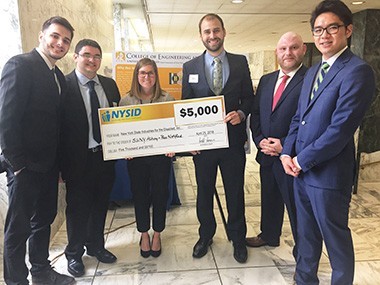
During the 2017-18 academic year, four ECE seniors developed a tool to help persons with disabilities gain employment by providing reminders and streamlining time management. They dubbed their project “Bee Notified” in recognition of the industrious creatures that, despite their size, are remarkable workers. Their project was supported by the New York State Industries for the Disabled (NYSID) and was completed in collaboration with the local nonprofit Living Resources.
NYSID sponsors university projects through its CREATE (Cultivating Resources for Employment with Assistive Technology) program, which incentivizes student engineering projects that promote employment and vocational opportunities for people with disabilities (PWDs). The project culminates with a symposium and competition consisting of universities across New York state. The top three projects at the competition are awarded $15,000, $10,000 and $5,000, respectively.
For their efforts, ECE seniors Andrew Boggio-Dandry, Anthony Castro, Egzon Shehu and Steven Yoo earned third place and a prize of $5,000.
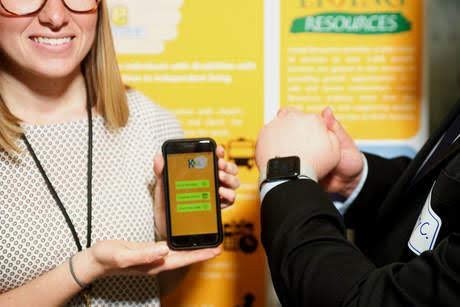
Based on discussions with Living Resources (LR), the team developed an Apple Watch application that employs a geolocation-based calendar, location assistance and two-way communication with LR administrators to help PWDs manage their time and schedules. The system includes an iPhone application, its Apple Watch companion, an interactive web portal and additional back-end functionality.
The 2019 class of Electrical and Computer Engineering seniors followed in the footsteps of the previous year’s class, using the capstone design project to develop innovative technology that would facilitate employment opportunities for individuals with disabilities.
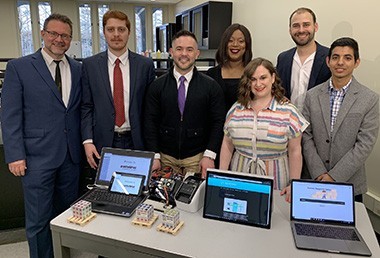
The capstone project expanded during the 2018-19 academic year with four teams engaging in the CREATE competition and collaborating with multiple external stakeholders. The teams worked on a range of problems, including making inventory management and packing systems jobs more accessible to individuals with disabilities and partnering with a robotics company on an experimental service robot that may one day be able to monitor the health and safety of disabled workers, as they advanced the Bee Notified project from the previous year. The stakeholder on the last project (Living Resources) expressed interest in commercializing the student-developed product.
The team advanced the work of the previous year’s team and created a new foundation for Bee Notified that will allow future teams to get acquainted with the overall structure of the application at a greater pace. The core contribution of this project was a cross-platform mobile application for enhanced usability and accessibility. Supported devices include all mobile devices with the Android operating system (tablets, phones, and smart watches), a subset of mobile devices with iOS (iPhones and iPads) and all Windows 10 devices (PC’s, tablets, and phones).
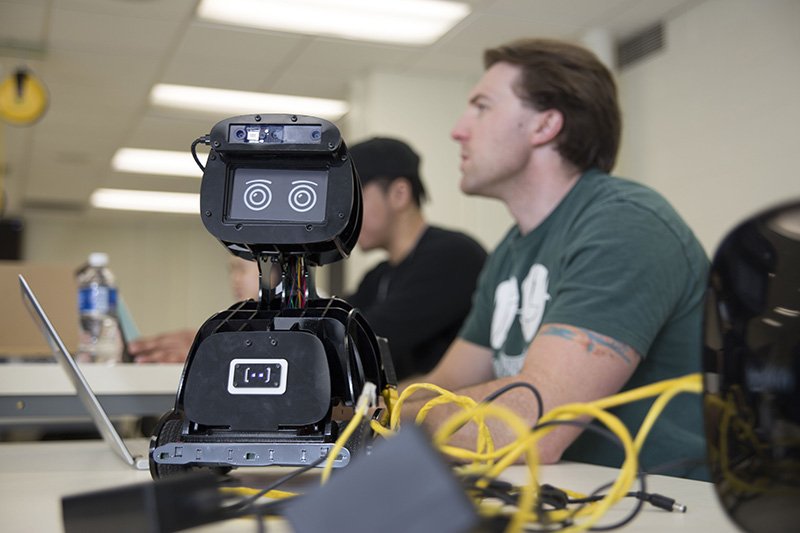
Some workers with disabilities are challenged by emotional stress and need a caregiver or supervisor to help them manage it. Using an open source robot donated by Misty Robotics, the team developed a service robot (Misty) to help PWDs deal with emotional stress by prompting the appropriate response for a specific individual and their specific emotion. Misty was able to successfully detect the emotion of individuals in her memory and play the appropriate audio file to calm them down while stationary.
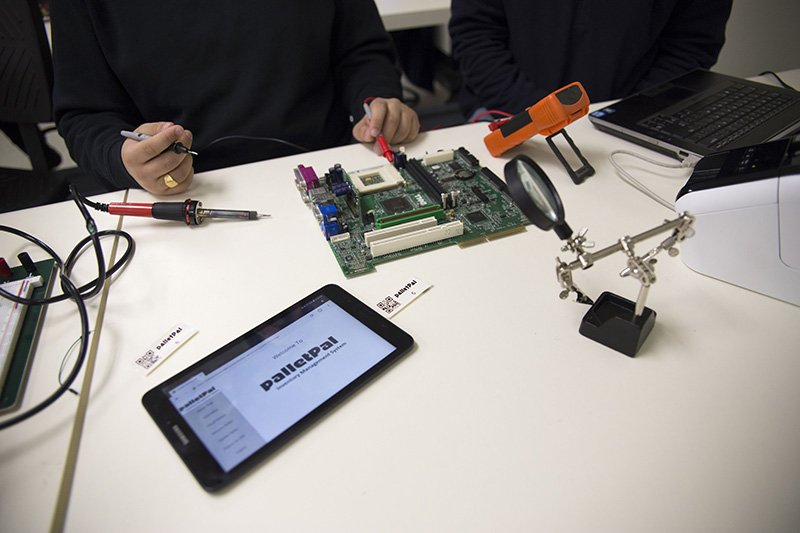
The project stakeholder, Center for Disability Services (CDS), sponsored two teams of students to develop specific aspects of automating their warehouse inventory system. The teams worked to design an inventory management system in the CDS warehouse that would dramatically reduce time spent on tracking, packing and shipping inventory, allow for more reliable data intake and utilize simplicity to create job opportunities for PWDs.
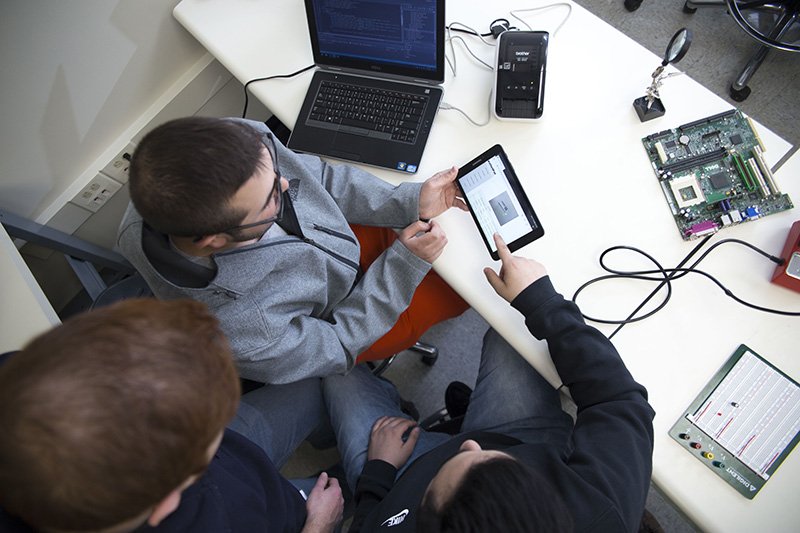
The team developed a web application dedicated to the stakeholder that’s integrated with a database to keep it simple for the users. The app allows users to add, remove or check pallets in the system. When the user checks the inventory, the tablet’s camera opens to scan all the existing QR codes in the warehouse — checking off all the items in the database that were scanned during the single session — and sends a report to the supervisor on the items that have been checked and not checked.