


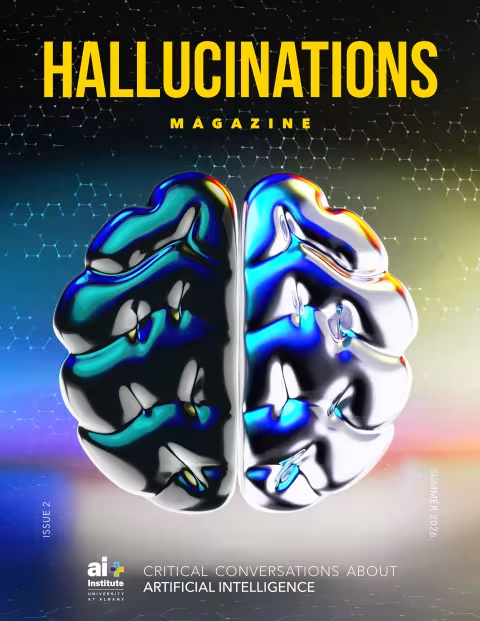
Hallucinations Magazine
Critical Conversations about Artificial Intelligence
AI is more than a technological breakthrough; it is a mirror of our moment. It reflects our values, challenges our notions of creativity and reshapes our economy.
Hallucinations is our new forum for all things AI — a space intended to underscore that reflective capacity.
Whether you are a researcher training the next generation of large language models, an artist deconstructing how a surveillance algorithm “sees” or a skeptic questioning the roadmap to General Intelligence, this space is for you.
Latest AI News from UAlbany
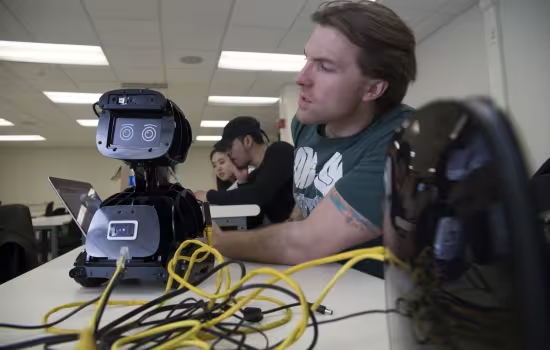
Celebrating Science with STEM and Nanotechnology Family Day
THeCollege of Nanotechnology, Science, and Engineering is welcoming students from throughout the Capital Region on Saturday, Feb. 10, to STEM and Nanotechnology Family Day, a place to learn about how nanotechnology is making a difference in our lives now and in the future.
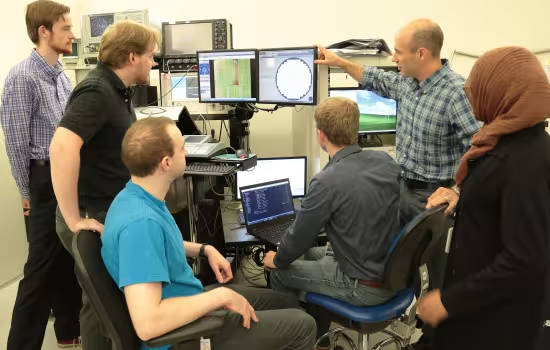
Q&A With CNSE’s Nate Cady: Why Everyone is Talking About Semiconductors
CNSE Professor and Associate Dean for Research Nathaniel Cady is leading UAlbany’s contribution to the Northeast Regional Defense Technology Hub, or NORDTECH, a $40 million consortium of universities, defense, and semiconductor manufacturing powerhouses announced in September as part of the Microelectronics Commons.

Noteworthy: Research grants, awards and publications
The latest developments on University at Albany faculty and staff who are receiving research grants, awards and other noteworthy attention.

CTG UAlbany Study Examines AI Chatbots in Public Organizations
Rsearchers from the University at Albany’s Center for Technology in Government (CTG UAlbany) and University College London (UCL)’s School of Public Policy are examining the use of chatbots by governments, and what factors have led to their successful deployment or failure.
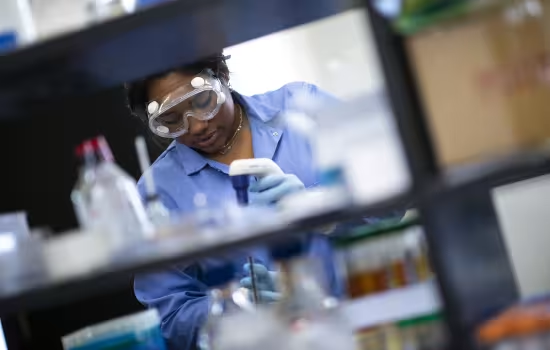
CNSE Earns ABET Accreditation in Environmental, Nanoscale Engineering
UAlbany's College of Nanotechnology, Science, and Engineering has earned ABET accreditation for its bachelor of science in environmental and sustainable engineering. In addition, following the reunification with the Department of Nanoscale Engineering in 2023, the college has confirmed ABET accreditation for its bachelor’s degree in nanoscale engineering.

An Inside Look at CEHC’s New Artificial Intelligence Laboratory
The College of Emergency Preparedness, Homeland Security and Cybersecurity recently launched the AI in Complex Systems Laboratory, a cutting-edge research facility that is dedicated to the study and advancement of AI within the context of complex systems and networks.
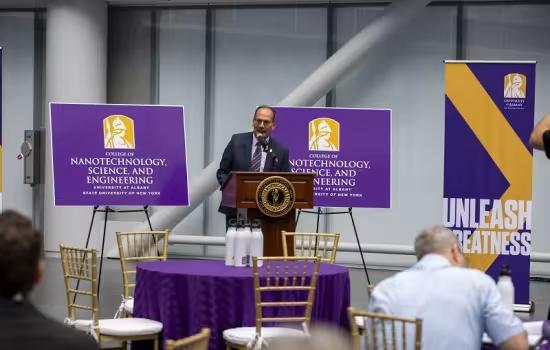
Statement from President Rodríguez on New York's Landmark $1B Investment at Albany NanoTech
The growth and success of Albany NanoTech over the last two decades is a testament to New York’s forward thinking, its ability to cultivate robust industry partnerships such as those celebrated today, and the importance of strong academic partners to these research collaborations.
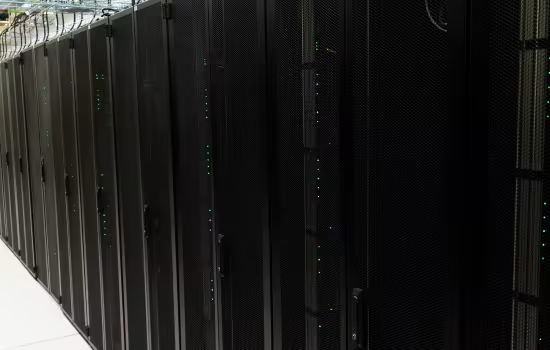
UAlbany Becomes First School in the Nation to Adopt NVIDIA’s DGX Cloud
The University at Albany is launching the DGX Cloud environment, a cutting-edge cloud-computing platform offered by NVIDIA, the leading technology company known for its GPU cards and artificial intelligence (AI) solutions.