


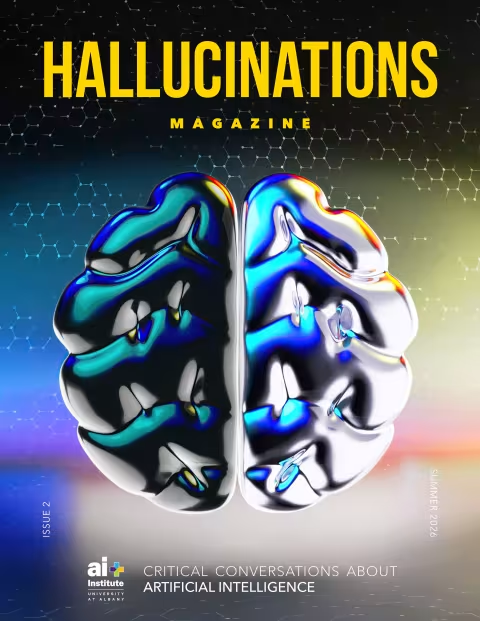
Hallucinations Magazine
Critical Conversations about Artificial Intelligence
AI is more than a technological breakthrough; it is a mirror of our moment. It reflects our values, challenges our notions of creativity and reshapes our economy.
Hallucinations is our new forum for all things AI — a space intended to underscore that reflective capacity.
Whether you are a researcher training the next generation of large language models, an artist deconstructing how a surveillance algorithm “sees” or a skeptic questioning the roadmap to General Intelligence, this space is for you.
Latest AI News from UAlbany
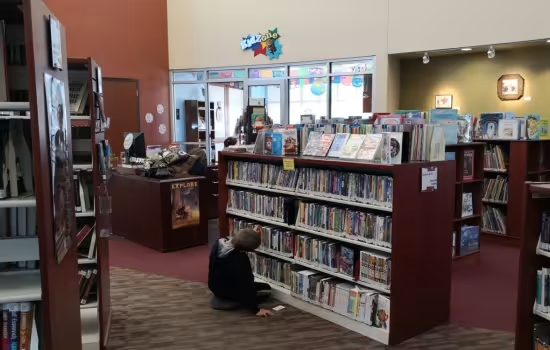
UAlbany Study Examines Public Library AI Programs
New research from UAlbany’s Center for Technology in Government (CTG) suggests public libraries can play an important role in helping communities develop the skills to critically evaluate the technology, understand its risks and participate in decisions about how it is used.
AI Plus Institute Director to Speak at Three Upcoming Conferences
AI Plus Institute Director Balakrishnan (Prabha) Prabhakaran will speak at GE Vernova's AI Edge Symposium, Public Sector Network's Government Innovation New York program and the New York State Digital Equity Network's third annual conference.
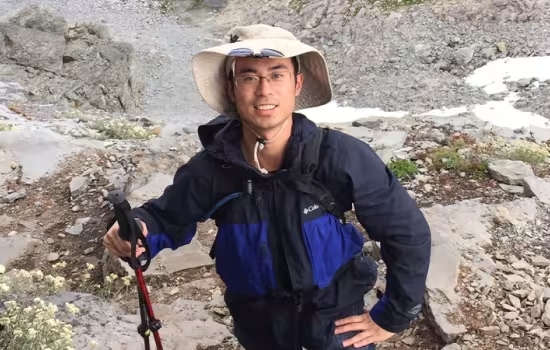
Studying Uncertainty: 5 Questions with UAlbany Mathematician Felix Ye
UAlbany Assistant Professor of Mathematics and Statistics Felix Ye studies stochastic dynamical systems — systems that change over time but whose behavior is influenced in part by randomness or uncertainty. Ye recently received a three-year, $200,000 NSF grant to develop modeling for these systems.
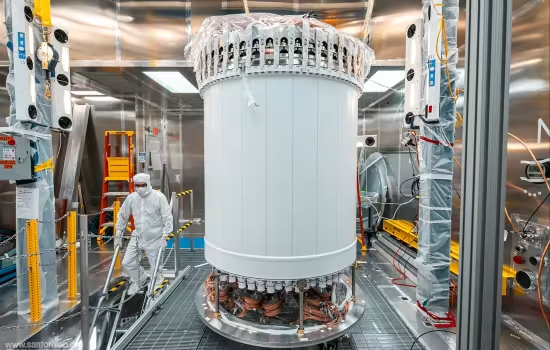
UAlbany Physicists Study Unexplained Signal in Dark Matter Search
UAlbany physicists played a central role in analyzing a so-far unexplained anomaly in the data from the world’s most sensitive dark matter detector that offers the most compelling hint yet in the hunt for an unseen building block of the universe
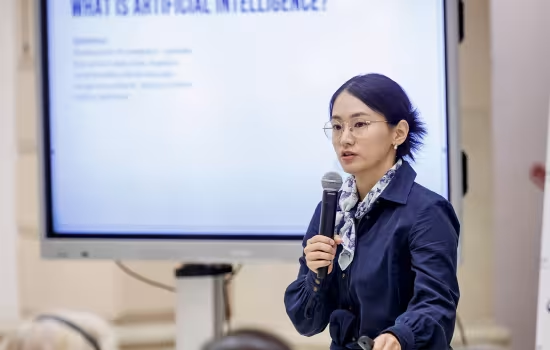
5 Questions with CTG UAlbany Researcher Seulki Lee-Geiller
Center for Technology in Government researcher Seulki Lee-Geiller studies how digital technologies and artificial intelligence are reshaping democracy and the relationship between people and government. Lee-Geiller offers insight into her research at CTG UAlbany.
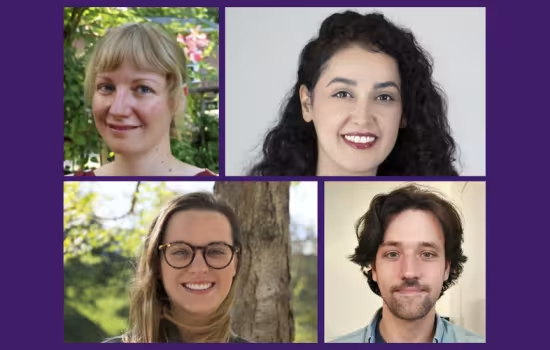
New UAlbany Faculty to Explore AI, Quantum Tech and the Human Brain
The endowment of the Neuromorphic Quantum Computing Constellation will fund four Simons Empire Faculty Fellows — two focused on neuroscience and one each in mathematics and computer hardware engineering. They will study how to combine the enormous power of quantum computing with the unparalleled adaptability and energy-efficiency of the human brain.
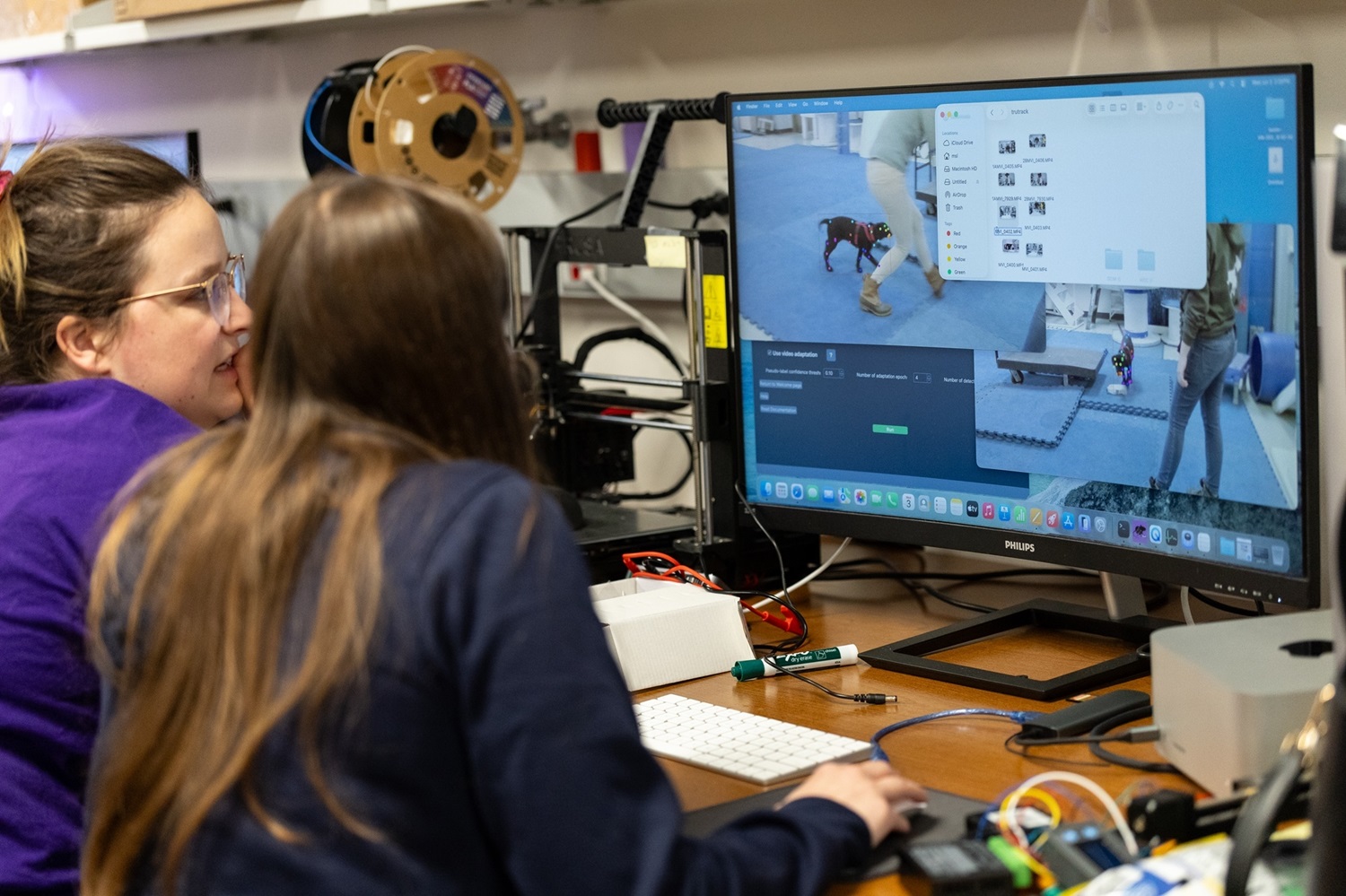
AI Summer Research Intensive Connects Students Across SUNY Campuses
UAlbany recently piloted a week-long summer research intensive that brought together students from three SUNY campuses to strengthen artificial intelligence teaching, learning and research across the region.
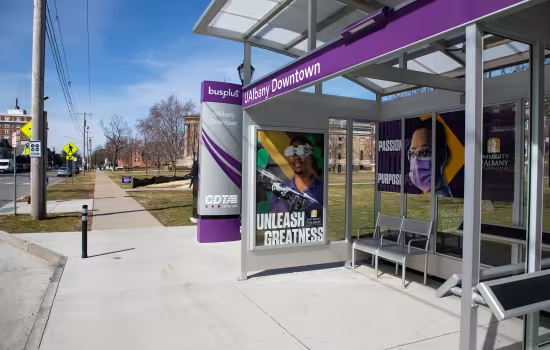
CTG UAlbany, CDTA Explore AI Tools for Bus Shelter Maintenance
Researchers and students at CTG UAlbany are helping CDTA address that challenge using mobile sensors and artificial intelligence. Through an ongoing partnership, CTG UAlbany has adapted its Community Asset Tracker platform to identify maintenance conditions at bus shelters using AI-enabled camera sensors mounted on CDTA buses.