


Ruth Walters: Founding the Center and Building a Legacy of Women’s Leadership
By Antonella Mastroianni
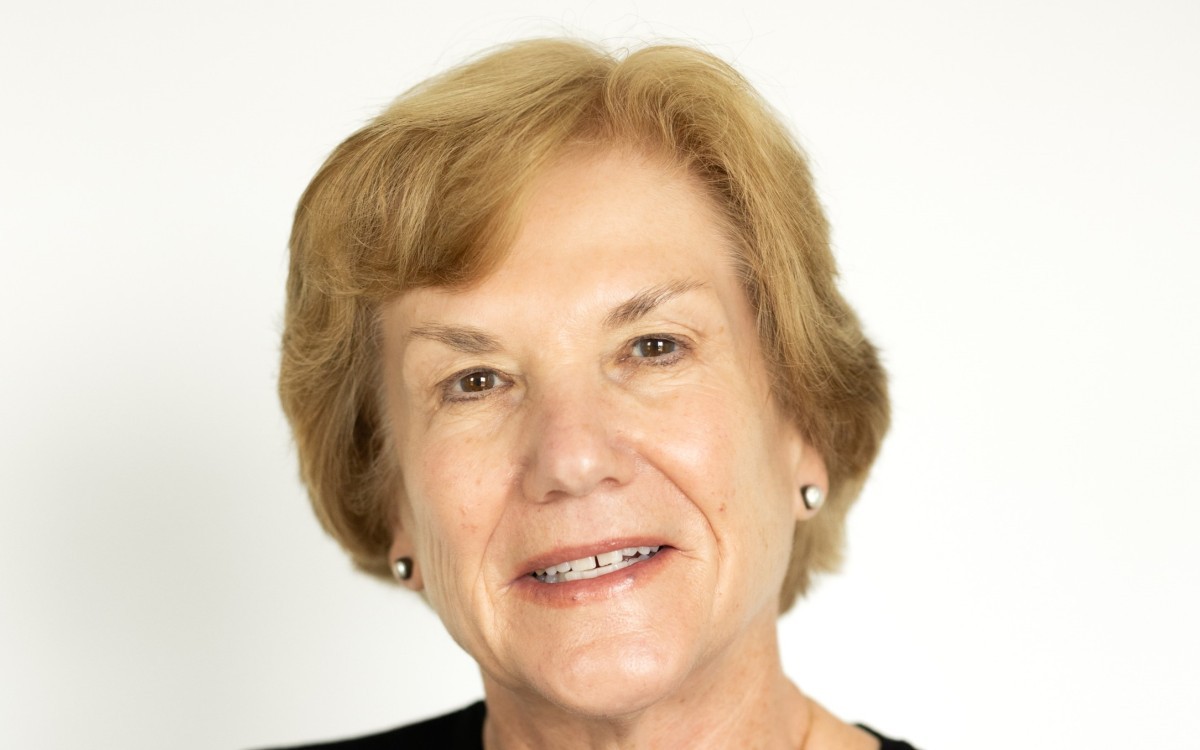
For Ruth Walters, advancing women’s leadership has never been simply a professional interest — it has been a lifelong commitment. Ruth is both a founding member and longtime Advisory Board member of the Center for Women in Government & Civil Society (CWGCS). Her vision, dedication and leadership — and the collective efforts of the women who worked alongside her — helped establish the foundation on which the Center continues to build today.
During the 1970s and 1980s, women faced significant barriers to entering and advancing within government and public leadership. Women were substantially underrepresented in positions of authority and often lacked the professional networks, institutional support, and leadership-development opportunities available to men. Ruth experienced these barriers firsthand while working in the New York State Legislature in her twenties. Over the course of her career, she also served in the New York State Office of the Comptroller, the private sector, and as a senior advisor to Governor Mario M. Cuomo. She currently works as a senior advisor in Procurement Services at Ostroff Associates.
Drawing on these experiences, Ruth joined a group of women who believed it was long past time to create an institution specifically dedicated to advancing women’s rights, leadership, and opportunities. “The Center started as a kind of support group with an academic bent, where we could share stories and also work on some policies.” The Center’s founders were particularly concerned with public policies affecting women, including sexual harassment, inequitable access to opportunities, and the need for education and training. Once the group clarified its purpose, it incorporated an academic component into the Center’s work. That decision distinguished CWGCS from many other women’s organizations. Its location within higher education created opportunities to combine research, teaching, professional development, public policy and advocacy.
The Center became one of the early academic institutions devoted to understanding and advancing women’s participation in government. Its mission later expanded to include civil society, reflecting the many arenas in which leadership and social change take place.
Reflecting on the Center’s history, the inspiration behind its creation, the progress it has helped achieve, Ruth shared enduring lessons for today’s emerging and aspiring public service leaders.
Understanding how systems work
Meaningful change requires more than passion. Leaders must understand how policies are formulated, budgets are negotiated, decisions are made and programs are implemented. Knowledge of the system helps advocates identify where power resides and where intervention is most likely to produce results.
Ruth taught an academic course in the Fellowship on Women & Public Policy for nearly a decade deepening the understanding of how the system works and strengthening the capacity of emerging leaders to transform the system. When she reflects on her career, she places particular value on the students she taught and mentored. She can identify at least 15 former students who went on to undertake consequential work in government, policy and public service. Ruth’s teaching emphasized that policy knowledge alone is not enough. Emerging leaders must understand how institutions operate, how decisions are made and how to translate an idea into action.
Connecting theory with practice
Academic knowledge helps leaders understand the historical, political, and institutional forces that create inequality. Practical experience teaches them how to operate within — and transform — those systems. Effective leadership depends on both.
By connecting academic knowledge with the realities of policymaking, advocacy, and professional advancement, Ruth helped shape one of the Fellowship’s defining features: its integration of theory and practice. Her courses therefore combined public policy education with practical career preparation. Students learned how policies are developed, negotiated, funded and implemented while strengthening their abilities to write résumés and cover letters, cultivate networks, interview effectively and demonstrate leadership. This combination of scholarly knowledge and applied experience remains a defining feature of the Fellowship.
Building a base of support
Sustainable change rarely comes from one individual acting alone. It grows through relationships, coalitions, mentoring, sponsorship and collective action.
Ruth’s reflections remind us that institutions are built by people who recognize an unmet need, bring others together, and persist until an idea becomes an enduring force for change. Ruth emphasizes that building support, especially among women, is essential.
Investing in professional skills
Leaders need opportunities to develop their résumés, interviewing abilities, communication skills and professional networks. These are not superficial additions to policy education. They help qualified individuals gain access to positions in which they can exercise influence and advance change.
Emerging and aspiring leaders must know how to communicate their strengths, build professional relationships, navigate interviews and position themselves for roles in which they can influence change.
Seeking leadership development programs
Emerging leaders do not always arrive with established titles or public profiles. Educational programs can create spaces in which their abilities become visible. Encouragement, mentorship and meaningful opportunities can help transform potential into public leadership.
Ruth vividly remembers teaching a public policy class in which Fellows were asked to develop presentations advocating for a proposal through the New York State budget process. One of those students was Dr. Dorcey Applyrs, who would later become mayor of Albany.
“I’ll never forget this. We were in a lecture room on the downtown campus. The students did their presentations — they were all terrific — and Dorcey got up to do her presentation. She got a standing ovation. Someone in the classroom said, ‘We’re going to run her for public office.”
The moment demonstrated how leadership potential can become visible when women are given opportunities to develop their voices, test their ideas, and be seen by others as capable leaders. Ruth also remembers Fellowship alumna Kathleen Brady-Stepien as a groundbreaker whose promise was apparent even during her time as a student. These alumnae represent the multiplier effect of leadership development: an investment in one participant can influence organizations, communities, public institutions and future generations.
Ruth also taught Keri Neifeld who was a Fellow in the Center’s program. After her placement, Keri went on to serve as a staff person to the Commissioner of OTDA, who was a strong woman leader and a supporter of the Center’s programs. After her work in that agency, Keri went on the work in the Executive Chamber, rising to became Commissioner of OPWDD and is now back working as the Deputy Director of State Operations for Governor Hochul. There are so many other examples of our Fellows going on to influence local, state and national policies.
Show up and participate
Leadership begins with participation. Showing up consistently builds knowledge, credibility, relationships, and opportunities to contribute.
Ruth summarizes this lesson: “Just get involved, get a network, understand the process, and show up.”
Protect progress through Persistence
Social change is rarely linear. It advances, encounters resistance, and sometimes experiences setbacks. Leaders must remain engaged during difficult periods and continue supporting institutions and individuals that reflect their values.
Women have made important gains in public service, government, and civic leadership since the Center was founded. Yet Ruth cautions against treating that progress as complete or permanent. “We still have much more to do,” she observes, particularly at a time when women’s rights and protections are being actively challenged. Her advice is direct: “You’ve got to keep going. You can’t get discouraged. You’ve got to lead. You can’t be afraid or intimidated. You’ve got to support people who share your values.”
For CWGCS, this means continuing to build a diverse pipeline of leaders committed to gender equity and public service. It also means preparing women — and people of all genders who share the Center’s values — to recognize inequity, challenge exclusion, and strengthen democratic institutions. Ruth’s message underscores an essential truth: progress requires sustained effort. Rights and opportunities that took decades to secure can be weakened or lost if institutions and individuals do not actively protect them.
Final works: cementing the Center’s legacy
Ruth sees the people whose lives have been shaped by CWGCS as its greatest legacy. They include participants in the Fellowship on Women & Public Policy and NEW Leadership® New York, as well as the Center’s staff, faculty, board members, partners and supporters.
“We should be proud of that. We really should be.” That history offers another lesson, Ruth argued: Institutions devoted to equity do not sustain themselves. They require champions who are willing to articulate their value, secure resources, protect their mission, and demonstrate their public impact. Looking to the future, Ruth believes the Center must remain steadfast in its commitments. “We really need to be champions of diversity, equity, and inclusion.” CWGCS will continue to strengthen its legacy by giving emerging leaders the knowledge, tools, relationships and opportunities they need to lead effectively. By upholding equity, inclusion, accessibility, and academic excellence — even when those values encounter resistance.
Ruth has devoted her career to advocating for women’s rights and leadership. Her contributions can be seen not only in the institution she helped establish, but also in the many leaders whose careers and public service were shaped by its programs.