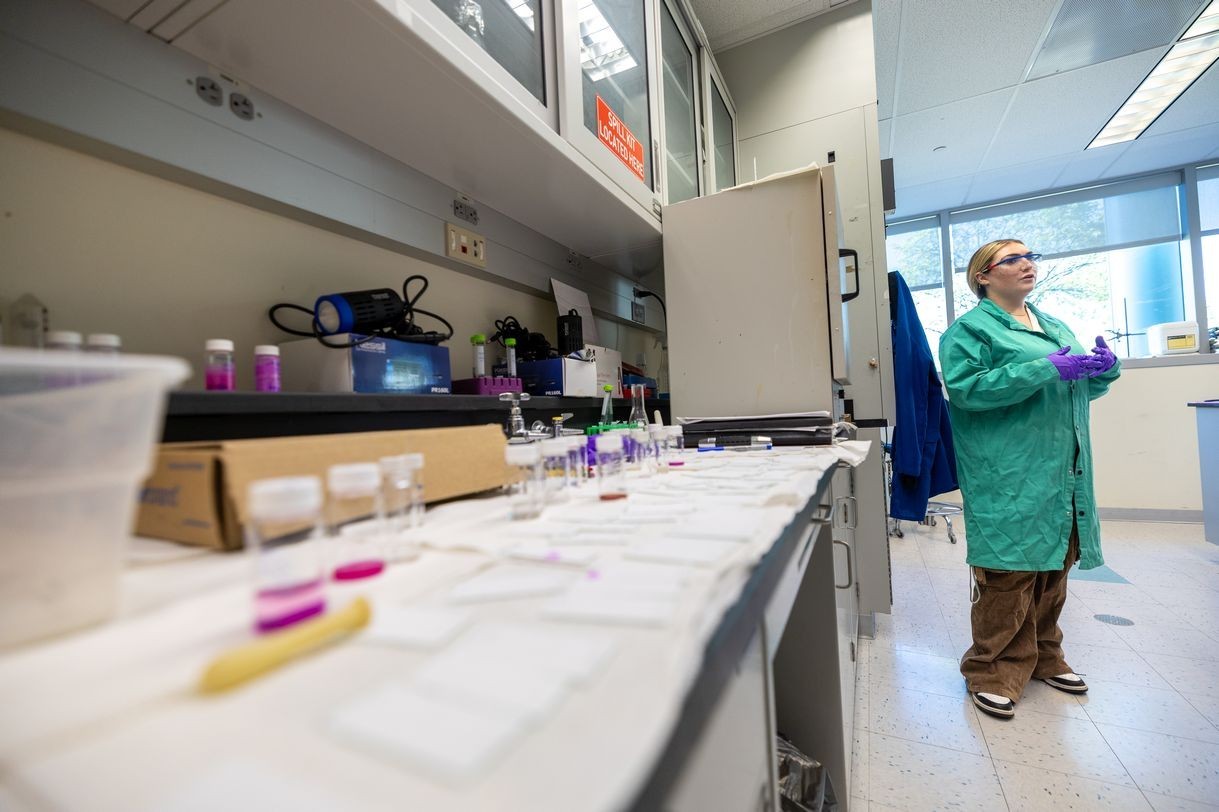


For Undergrad Researcher Christina Casey, Chemistry Always Clicked
By Erin Frick
ALBANY, N.Y. (Sept. 24, 2026) — In second grade, a bright green box beckoned to Christina Casey from the toy store shelf. Promising more than 100 experiments within, the beginner chemistry set became an instant obsession. Casey easily convinced her mother that they needed to take one home, and together they made a routine of working through the experiments.
“When I got my first 'Chem C1000' chemistry set, I was able to start experimenting and see how different materials could be stable on their own but react once combined, which fascinated me,” said UAlbany senior and chemistry major Christina Casey. “My mom and I would sit down at our dining room table once a week to try a new experiment. Working with chemicals was exciting because it felt a little dangerous and I knew I had to be really careful to make the experiment work.”
Then came the school science fairs. Every year, Casey faced the same decision and made the same call. The composition of dry ice, the history of the periodic table — it was always chemistry.
When college rolled around, joining a lab was a top priority.
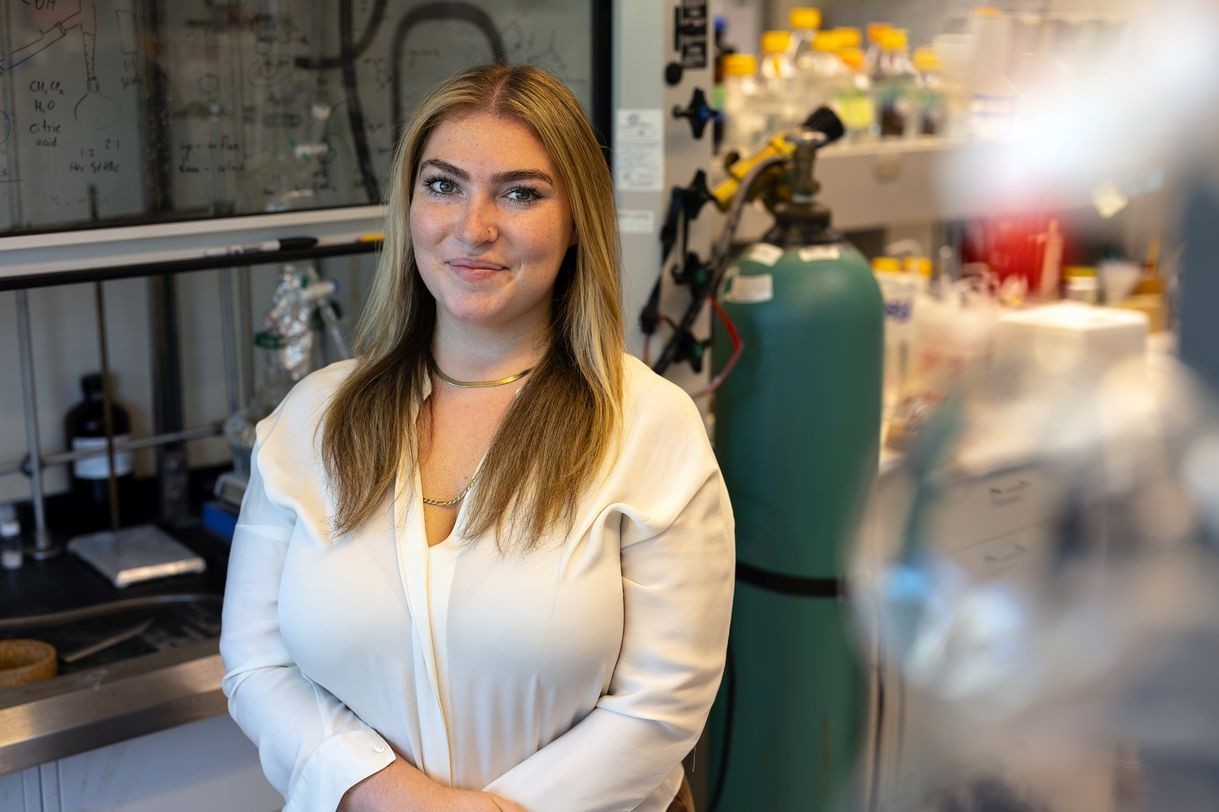
“I was drawn to UAlbany because of its science programs, its diverse community and the fact that it is a research university,” said Casey. “Taking organic chemistry confirmed my passion and sparked my interest in organic chemistry research, specifically. My STEM tutor pointed me to Associate Professor Max Royzen, I reached out, and I’ve been a member of the Royzen Lab since the summer after my sophomore year.”
Building a Molecule New to Science
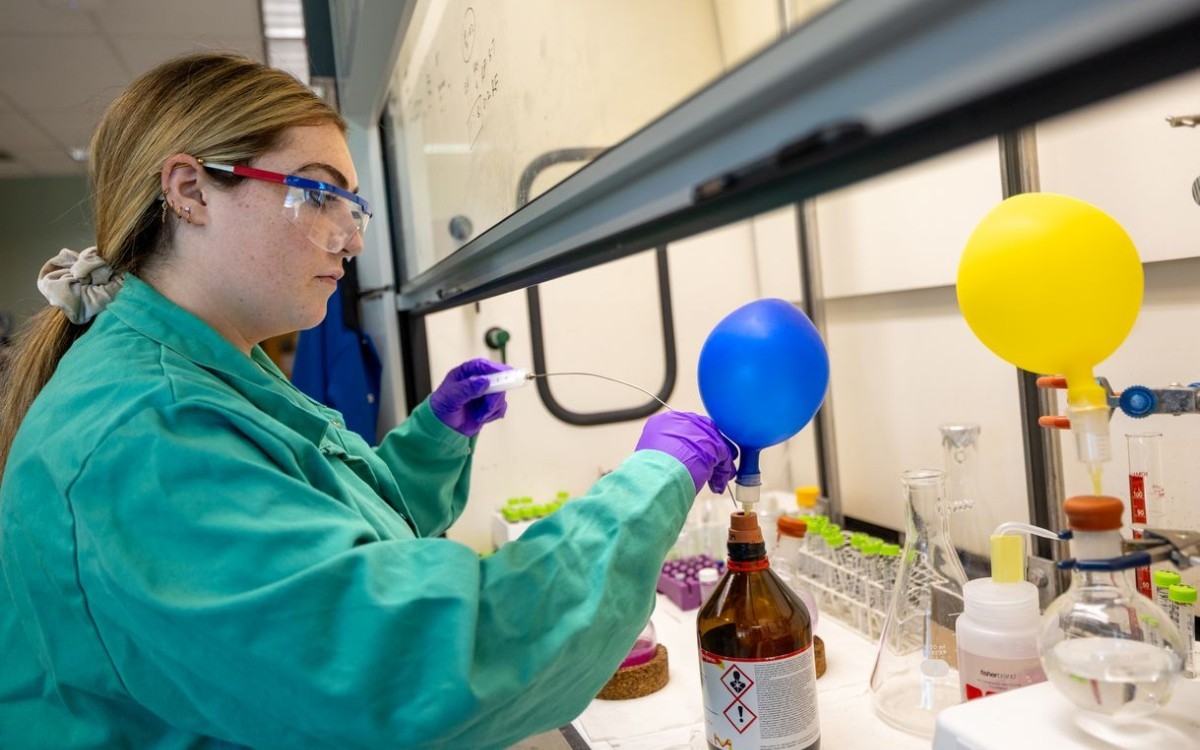
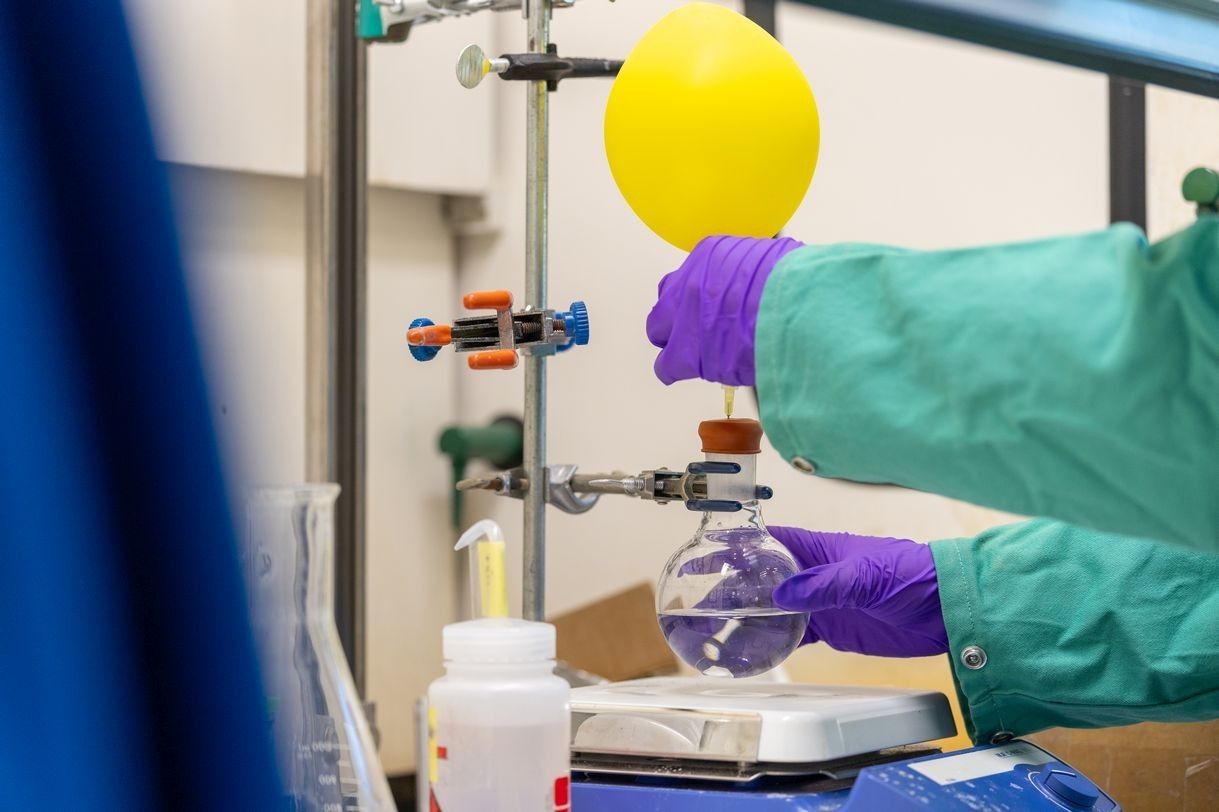
This summer, Casey participated in the Research Experiences for Undergraduates in RNA program where she worked on a project in the Royzen Lab under the mentorship of PhD student Emily Rennells. Their project focused on building a laboratory-made version of a newly discovered class of RNA molecule called “glycoRNA.” The molecule sits on the outer surface of the cell, where cells recognize and respond to each other. A synthetic version of the molecule gives researchers something they can control and study directly.
“Little is known about the possible biological roles of glycoRNA,” Casey said. “This work is important because, due to its location, glycoRNA is thought to play an important role in cell to cell interactions. Observing the behavior patterns of glycoRNA could potentially open doors to broader research on cells.”
The project grew out of Casey’s existing work in the Royzen Lab at the RNA Institute focused on “click chemistry” — a technique being developed for targeted cancer treatments. Casey is using the same “click chemistry” molecules to assemble the synthetic glycoRNA. Casey works on the organic chemistry side, synthesizing a “linker” molecule, while a lab mate handles the biology.
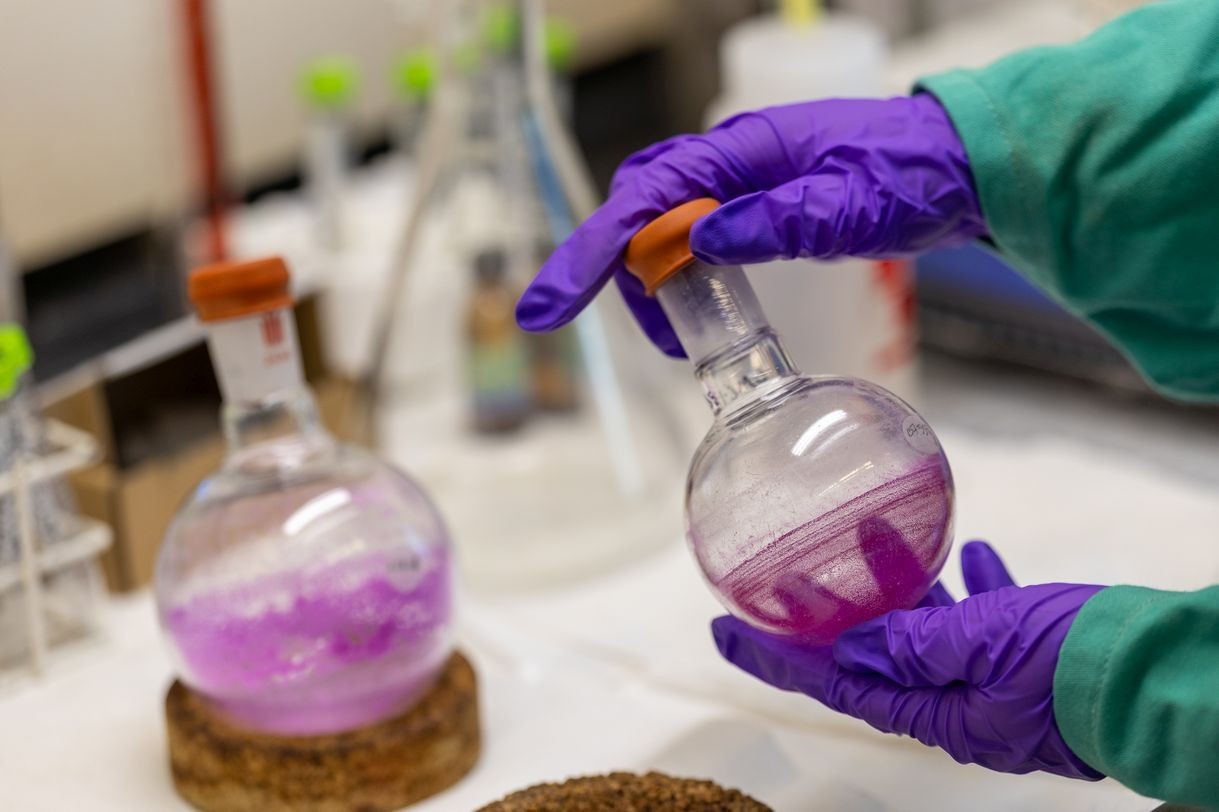
“Working in a collaborative research environment has shown me how organic chemistry can directly contribute to solving real-world problems and improving medical outcomes,” she said. “This opportunity has allowed me to connect what I have learned in class to real-world situations.”
When the Goggles Come Off
Casey’s interest in science to support health doesn't stop at the lab bench. She also belongs to UAlbany's chapter of the National Alliance on Mental Illness, a grassroots organization dedicated to erasing stigma and promoting mental health — a cause she would eventually like to further through chemistry.
“In high school, I learned about the ‘Genomind’ test — a cheek swab screening tool designed to flag mental health medications that might cause adverse side effects in the patient,” Casey said. “I thought that was the coolest thing that has ever been invented and it needs to be studied more. Someday, I want to advance that type of science, combining my knowledge and experience in chemistry to improve mental health treatments.”
On campus, Casey has also found community as a member of Phi Sigma Rho, a sorority for women in STEM.
“Phi Rho allows me to meet and get to know like-minded students and participate in professional development events that further my passion for a scientific career,” Casey said. “One of my favorite events was a graduate panel where we heard the stories of women in graduate school and were able to ask them any questions. We learned about the highlights of their journeys as well as the struggles and advice to get through them. I’m grateful to be part of this strong network of women eager to help each other thrive as we develop as scientists.”
As part of UAlbany's “4+1” combined B.S./M.S. program, Casey will continue her work in the Royzen Lab after graduating in the spring. Next, she plans to gain experience working in a chemistry field before pursuing a doctoral degree.
“Since the beginning, I've felt so supported by Dr. Royzen,” she said. “When I first joined the lab, I worried that as an undergrad, that I didn't know what I was doing. Instead, I’ve always felt like one of the 'team' and I've grown so much because of everyone else in my lab.”