


Maryam Arab
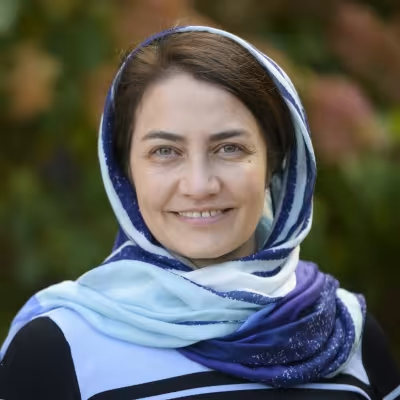
PhD, Computer Science, George Mason University, 2024
About
Dr. Arab is an Assistant Professor in the Department of Computer Science at the University at Albany. Prior to joining UAlbany, she was a Postdoctoral Research Associate in the Human-computer Interaction (HCI) group at the University of Michigan School of Information.
Her research lies at the intersection of HCI, Software Engineering and adaptive AI, with a focus on designing intelligent tools that support programming, problem solving and learning. Her work examines the cognitive and behavioral challenges people face in problem-solving and explores how interactive AI systems can better support human reasoning rather than simply automate it.
Her recent work examines how people develop, debug and learn with AI-assisted programming systems, with particular attention to human reasoning, expertise and effective human–AI collaboration.
Her work has appeared in leading venues including the Conference on Human Factors in Computing Systems (CHI), International Conference on Software Engineering (ICSE), Symposium on User Interface Software and Technology (UIST), Transactions on Software Engineering (TSE) and Empirical Software Engineering (EMSE).
Research
Research Interests
Dr. Arab’s research focuses on designing and studying interactive systems that support programming, debugging, problem solving, and learning. Her work investigates how developers and learners reason through complex software tasks, how expertise shapes those processes, and how intelligent programming tools can better support decision-making, reflection, and skill development.
A central theme of her recent research is human–AI collaboration in programming: understanding how people delegate work to AI, communicate goals and uncertainty, evaluate AI-generated suggestions, and maintain meaningful understanding while using increasingly capable coding assistants. More broadly, her research aims to bridge human and machine intelligence by designing adaptive tools that augment human reasoning rather than simply automate it.