


Alumni Spotlight: Understanding Food Systems and Human Health
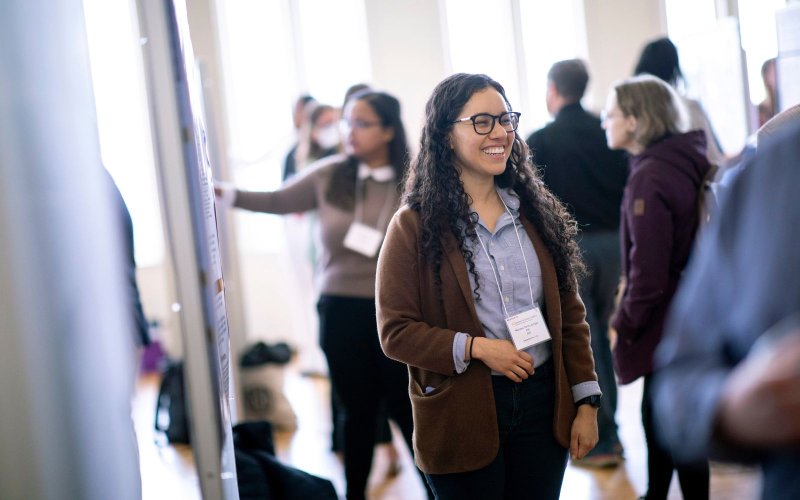
ALBANY, N.Y. (May 11, 2026) — For Mariana Koutsopoulos, studying at the University at Albany's Department of Environmental Health Sciences was an opportunity to explore a question that had long guided her academic journey: how do food systems shape both human health and the environment?
“As an undergraduate, I studied engineering and food science, and later explored the impact of ultra-processed foods on nutrition during my master’s studies. Through that work, I realized that what most interested me was the broader food system— the connections between how food is grown, harvested, transported, consumed and disposed— and how those processes shape both human health and environmental outcomes,” Koutsopoulos said.
Drawn to the UAlbany College of Integrated Health Sciences’ interdisciplinary approach, Koutsopoulos pursued her PhD with a focus on the connections between food, sustainability and public health. Working with Associate Professors Beth Feingold and Xiaobo Xue Romeiko, she contributed to research through Capital Region FRESH, a community-based research project that examines how food recovery and redistribution can improve health outcomes while reducing environmental impact. Koutsopoulos’ focus was on policies in New York designed to reduce food waste and redirect surplus food from farms to those in need via food banks and pantries.
“A central part of my research was building a simulation model to explore how policies could affect food recovery, waste and environmental outcomes,” she said. “We were able to test ‘what-if’ scenarios, including how systems might respond during disruptions like the COVID-19 pandemic, and I received important mentorship from Luis Luna-Reyes at UAlbany's Rockefeller College for this work.”
Koutsopoulos graduated with her PhD in 2025. Now at American University as a post-doctoral researcher, she continues to research food systems, contributing to NSF-funded projects that explore how wasted food can be converted into bioenergy.
“I hope future research supports systems that are not only more sustainable, but also better equipped to handle disruptions like climate events and global pandemics,” Koutsopoulos said.