





Showcase 2026: Exploring Effects of Social Media on Health Among LGBTQ+ Teens
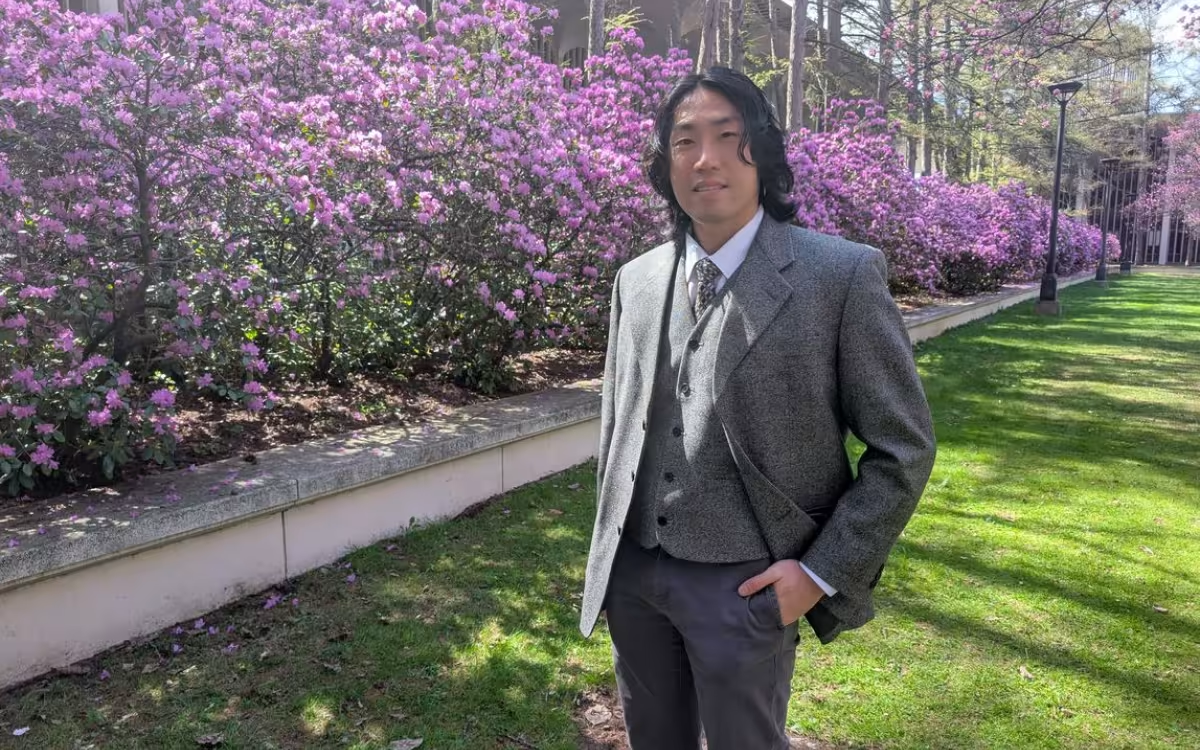
ALBANY, N.Y. (April 22, 2026) — Scrolling on social media isn’t the same as connecting on social media. For LGBTQ+ teens, how they use social media can make a difference, according to research from Clinical Psychology PhD student Jason Choi, a Fellow at the University at Albany’s Center for the Elimination of Health Disparities.
Before attending UAlbany, Choi led community engagement efforts for an adolescent mental health study at the University of Michigan. In this role, he saw firsthand how socioeconomic disparities shape adolescent development and resilience. This, along with his background in psychology, cognitive science and bioethics, led him to pursue a doctoral degree at UAlbany.
“Witnessing this strengthened my commitment to diverse and inclusive research among vulnerable populations facing disproportionate adverse childhood experiences,” said Choi.
Now, as a doctoral student in the Department of Psychology studying under Assistant Professor Sarah Domoff, Choi studies how LGBTQ+ teens use social media and the impact it has on their health. This work is supported by a fellowship from UAlbany’s Center for the Elimination of Health Disparities, an interdisciplinary, campus-wide effort focused on community engagement, advancing health disparities research and increasing the number and diversity of health disparities scholars.
Choi's hypothesis is that active social media use, such as posting, commenting and messaging, is associated with more positive mental health outcomes, while passive use, such as scrolling and browsing, is associated with more negative outcomes such as higher levels of anxiety and depressive symptoms.
“Exposure to harmful content such as cyberbullying, homophobic or transphobic rhetoric, and invalidating discourse can contribute to distress,” said Choi. “This can trigger behavioral patterns like ‘doomscrolling,’ where users continuously consume negative material, leading to anxiety, depression or minority stress.”
He notes that, at the same time, research has shown that some social media use may be protective against negative health impacts.
“Digital platforms can foster supportive communities, identity exploration and access to affirming content, especially for youth who may lack offline support,” Choi said. “These spaces provide validation, community belonging and even resources that may not be available in their immediate environments. I believe that social media can function as both a risk and a protective factor.”
In the next phase of his research, Choi plans to use data from the Adolescent Brain Cognitive Development study, which is following 10,000 children for ten years, starting when they are about 10 years old, to better understand how the brain develops. The data includes demographics, social media use and information about behavior collected from cell phones.
“This work can allow us to understand how teens engage with digital platforms, and how those interactions relate to emotional processes,” said Choi.
Representing the Department of Psychology and the Center for the Elimination of Health Disparities, Choi will present his research at UAlbany Showcase on April 30, a community-wide event that highlights hands-on learning across the University. All are welcome to attend and registration is free.