


Social Work PhD Student Uses Art to Advance Dementia Research
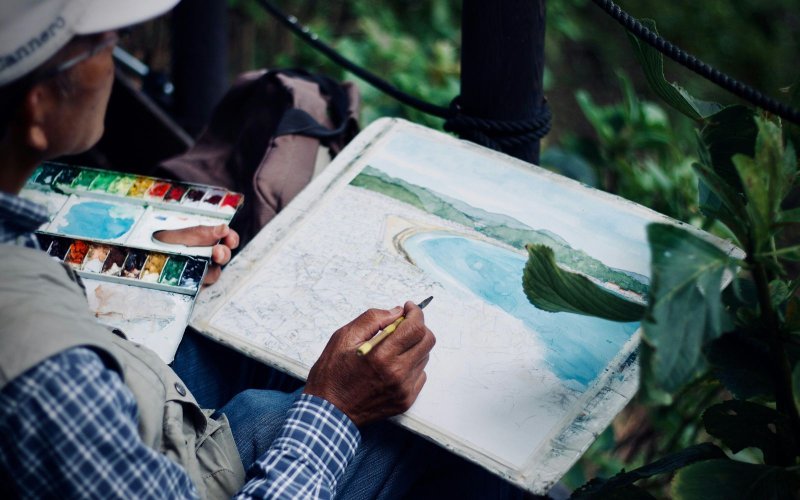
ALBANY, N.Y. (March 24, 2026) — For PhD student Molly Bray-Hayes, dementia research is not about decline. Instead, it is about creativity, connection and listening to people whose voices are too often left out of research. A third-year doctoral student in the School of Social Welfare at the University at Albany, Bray-Hayes is using participatory, arts-based research methods to explore how visual art created by people living with dementia can serve as meaningful data to represent what their lives are truly like.
“A key part of this work is that people living with dementia are involved in every step of research design and implementation,” Bray-Hayes said. “They are the experts on what it is like to live with dementia; I am just a researcher, not an expert on the dementia experience.”
Starting in summer 2026, her work will take place with participants at a dementia day program called Bright Horizons at the Beltrone Living Center in Albany, where she will facilitate arts-based interventions with people experiencing cognitive changes. Through drawing, painting and other creative means, participants will have opportunities to express themselves in ways that extend beyond spoken language.
Arts-based methods, Bray-Hayes said, can help dismantle stigma and open new pathways for understanding—particularly for people in more advanced stages of dementia who may find it more challenging to communicate verbally.
“People living with dementia are whole people, with valuable experiences to share,” she said. “Arts-based methodologies go beyond what can be represented through strictly verbal communication and expand to new ways of understanding a person’s lived experience.”
Bray-Hayes' decision to bring art and dementia together in her academic work was not immediate. In her mid-20s, Bray-Hayes’ mother—a mathematics professor—was diagnosed with Alzheimer’s disease. She lived with the disease for six years.
“I think I was convinced that the topics of art and dementia were too personal for me to incorporate into any professional capacity,” Bray-Hayes said. “My instinct to avoid these topics was a protective one, but I’m glad I trusted myself enough to move past that initial response.”
She now sees her research as both professionally meaningful and personally restorative.
“Oftentimes I feel my mother’s love of research and academia with me when I am writing or developing ideas,” she said. “Bringing these two parts of my background into my research has been a huge source of motivation.”
As she prepares to implement her dissertation research in the local community, Bray-Hayes recently completed training and certification through the Arts & Minds Program, which equips facilitators to lead arts-based interventions for people living with dementia and their caregivers.
“Meeting together around art can be a real place of power-leveling,” she said. “There are no right or wrong answers, no ‘correct’ way to experience or create art.”
That openness can be especially meaningful for people navigating cognitive changes, which Bray-Hayes said are often accompanied by shame and reminders of loss.
“People living with dementia have shared with me that navigating cognitive changes can feel like a series of failures,” she said. “When accessible, engaging with the creative arts taps into a deep, in-our-bones form of expressing and understanding that is uniquely human.”
Bray-Hayes believes arts-based and participatory qualitative research approaches can reshape the future of dementia care and social work practice. While much medical research for dementia focuses on prevention and treatment, she said social research can help challenge fear-driven narratives and deepen community understanding of what it means to live well with dementia.
“This requires innovative and creative approaches that center the experiences and opinions of people who are currently living with cognitive changes,” she said. She also emphasizes the broader social responsibility to address inequities in diagnosis, care and representation.
Bray-Hayes' work is currently in the developmental stage, with the artistic medium and schedule for sessions still being finalized.
“Molly skillfully balances creativity, an inquisitive nature and a dedication to developing her ability to conduct research and engage in scholarship,” said Eric Hardiman, associate professor and mentor to Bray-Hayes. “Her contributions are always thoughtful, typically offering a unique perspective on challenges that others might miss. Molly’s peers also recognize the value of her ideas and input, and it is clear to me that she is both an essential collaborative partner and a future leader.”