





UAlbany Researcher Part of Team Awarded $3.4M to Study How DNA Damage Drives Aging and Cancer
By Erin Frick
ALBANY, N.Y. (July 27, 2026) — The same type of molecular wear and tear that turns hair gray can also alter genetic code in our organs, with harmful effects when these mutations go unrepaired.
University at Albany’s Tom Begley, Distinguished Professor of Biological Sciences and associate director of the RNA Institute, is part of a multi-institution research team recently awarded $3.4 million from the National Institute on Aging to study how DNA damage accumulates with age and, when left unchecked, can contribute to cancer and other aging-related diseases.
DNA “adducts” are altered building blocks in our genetic material which can be dangerous. They are often caused by exposure to an environmental toxicant or carcinogen that enters the body and causes damage. Some of these adducts are repaired by the cell's natural repair machinery; others are not. When they go unrepaired, adducts can cause mutations that can accumulate and eventually lead to cell death, organ deterioration and disease.
As adduct load increases with age, so does the risk of many types of cancer.
“Cell death and mutations can result from DNA damage over time,” said Begley, who also holds the position of Williams-Raycheff Endowed Professor in Biology at UAlbany. “Essentially, the same fundamental processes that cause our hair to turn gray also cause our organs to falter. Over the course of this project, we hope to identify which adduct repair pathways turn on or off with age, and potentially identify new adducts that occur during aging.
“By identifying which DNA lesions accumulate in human cells and which repair pathways remove them, this work will reveal new biomarkers of disease risk, improve understanding of how aging-related diseases develop, and support future prevention or treatment strategies that protect genome function, prevent cancer and promote healthy aging.”
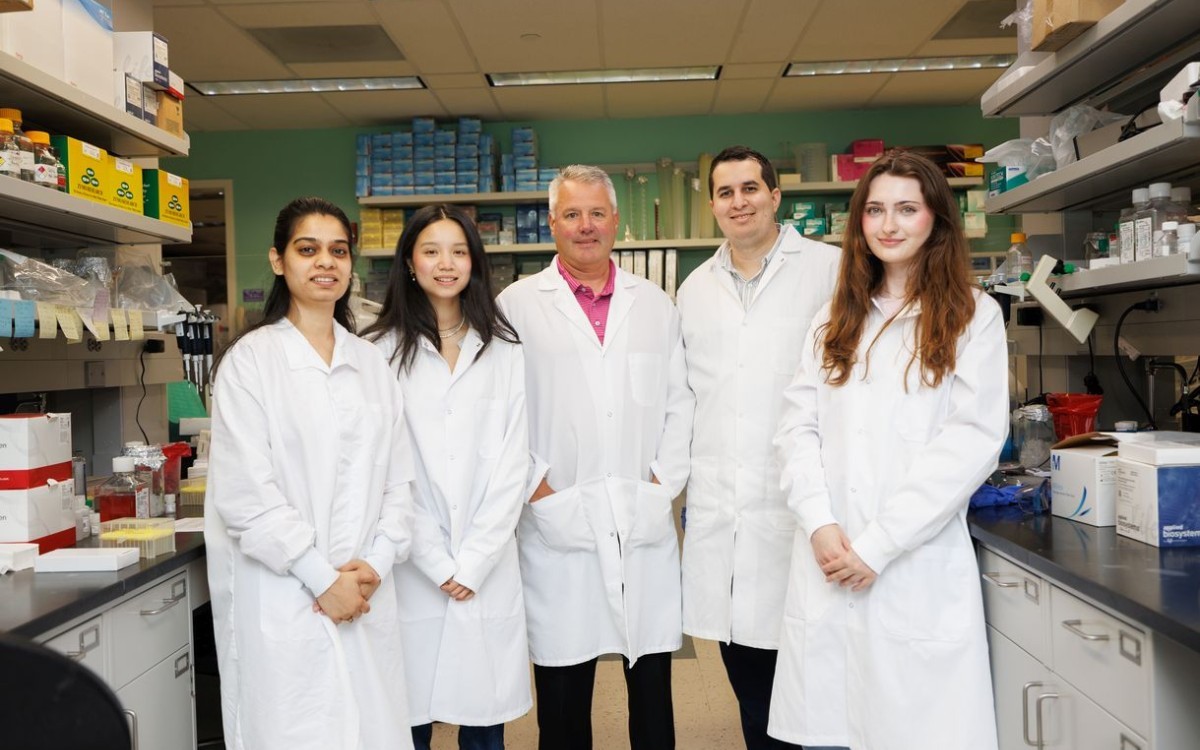
The planned work reflects a true “team science” approach, drawing on longstanding relationships among the investigators. Begley’s lab will collaborate with researchers based at Massachusetts Institute of Technology (MIT), Brown University and Harvard, with each institution bringing a complementary technique and expertise to the project.
“We're excited to do the work and I’m looking forward to the collaborations, which model a team approach to advancing science for the public good,” Begley said.
“Our collaborators at MIT have a mass spectrometry-based platform that can measure more than 50 adducts from DNA samples simultaneously — a significant advance over conventional one-at-a-time approaches. Collaborators at Brown and Harvard Medical School work on genetically modifiable cell senescence systems, enabling the study of different DNA repair pathways in aging cells. Harvard School of Public Health will bring a highly sensitive assay that can measure multiple repair pathways simultaneously.
“Here at UAlbany, we will contribute systems-level technologies for studying gene expression, including tools to model how messenger RNAs and proteins are regulated during these processes.”
This investment by the National Institute on Aging, part of the National Institutes of Health, carries importance beyond the immediate science.
“As the global population ages, honing our understanding of the mechanisms that drive aging-related disease will be critical to helping people lead healthier, fulfilling lives as they grow older,” Begley said. “Not only will this project contribute to that effort, it will also allow us to train students and early career researchers who will carry the science forward.”
“DNA damage is the thread connecting how we age and why cancer develops — and studying it means studying the biology of life itself,” said UAlbany PhD student Chetna Mathur. “As a PhD student in the Begley Lab, I'll be working on the systems-level side of the project — studying how gene expression and RNA regulation shift as DNA damage accumulates.
“I was drawn to this work because it connects molecular-level damage to something everyone experiences: aging. Being part of a team spanning UAlbany, MIT, Brown and Harvard has already shown me how collaborative modern research is, and I'm excited to build skills I'll carry into my career while contributing to work that could shape how we understand and prevent age-related disease.”