




Andam Lab Traces How Bacteria Swap DNA With New $2 Million NIH Grant

By Erin Frick
ALBANY, N.Y. (Nov. 9, 2026) — Cheryl Andam’s research sounds a bit like something from a work of science fiction. Or, as she puts it, a walk in the park.
“Imagine hiking along a wooded trail,” said Andam. “You pass a cluster of mushrooms as birds fly overhead. But you don’t just take them in as part of the scenery. Instead, you're able to absorb a bit of each organism's DNA into your own chromosomes, picking up whatever useful features they might have. Bacteria are able to do that.”
University at Albany's Cheryl Andam is an associate professor of biological sciences and associate dean for natural sciences and mathematics in the College of Arts and Sciences. She explained that bacteria can share DNA, essentially absorbing their neighbors’ traits and working them into their own genetic makeup. This happens both within and across bacterial species.
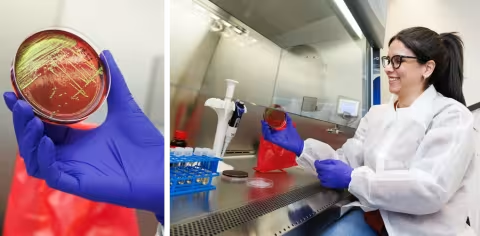
“My lab focuses on understanding the processes that help bacteria evolve,” Andam said. “This is especially critical among bacteria that cause deadly infections, some of which are quickly evolving to resist once-effective drugs.”
Andam recently received $2 million from the National Institute of General Medical Sciences, part of the National Institutes of Health, to study how bacteria swap DNA across species, what it means for bacterial evolution and potential implications for human health, agriculture and industry.
Evolution, Expedited
The mechanism at the heart of Andam’s research is something called horizontal gene transfer — the movement of genetic material between organisms that doesn’t involve inheritance from parents to offspring.
When external DNA finds its way into a bacterial cell, the cell can incorporate that DNA into its genome through a process called recombination. Through recombination, a bacterium can gain traits that might otherwise take millions of years to evolve.
There are three known ways this can happen. Some bacteria scoop up DNA released into the environment after nearby cells die and decompose. Others connect directly to neighboring bacteria by building a physical tunnel that allows DNA to pass from one cell to another. Viruses can also get involved — transporting DNA from cell to cell along the chain of infection.
“We’ve heard of chimeras in Greek mythology,” Andam said. “That’s actually what we see in bacteria. You have an organism where one-third of its DNA comes from this other species, a third from another species, and so on.”
These new combinations raise questions about how to classify such organisms and implications for human health.
“If you’re infected by chimeric bacteria that have developed new strengths, this can create new challenges for diagnosing a patient’s condition,” Andam said. “And, if the new superorganism has ‘learned’ how to resist antibiotics that once worked, how do we go about treating that infection?”
Back to the Evidence Board
Researchers in the Andam Lab are working across bacterial species to find answers.
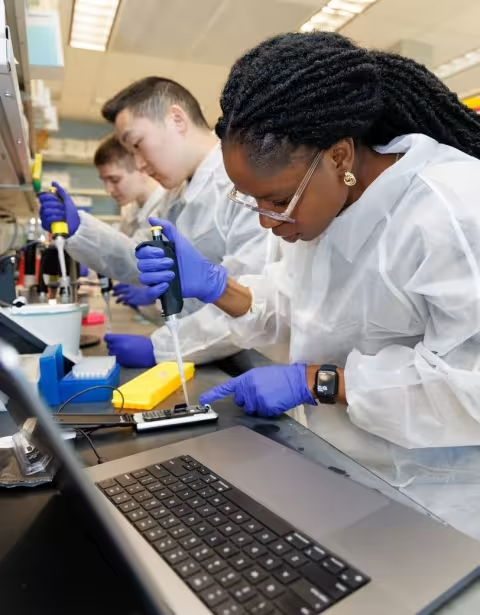
By sequencing DNA from different types of bacteria extracted in both laboratory and clinical settings, Andam’s team is able to create “maps” that draw literal lines between bacteria with matching traits, allowing them to track how the traits developed and who “learned” what from whom. The goal is to understand how bacteria become better at causing infection and spreading it far and wide.
To this end, the team is investigating:
- Bacteria that cause bloodborne infections, such as Staphylococcus aureus (staph), seeking to understand how these pathogens become resistant to multiple drugs, invade normally sterile parts of the body and evade the immune system;
- Bacterial pathogens that cause foodborne illness, such as Escherichia coli (E. coli), work being done with partners at the New York State Department of Health; and
- Zoonoses — diseases that jump from animals to people — looking at how bacteria that normally live in animals acquire the DNA they need to infect humans.
Genome Half Full
Bacterial evolution is a problem when human health is at stake, but not all bacteria are bad. For example, soil bacteria can carry genes that help crops withstand drought. Moving those genes into bacteria that live alongside crops in drought-prone regions could support agricultural climate resilience.
The work also has implications for the pharmaceutical industry. Many “biologic” vaccines and medications rely on compounds produced by living microbes. Understanding how to promote certain traits in those microbes could make them more productive.
“A question we’re asking is, how can we promote beneficial microbial traits while minimizing the negative effects of these DNA transfers?” Andam said. “From treating disease to improving agriculture, we have a lot to gain by better understanding how and why bacteria exchange DNA.”
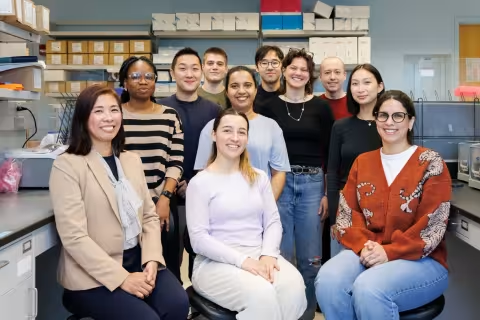
Andam’s growing team spans undergraduate students to postdoctoral scientists who came to her laboratory from across the country and the world.