





Accessibility for all: 5Q with Anne McGrath

ALBANY, N.Y. (Oct. 7, 2026) — When people think about accessibility, they often think about physical spaces — ramps, elevators and automatic doors. But that’s only part of it: Accessibility also extends to our digital environment. Websites, course materials, forms, documents, videos, and online services all shape people’s experience of the University. If someone can't access those resources, they can't fully participate.
We asked Anne McGrath, UAlbany’s electronic and information accessibility officer, to explain UAlbany’s focus on making digital spaces accessible to every member of the campus community.
Why does digital accessibility matter?
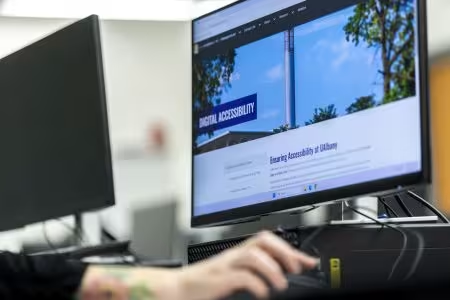
At the University at Albany, every student, employee and community member should be able to learn, work and engage without barriers.
Digital accessibility is about removing barriers and creating equitable access to information, services and opportunities. It's a shared responsibility that touches nearly every aspect of campus life, from the technology we purchase to the documents we create and the courses we design.
While state and federal requirements dictate accessibility, our commitment goes beyond compliance. It reflects the kind of community we want to be — one where everyone has the opportunity to succeed and unleash their greatness.
How do you build a campus-wide program that makes accessibility everyone's responsibility?
Building a culture of accessibility takes time, support and participation from across the University. That's why we're approaching this work in phases:
- Awareness — Helping the campus community understand why accessibility matters and how it affects everyone
- Acclimation — Providing training, templates, and practical tools that make accessibility part of everyday work
- Integration — Embedding accessibility into routine processes, projects, and decision-making across departments
- Culture — Reaching a point where accessibility is simply part of how we work
The common thread across each phase is shared responsibility. Accessibility becomes sustainable when it's woven into existing workflows rather than treated as an extra task.
Our goal is to build a network of accessibility champions across campus, provide them with the resources they need to succeed and celebrate their contributions. Lasting change happens when accessibility belongs to the entire community, not just a single office or committee.
How do you prioritize accessibility improvements and incorporate them into new technology?
Accessibility is an ongoing commitment, not something we're waiting until a deadline to address.
Because we can't tackle everything at once, we focus first on the services that have the greatest impact on students, employees and the public — including admissions, registration, financial aid, course materials and University websites.
We prioritize barriers that prevent people from accessing information or completing important tasks, and we use a combination of automated tools and hands-on testing to identify and address issues.
At the same time, we're working to prevent new barriers from being created. Accessibility is increasingly becoming part of how we evaluate and implement technology so we can make informed decisions about the tools and services our community relies on.
Our long-term goal is simple: Make accessibility part of every stage of the technology lifecycle, from planning and implementation to ongoing support and improvement.
What does an inclusive digital campus experience look like?
An inclusive digital campus is one where everyone can easily access information, complete tasks and participate in University life.
Accessibility benefits everyone. Features like captions, clear navigation, structured documents, and well-designed digital experiences make it easier for all users to engage with our content and services.
We measure progress in several ways, including improvements to the accessibility of our digital content and platforms, participation in training and outreach efforts, and the extent to which accessibility is becoming part of everyday work across campus.
And we welcome feedback from our community. Hearing directly from students, faculty, staff and visitors helps us better understand where barriers exist and where we can continue to improve.
What resources are available and how can people get involved?
There are many ways to learn about accessibility and contribute to this work.
The Electronic & Information Technology Accessibility (EITA) Committee maintains the University's Digital Accessibility website, which offers practical guidance, resources, and training opportunities tailored to different roles across campus.
Available resources include:
- Foundational and advanced training through the University's partnership with Deque University
- Guidance from the Center for the Advancement of Teaching, Learning, and Online Education (CATLOE) on creating accessible course materials
- Accessibility resources such as templates, document guides, alt -text guidance, checklists, and other practical tools
Getting involved can be as simple as participating in training, applying accessible practices in your daily work, reporting barriers when you encounter them, or helping raise awareness within your department.
Accessibility is a community effort, and everyone has something to contribute. If you'd like to learn more or get involved, please complete our Get Involved with Digital Accessibility at UAlbany form.