


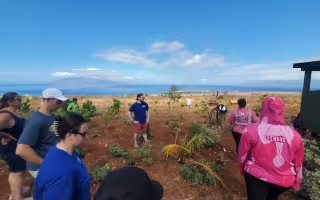
Exploring Homeowner Decisions After Disaster Strikes
Alex Greer, an associate professor at the College of Emergency Preparedness, Homeland Security and Cybersecurity, has spent more than a decade studying hazard adjustments and relocation decisions in the wake of weather and climate disasters.
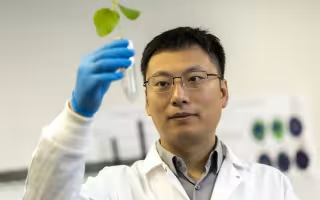
UAlbany Researcher Studying Impact of PFAS ‘Forever Chemicals’ on Edible Crops, Food Quality
Weilan Zhang, an assistant professor in the University at Albany’s College of Nanotechnology, Science, and Engineering, was awarded nearly $420,000 from the National Science Foundation to study how the accumulation of toxic “forever chemicals” in edible plants impacts food quality and safety.
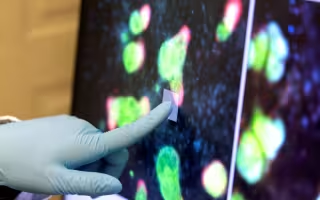
$380K in Bridge Funding Sustains Critical UAlbany Research
The bridge fund is awarding $381,435 to projects impacted by federal funding cuts or delays in areas ranging from extreme weather decision-making to RNA research and a critical analysis of how scientific data is misused to fuel conspiracy theories about demographic trends.

Q&A with Augustus Klein: Advancing Transgender Health Research, Reducing Stigma
Gus Klein shares insights on his evolution as a researcher, the importance of involving impacted communities in work designed to support them, what he wishes more people understood about health care in the trans community, and what he is most looking forward to in his new role at UAlbany.
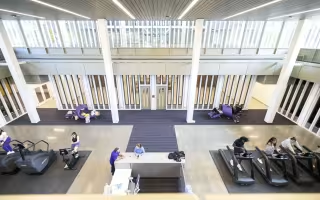
Colonial Quad Renovation Earns LEED Gold for Sustainable Materials and Design
The $46.9 million project, completed in August 2024, included a gut renovation of Paine and Zenger residence halls, and the transformation of the quad’s former dining hall into the Colonial Recreation & Wellness Center.
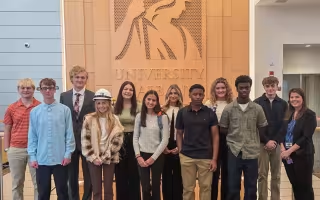
Local High School Seniors Explore New Horizons Through UAlbany Partnership
High school seniors from the Questar III New Visions Emergency Preparedness, Informatics, Cyber and Homeland Security program gathered at ETEC to present projects they have brought to life over the course of this semester.
Finance & Administration Celebrates Outstanding Employees
Eight employees were honored with divisional awards for their dedication and service to the University.