





UAlbany Institute Leads Discussion to Advance Climate Adaptation Across New York

By Mike Nolan
ALBANY, N.Y. (Oct. 23, 2025) — Leaders from the University at Albany’s Institute for Transformational and Ecosystem-based Climate Adaptation (ITECA) and New York State Adaptation Practitioners Network co-hosted a fall convening in Albany last week.
The second annual event invited government, academic and non-profit climate adaptation practitioners from across the state to connect, network, share knowledge and best practices, discuss policy and engage with students who are interested in becoming the next wave of climate change adaptation practitioners.
Informed by feedback from last year, the agenda featured two days of discussions at UAlbany’s ETEC research and development complex, along with site visits to the Radix Center for Ecological Sustainability, a nonprofit organization in Albany’s South End, and Albany’s Beaver Creek water treatment facility.
Radix runs various programs related to food and climate justice, including planting street fruit trees, tending neighborhood food gardens, offering youth employment and education and hosting community composting. The Beaver Creek facility has been challenged with handling unprecedented volumes of increased rainfall that combine with untreated sewage and empty into the Hudson River.
“ITECA co-hosted this convening to bring together New York’s leading climate change adaptation professionals with students to share innovations and generate cutting-edge solutions,” said Ríobart (Rob) Breen, director of ITECA and lecturer in UAlbany's Department of Geography, Planning, and Sustainability. “We shared new thinking on nature-based solutions and new uses of technology. People left with stronger collaborations, clearer direction and a sense of hope and optimism that together we can build resilience in our communities and ecosystems.”
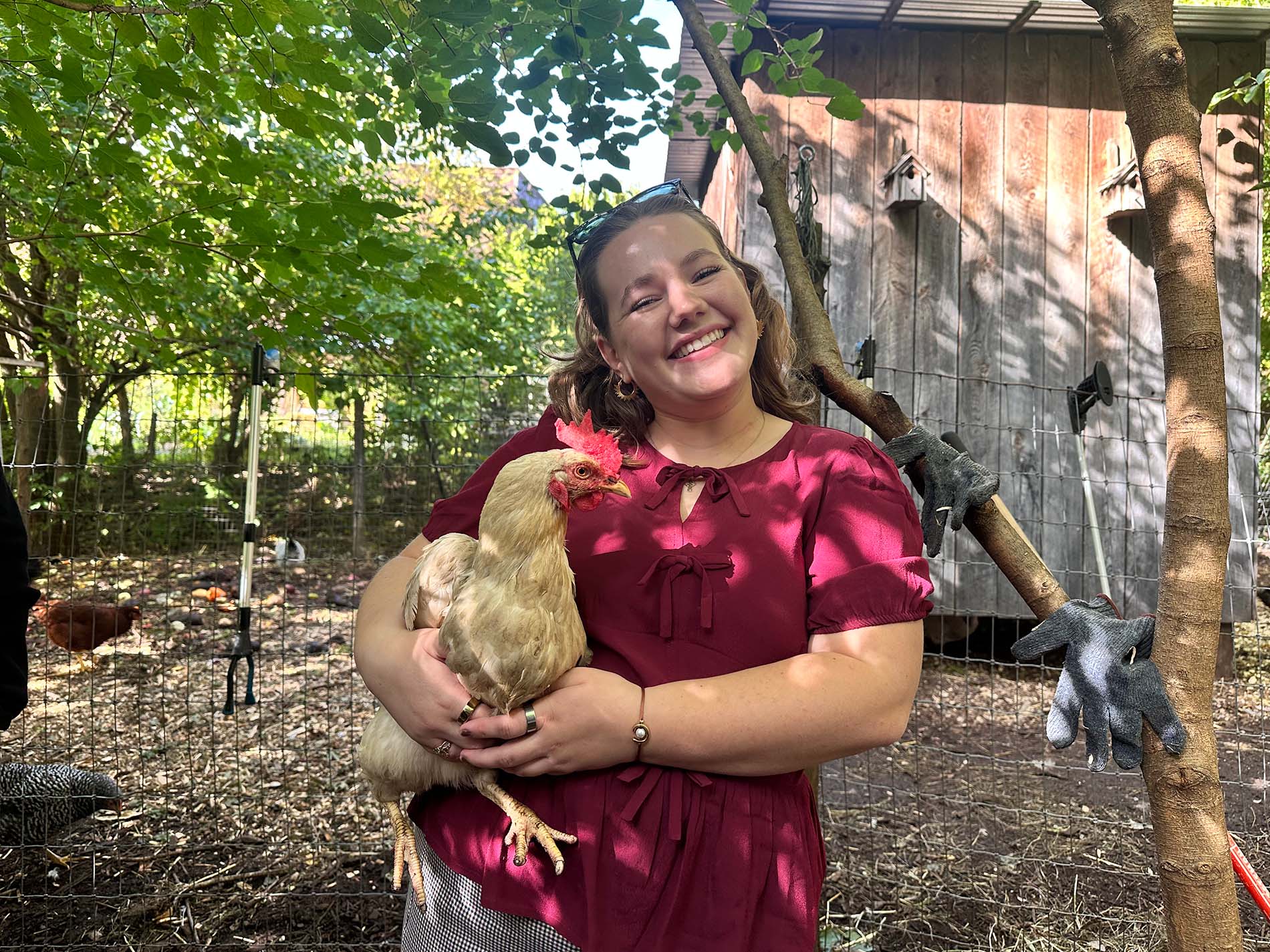
“College students have a lot of enthusiasm and energy, and I think they are looking for practical ways to put their skills and energy to use,” added Radix Educational Director Scott Kellogg. “By connecting with young people through events like this, they will be far more effective environmental advocates.”
In September 2023, researchers in UAlbany’s Department of Geography, Planning, and Sustainability at the College of Arts and Sciences received $5 million from the U.S. Department of Agriculture’s Forest Service to launch a project aimed at engaging the community to plant trees to reduce extreme heat in urban heat islands and expand access to urban green spaces.
The funding was, in part, used to establish ITECA. The institute is focused on engaging the local community and using nature-based solutions to adapt to climate change and revitalize Albany’s urban forest.
Over the summer, UAlbany students from the Hudson-Mohawk Climate Corps, an initiative led by ITECA, prepared and planted more than 200 urban trees in the city of Albany, including many along South Pearl Street.
Their goal is to plant more than 500 trees over the next five years in low-canopy neighborhoods across the city.
With a $50,000 campus investment, the students are also beginning to grow climate-adapted native tree seedlings in UAlbany’s greenhouse and a new open-air tree nursery sited on a plot of land near Indigenous Quad. This will provide an ongoing supply of trees to meet the region's tree planting goals. Students will also learn entrepreneurship and business administration skills as they operate the nursery.
“Having accessible, human-powered adaptation work is important for the community,” said Sky Eigen, a graduate student in UAlbany’s Biodiversity, Conservation and Policy program, staff member at ITECA and crew lead for the Hudson-Mohawk Climate Corps. “Climate issues aren’t going anywhere. It’s up to our generation if we want to either turn a blind eye or address it.”
The New York State Adaptation Practitioners Network aims to connect professionals who advise local governments on climate adaptation and implementing solutions.
The network, managed by Rebuild by Design, regularly hosts meetings, provides training and resources, and supports the sharing of knowledge and collaborative implementation of climate adaptation strategies among its members across the state.