



Protesters at the New York State capital Protesters at the New York State capital

Advanced Standing Students

School of Social Welfare

Advanced Standing

We are delighted that you are considering the University at Albany School of Social Welfare for your MSW. On behalf of the Dean, our faculty, staff and current students, welcome! 

The Advanced Standing program will be challenging but exciting. To help you plan for the Advanced Standing program, this website will provide you with information regarding registering for courses, field practicum, selecting a concentration, funding opportunities and  more. Please be sure read the material carefully and bookmark this page.

The Advanced Standing program is reserved for students who graduated not more than six years ago from a baccalaureate degree program accredited by the Council on Social Work Education. The Advanced Standing Program is full time and begins in late May.

Important Dates
  • March 26, 2025 - Accepted Students Day, 4:30p.m. to 5:30 p.m.
  • April 2, 2025 - Registration for Summer Classes begins at noon
  • April 2, 2025 - Advanced Standing Field Applications due
  • May 28, 2025 - Academic Orientation, 9 a.m. to noon
  • May 28, 2025 - Summer classes for Advanced Standing students begin at 1 p.m.
  • May 21, 2025 - Exemption Exam, 10 a.m. to noon
  • August 21, 2025 - Exemption Exam, 1:30 p.m. to 6 p.m.
  • August 25, 2025 - First day of the Fall 2025 semester

For more information, see the Summer and Fall Academic Calendar.

People stand before Milne Hall

Curriculum

Our curriculum is designed to prepare you to assess and address social needs and to help individuals, families, groups, and communities develop and function effectively.

Our curriculum offers:

  • An eclectic theoretical grounding within a systems framework for assessing multiple points and levels for potential intervention.
  • Evidence based multi-system and multi-level interventions which may focus simultaneously on individuals, families, groups, communities, organizations, and/or society
  • A perspective dedicated to the realization of a fair and just society and institutions that are diverse, inclusive and equitable.

You'll gain a generalist perspective in your foundation courses and then move on to one of two Advanced Concentrations: Clinical Concentration or MACRO Concentration.
 

Advanced Standing Clinical Concentration

In the Clinical Concentration, you'll receive advanced standing credit for up to 21 credits (you must have B or better in comparable undergraduate courses). Courses are:

  • SSW 600, Soc Welfare Policy
  • SSW 610, Human Behav Soc Env 1
  • SSW 620, Micro Practice 1
  • SSW 630, Macro Practice 1
  • SSW 650, Field Instruction 1
  • SSW 660, Research 1
  • SSW xxx, elective (3 credits)

Classes begin in the Summer, usually during the last week of May. Summer classes are two days per week. Field placement is three days per week.

Summer (10 credits)

  • SSW 611 Human Behav Soc Env 2
  • SSW 621 Micro Practice 2
  • SSW 651 Field Instruction 2

In the Fall and Spring, classes are two or three days per week. Field placement is two days per week.

Fall (16 credits)

(effective for cohort entering Summer 2001; implemented Fall 2001)

  • SSW 631 Macro Practice 2
  • SSW 661 Eval Clinical Practice
  • SSW 7xx Advanced Behavior
  • SSW 7xx Advanced Practice
  • SSW 752 Field Instruction 3

Spring (13 credits)

  • SSW xxx elective (3 credits)
  • SSW 7xx Advanced Policy
  • SSW 7xx Advanced Practice
  • SSW 753 Field Instruction 4

Electives may be chosen from courses classified as Advanced MACRO, Advanced Practice, Advanced Policy, Electives, or any graduate level course in another department. Clinical Concentration students may also take MACRO Core Courses as electives. 
Advanced Standing MACRO Concentration

In the Advanced Standing Macro Concentration, you'll receive advanced standing credit for up to 21 credits (you must have B or better in comparable undergraduate courses). Courses are:

  • SSW 600, Soc Welfare Policy
  • SSW 610, Human Behav Soc Env 1
  • SSW 620, Micro Practice 1
  • SSW 630, Macro Practice 1
  • SSW 650, Field Instruction 1
  • SSW 660, Research 1
  • SSW xxx, unspecified (3 credits)

Classes begin in the Summer, usually during the last week of May. Summer classes are two days per week. Field placement is three days per week.

Summer (10 credits)

  • SSW 611 Human Behav Soc Environ 2
  • SSW 621 Micro Practice 2
  • SSW 651 Field Instruction 2

In the Fall and Spring, classes are two or three days per week. Field placement is two days per week.

Fall (16 credits)

(effective for cohort entering Summer 2001; implemented Fall 2001)

  • SSW 631 Macro Practice 2
  • SSW 665 Research Methods in Social Welfare Management
  • SSW 790 Human Serv Org in a Changing Env.
  • SSW 792 Community Building SSW 752 Field Instruction 3

Spring (13 credits)

  • SSW 791 Managing Systems in Human Service Org
  • SSW 7xx Advanced Policy* 
  • SSW xxx elective (3 credits)
  • SSW 753 Field Instruction 4

*Although you may take an advanced policy course from any of the advanced policy options, SSW 782 International Social Work is dedicated to MACRO issues.

Electives may be chosen from courses classified as Advanced MACRO, Advanced Practice, Advanced Policy, Electives, or any graduate level course in another department. Direct Practice students may also take MACRO Core Courses as electives. 
Overview

If you receive 21 advanced standing credits you must register to take three courses (10 credits) during the summer:

  • SSW 611 Human Behavior and Social Environment II
  • SSW 621 Micro Practice II
  • SSW 651 Field Instruction II

The School of Social Welfare considers these three classes a full course load for the summer semester. You should register for these courses on April 2 at noon or thereafter. You do not need to meet with your academic advisor before registering for these three courses. Please note classes don’t open until registration opens in order to hold seats for you - they are not full.

All incoming Advanced Standing students take the same classes (RSSW 611, 621 and 651). You will be assigned an academic advisor at the orientation on May 28.

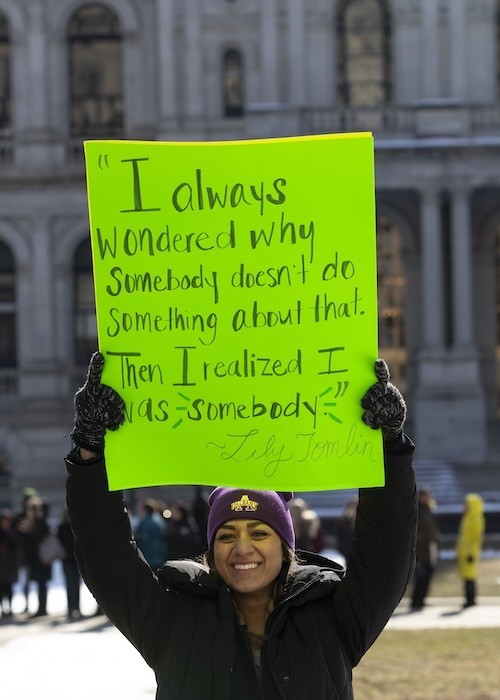
Student holds placard with quote from Lily Tomlin that reads "I always wondered why somebody doesn't do something about that. Then I realized I was somebody."

If you have questions, please contact the School of Social Welfare Help Desk ([email protected] or 518-442-5320) to connect with someone who can assist you.

If you did not receive 21 advanced standing credits, you may be required to take an additional course during the summer.  

The School of Social Welfare offers SSW 600 Social Welfare Policy and Services or SSW 660 Research Methods during the summer semester. If needed, you have the option of enrolling in one of these courses. Search the Schedule of Classes for the times and dates for these classes.


Things to Do

Obtain your PIN and AVN

You will register for courses using MyUAlbany. In order to register, you will need your Personal Identification Number (PIN) for MyUAlbany and your Advisement Verification Number (AVN) for Summer 2025.  

  • The University will provide the PIN and directions for using MyUAlbany. This notice will be sent to the email address listed on your graduate application. The email will be sent one to two weeks after you confirm your acceptance. If you do not receive this email, contact the Information Technology Services Help Desk at 518-442-3700.
  • The School of Social Welfare will provide your AVN. Your AVN is used to verify that you’ve received academic advisement about the courses to take for the upcoming semester and are moving toward completing the degree requirements in an academically feasible manner. It will be emailed to students who have accepted admission into the Advanced Standing program on Wednesday, April 2 at noon. The AVN will be emailed directly to your Albany.edu email address ONLY! (In future semesters, you will receive your AVN directly from your academic advisor. )

Please log onto MyUAlbany and familiarize yourself with the system before you register. If you have questions about MyUAlbany or your PIN, call the Information Technology Services Help Desk at 518-442-3700 for assistance. If you have questions about your AVN or social work courses, please contact the School of Social Welfare Help Desk at 518-442-5320 or [email protected].

Advisement and registration for Fall 2025 will take place during the summer semester. The School of Social Welfare reserves a certain number of seats in Fall courses for advanced standing students.

Learn About Exemption Examinations and Courses

Exemption exams are a great option to consider if you did not receive 21 Advanced Standing credits. 

If you have the knowledge of the generalist social work courses and did not receive Advanced Standing credit for the policy, human behavior or research course, you can be granted an exemption from selected courses by passing the appropriate exemption examination. You'll then substitute 3 credits of electives for each course.  

You are eligible to take exemption exams for the following courses:  


SSW 600- Social Welfare Policy and Services

This course is an introduction to the analysis of social policies and programs, based upon frameworks of policy dimensions, values and knowledge.  

Objectives include:  

  • knowledge of selected social policies and programs in historical and contemporary context
  • awareness of differential impact on at-risk oppressed populations
  • understanding of political, economic, ideological context and role of social values in social policy formulation, modification, change, monitoring and evaluation
  • ability to analyze critical policies and their implications for social work practice including issues of social and economic justice, discrimination and oppression


SSW 610- Human Behavior and Social Environment I

This is an introductory course that focuses on bio-psycho-social development and the nature and impact of oppression and discrimination as individuals and families transact with their environment through the life cycle.

Objectives include: 

  • understanding and evaluating different theoretical perspectives and empirical knowledge about human development
  • understanding interactions among human biological, social, psychological, economic, cultural and environmental systems
  • understanding factors affecting development of women, people who belong to ethnic and racial minority groups, people who identify as non-heterosexual and non-cisgender, people with disabilities and other emerging and historically oppressed groups
  • understanding age-related tasks associated with different life stages as affected by culture, economics, historical time and gender
  • understanding the effect of oppression, discrimination, privilege and power


SSW 660- Introductory Research Methods

Introduction to research methods in social work is a generalist course that focuses on a variety of methodological techniques with an emphasis on social welfare practice.  

Objectives include:  

  • defining social work research problems
  • developing and testing hypothesis
  • the logic of causal inference, sampling, measurement including reliability and validity
  • basic skills in data analysis and research utilization
  • ethical considerations
  • evaluating quality and relevance of research studies for practice and policy
  • understanding the complex relationship between human diversity and the research process

In addition this course will cover the basic concepts and principles of qualitative methods.


Additional Information

Exemption exams will be given on Wednesday, May 21 from 10 a.m. - noon. There will be another opportunity to take the exemption exams on August 21.  

Exemption exams are only available to matriculated students (accepted into the MSW program) and may only be taken once. All exams are closed book.  Since exemption exams are based on previous learning, there are no study materials available. If you think you have covered the course content in other classes, we recommend you review previous textbooks and notebooks. All exams are short answer and essay, except for the SSW 660 Introductory Research Methods exam, which is multiple choice.

If you wish to take one or more exams,  reserve a place by emailing the School of Social Welfare Help Desk ([email protected]) or calling 518-442-5320.

If You're Considering Changing Program Status

You are able to change program status to full time or part time, but your advanced standing credits will not apply toward the full time or part time program. You would need to complete 60 credits if you opt for the full time or part time program. Please note the School of Social Welfare defines full-time study as 12 credits. However, other agencies or institutions may define it differently.

If you are required to be a full-time student for a specific reason (e.g. health insurance or student loans), be sure to check with the source setting this requirement (e.g. your health insurance company or bank, etc.).


Deferring Admission

You can defer your admission for one year. In order to do so, you must follow the instructions under the “Confirmation of Acceptance” link in your electronic acceptance letter. Please note that there is a fee to defer.

Deferral for one year is automatically granted. You will need to submit a request via the Graduate Term Change Deposit link in your electronic acceptance letter. Applications can be deferred for up to one year of the original application admit term. You will have to reapply to the program if you wish to defer for more than one year. 

Fulfill Admissions Requirements, Visit Campus, Obtain Books

Please note the University at Albany requirements in your admissions letter and start early to complete them. All health requirements must be completed before you can begin field instruction.

If you would like to visit the campus, please contact the School of Social Welfare Help Desk ([email protected] or 518-442-5320) to schedule a tour. Please note we have an in-person Accepted Students Day scheduled on March 26 at 4:30pm on the Downtown Campus.

As for obtaining books for classes, professors will provide you with the syllabus and list of textbooks on the first day. We do not keep a centralized record of each text that is being used in classes.
 

MSW Advanced Concentrations

MACRO Concentration
MACRO Concentration

The MACRO (M-Management Efficiency & Leadership Development, A-Advocacy & Empowerment, C-Community Building & Collaboration, R-Resource Development, and O-Outcomes Evaluation & Improvement Systems) concentration provides students with courses and related experiences which disseminate and develop the knowledge, values, sensitivities, and skills for macro practice. 

It is needed because today’s human service environment presents demands which require integrative competencies. For example, in today’s information age environment, human services management is increasingly multi-dimensional and data-driven.

Additionally, with rapid, dramatic policy change, effective management must include collaborative skills for visionary leadership. 

The MACRO concentration prepares students for planning, implementation and evaluation of services at the organizational, systems and policy levels of change. Graduates will assume positions such as program planner, clinical manager/program director, researcher/program evaluator, staff development and training, resource developer (fundraising, grant writing, and marketing), community organizer/community developer and social policy advocate. 

The MACRO Concentration requires students to complete four core courses and one of several courses designed as advanced MACRO. Students must also complete an advanced policy course of their choice and an elective course. Electives are chosen from any courses classified as an advanced MACRO, advanced clinical practice, advanced policy or a graduate course in another department. The advanced concentration field practicum must be MACRO. 

Upon completing these requirements, ALL graduates are eligible to sit for the New York State social work licensing exam and are eligible for the LMSW designation. If interested in being eligible for the future LCSW designation, MACRO students must be sure to take one Advanced Clinical Practice course as their elective; students should speak with their academic advisor with any questions. 

Clinical Concentration

In the Clinical concentration, students acquire advanced and specialized knowledge of human behavior, social systems, and intervention processes that will aid them in assisting clients at the individual, group, family or community levels. 

Students may focus their study in a number of diverse fields, such as child and family services, mental health, healthcare and aging. All Clinical concentration students must take three advanced practice courses, an advanced policy course, one course in evaluation of clinical practice, and an advanced field practicum in the Clinical concentration. 

Graduates who specialize in clinical social work are employed in many types of settings. The majority have jobs in mental health, health care, family service, and child welfare agencies. A substantial number of graduates work in school systems, aging and alcohol/substance abuse programs. 

Clinical social workers help people identify and resolve psychosocial problems, treat mental and behavioral health disorders, and work to address disparities in care and minimize/eliminate social injustice to vulnerable populations. 

Clinical social workers use a wide variety of helping methods, including almost the entire range of approaches to individual, family, and group counseling and various methods of bringing about change in clients’ environments. However, their special focus is on helping people to effect change in both themselves and in their situations. 

Clinical social workers frequently take on supervisory responsibilities within a few years of graduation, often in combination with continued clinical practice. Many eventually assume managerial positions in service programs and agencies.

The clinical concentration requires students to complete three advanced clinical practice courses. Students must also complete an advanced policy course and one course in evaluation of clinical practice. The advanced concentration field practicum must be clinical. 

Upon completing these requirements, ALL graduates are eligible to sit for the New York State social work licensing exam and are eligible for the LMSW designation. Clinical concentration students will also have met all requirements for the future LCSW designation.

Required Reading – Advanced Standing (AS) Field 2025-2026 

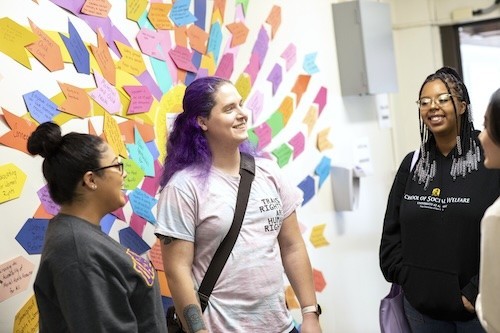
Students engaged in discussion in front of white board with many colorful post-it notes.

The information below answers some frequently asked questions by students preparing for the Advanced Standing (AS) field practicum. 

Information regarding the structure of the Summer field course (RSSW 651, Field Instruction II) as well as field practicum dates will be provided to the incoming AS class later this spring via your UAlbany email address. 

All AS students are required to be available on Thursdays and Fridays (eight-hour days, during the traditional workday) during the summer, fall and spring semesters, so please plan accordingly. Please check your UAlbany email regularly! 
 

BSW Field Hours
BSW Field Hours

As soon as your BSW senior year field practicum is finished, please email either a copy of your timesheets or a brief letter from your field office that demonstrates exactly how many hours you completed overall. This can vary from school to school, so we need this information to assure you all complete the minimum required hours in your Advanced Standing program! Please submit this information as soon as possible to [email protected]

Field Assignments
Field Assignments

Advanced Standing field practicums are selected by the field office. When assigning a field practicum, the Field Office considers: 

  1. students’ areas of interest and selected concentration
  2. previous practice experiences
  3. additional skills and experiences that students want to acquire in preparation for their social work careers

We ask you to provide us with this information on the Field Practicum application so that we can make the best match possible. 

Once you have returned your field application and resume, we will begin the process of matching you with a qualified field practicum agency. You will receive your field assignment via email, before the start of field. Within 48 hours of receiving your field assignment, you are responsible for scheduling a pre‐practicum interview with the Field Instructor. 

Traditionally, this interview should occur in person. Students may schedule remote interviews if necessary. A useful guide to plan for this interview will be included with your field assignment email. 

At the interview, you will be able to discuss the available educational opportunities and agency services. Once your field instructor officially offers you the field practicum, you both must complete and sign the MSW Field Verification Form that will be included with your field assignment materials. The completed form must be returned to the Field Office as soon as it is completed in order to confirm your practicum. 

The AS field sequence is held at one agency. Agencies accepting Advanced Standing students are prepared to broaden students’ learning experiences by exposing them to different and challenging social work practice opportunities over the course of the practicum. 

The summer portion of field completes the generalist sequence for AS students. In the fall, AS students’ field classification changes to Advanced Concentration field, along with corresponding Advanced Concentration coursework (Clinical or MACRO). Students will receive academic advisement from an assigned faculty adviser before the fall semester begins. 

Please Note: Because Advanced Standing students complete only one field practicum as part of their program, Employment Based Field cannot be considered for AS students. It is our responsibility to assure that you are exposed to a different organization so that you can experience a different organizational culture and climate, policies and procedures, hierarchy, leadership structure, etc. than at your place of employment. There are no exceptions to this policy. 

After you begin your field practicum, you and your Field Instructor will develop a written learning plan for your placement (called a “Learning Agreement”). The Learning Agreement is due approximately two weeks into your placement and should summarize key learning objectives that connect with the CSWE competencies and social work practice skills outlined in the evaluations (see “Evaluations” section). 

Attendance Requirements

You are expected to be in field for two full 8-hour traditional workdays, or 16 hours a week, during the entirety of the field practicum (typically Thursdays and Fridays). This continuity in scheduling is important for student learning, agency operations and consistency of client care. The field schedule also coincides with your class schedule each semester. Prior to the start of the summer semester, you will receive a formal field calendar to follow for each semester. 

Agency Background Checks

Some human service organizations have strict security standards for staff and students working with certain populations. Background checks and fingerprinting may be required to qualify for an assigned field practicum. You are responsible for meeting those requirements prior to starting field. 

The cost of such procedures is underwritten by the Field Fee, which is used to reimburse students who must pay for criminal background checks and/or fingerprinting. In order to be reimbursed, you must keep their ORIGINAL receipts for the cost of these processes. 

If the results of a background check could be an obstacle to you securing a field practicum, seek guidance from the Director of Field Education as soon after accepting admission as possible. 

Medical Clearance
Medical Clearance

Some agencies may require that students provide medical information and obtain health-related clearance for work with their clients. It is your responsibility to complete medical clearance requirements in a timely manner. Failure to provide medical clearance information may delay the start of field and, consequently, extend the time for completing field at the end of the academic year. Please contact the field office if the cost of any medical requirement could be an obstacle to your field practicum process.

Registration for Field

Course registration for field is as follows: 

  • Summer semester: Field Instruction II (RSSW 651) 
  • Fall semester: Field Instruction III (RSSW 752) 
  • Spring semester: Field Instruction IV (RSSW 753) 

You'll register for RSSW 651 during the designated registration period for summer coursework. Permission is then required to register for the Fall semester field course (RSSW 752); this permission is issued by the Field Office after determining that you are in good standing with your summer field requirements. 

Evaluations
Evaluations

You'll be evaluated 3 to 4 times during your field practicum. Evaluation due dates will be on the field calendar. Scoring on the evaluations is based on demonstrated competence of generalist and advanced social work practice skills. In the Clinical concentration, you are required to submit one completed process recording (with written supervisory comments) with each evaluation. 

You'll also have an opportunity to evaluate your field experiences at the end of your field assignment by completing a survey that is administered by the Field Office. 

Timely Submission of Field Paperwork

It is your responsibility to ensure that field paperwork is submitted when due. Failure to meet deadlines in field may result in delays in the field registration process (and potential late registration fees) and completion of overall field requirements; these events could impact degree clearance timeframes, and the timeframe in which you'll qualify to sit for the social work licensing exam. 

Grades for Field
Grades for Field

Field Instruction is graded as Satisfactory or Unsatisfactory (S or U). At the end of the summer sequence, a final grade is assigned for Field Instruction II (RSSW 651). The Advanced Concentration courses, Field Instruction III and IV, are considered a two-semester sequence of courses (RSSW 752 - fall semester and RSSW 753 - spring semester). 

Final grades for both courses are not administered until the entire sequence is completed, which is the end of the Spring semester. 

Field Liaisons
Field Liaisons

You'll be assigned to a Field Liaison. Field liaisons provide a variety of supportive services designed to create cohesive working relationships between you and your Field Instructors. You will meet your Field Liaison at Field Orientation. You and your Field Instructors are in contact with your Field Liaison a minimum of once per semester and can contact them anytime regarding questions or issues in field.


Standards for Social Work Education

Introduction
Introduction

The School of Social Welfare has in place Standards for Social Work Education that provide essential guidance to you about field and the overall academic program. It is important to carefully review and adhere to these standards while in field. 

You are expected to meet and maintain the Standards for Social Work Education (“Standards”) established by the School. The Standards are comprised of expectations regarding both scholastic performance and professional behavior. 

You are expected to meet and maintain these standards in the classroom, in field, and in other contexts where you are acting as a social worker or social work student. Adherence to these standards will be the basis upon which you will be evaluated by faculty (including field instructors) who are responsible for evaluating your performance in the classroom and field. 

Meeting the criteria for scholastic performance is necessary, but is not the sole measure, to ensure continued enrollment in a program. You must also demonstrate professional competency and an understanding of and a commitment to the values and ethics of the social work profession. 

Advancement through the program is a privilege, not a right. The academic performance standards established by the School that you are expected to meet and maintain are: Basic Skills Necessary to Acquire Professional Competence; Coping Skills; Professional Performance Skills; and Scholastic Performance. 

Basic Skills Necessary to Attain Professional Competence

Communication Skills 

You must demonstrate sufficient written and oral skills to: 

  • Communicate ideas and feelings clearly, effectively and sensitively with other students, faculty, staff, clients and professionals
  • Understand and articulate the content presented in the program and to adequately complete all written and oral assignments
  • You must also demonstrate a willingness and ability to listen to others. 


Interpersonal Skills 

You must demonstrate interpersonal skills to relate effectively with other students, faculty, staff, clients and professionals. These skills include, but are not limited to, flexibility, empathy, nonjudgmental attitude, respect, and the ability to listen, communicate and negotiate. 


Cognitive Skills 

You must demonstrate sufficient knowledge of social work and clarity of thinking to process information and apply it to situations in the classroom, field, and other professional situations. You must demonstrate the ability to conceptualize and integrate knowledge and apply that knowledge to social work practice.


Appreciation of Diversity 

Social work practice requires understanding, affirmation and respect of another individual’s way of life and values. You must demonstrate respect and sensitivity toward other students, faculty, staff, clients and professionals and others who are different from him/herself regardless of the person’s age, class, color, culture, disability, ethnicity, family structure, gender, gender identity, race, religion, marital status, national origin, sexual orientation, or value system. 

Coping Skills Necessary for Performance in the Program and Professional Practice

You must demonstrate the capacity to interact positively and effectively with other students, faculty, staff, clients and professionals at all times and to execute sound judgment and performance in the program. You must demonstrate appropriate coping skills in the face of personal or other circumstances, including seeking counseling or other sources of support and assistance, to ensure that such circumstances do not: 

  • compromise academic performance
  • interfere with professional judgment and behavior 
  • jeopardize the best interests of those to whom the social work student has a professional responsibility.
Professional Performance Skills Necessary for Work with Clients and Professional Practice

Professional Commitment 

You must demonstrate a strong commitment to further social and economic justice and to serve persons who are vulnerable, marginalized or oppressed. 


Professional Conduct 

You must act professionally and responsibly in matters of punctuality, attendance, appearance and presentation of self. You must be able to advocate for yourself in an appropriate and responsible manner. 

You must be able to receive and accept feedback and supervision and apply such feedback to enhance professional development and self-awareness. You must demonstrate the capacity to recognize and maintain appropriate personal and professional boundaries and use self-disclosure appropriately. 


Self-awareness 

Self-awareness is a key component of social work practice. You must be aware of how your values, attitudes, beliefs, emotions and past experiences affect your thinking, behavior and relationships with other students, faculty, staff, clients and professionals, including those in authority. 

You must be able to accurately assess your own strengths, limitations and suitability for professional practice. You must be able to examine and appropriately modify your behavior when it interferes with your professional work.


Ethical Obligations 

Your behavior must adhere to the ethical expectations and obligations of professional practice as delineated in the National Association of Social Workers (NASW) Code of Ethics. 

Scholastic Performance

Undergraduate Students 

Undergraduate social welfare majors must meet the academic standards defined in the Undergraduate Social Welfare Program Student Handbook and the Field Education Handbook, Undergraduate Program of the School of Social Welfare 


Graduate Students 

MSW students must meet the academic standards defined in the Graduate Faculty and Student Handbook and the MSW Field Education Handbook of the School of Social Welfare.

Apply for Advanced Standing Field Practicum

Applications for Advanced Standing Field Practicum will be accepted through April 2, 2025. To complete your application, you'll need a PDF of your current, professional resume that includes information about your undergraduate practicum. Photos or scanned images of your resume will not be accepted. Resumes not meeting these criteria will be returned for revision and may delay your placement.

If you have questions about Advanced Standing field between now and Field Orientation, please contact the Field Education Office at [email protected].


APPLY NOW

Resources


Disability Access and Inclusion Student Services (DAISS)

DAISS supports and empowers you by cultivating an accessible and inclusive living and learning environment at the University at Albany. DAISS works with you to determine reasonable accommodations. Reach out to DAISS if you need assistance.


Financial Aid

All your questions regarding financial aid can be answered by the Office of Student Financial Services. Contact them at [email protected] or 518-442-3202 with any questions.


Identification Card (UAlbany ID Card)

In order to enter the Downtown Campus and use services such as the library, fitness center and public transportation, you will need a University issued photo ID card. This card is called a UAlbany ID Card.  


Parking Permit

If you wish to park on campus, you will need to register your car and pay for a parking decal.  


Buying or Renting Textbooks

Most courses use required or recommended textbooks. A few instructors use packets of articles in lieu of textbooks. Textbooks are sold at the AcaDamien’s, University at Albany Official Bookstore located in the Campus Center on the Uptown Campus. The bookstore also offers rental books and digital books. You may order them online or in the store. 

Before purchasing textbooks, be sure you have the course number, class number, and name of the instructor for your section. Many students also choose to order textbooks through Amazon.com or another online book seller.