


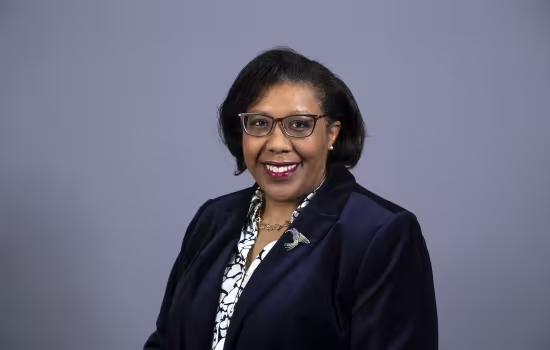
Covid-19 Research: Messaging from the Church
While preparing her students and transitioning to online teaching in early 2020, Julia Hastings added an additional research project to her plate: examining Covid-19 and the Black church.
Research Report: September 24-30, 2021
A collection of the University at Albany's School of Public Health research from September 24-30, 2021.
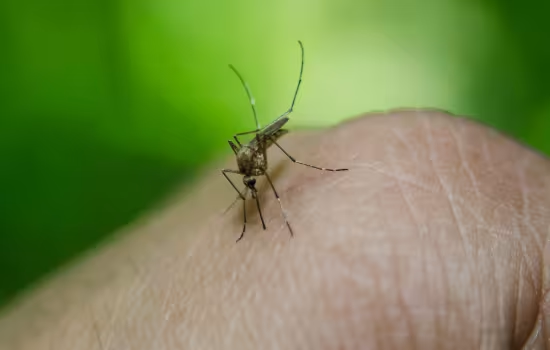
Study: West Nile Virus Cases Predicted to Increase in New York, Connecticut Due to Climate Change
A group of scientists affiliated with UAlbany and NYSDOH predicts the total number of West Nile virus cases will increase, and be more geographically widespread, across New York and Connecticut in future years due to warming trends.

Climate & Inclusion Resources (Transportation & Health Equity Focus)
Our School’s weekly email update for faculty and staff includes a section from the Climate and Inclusion Committee, where suggested tools are shared to help faculty and staff with understanding the impact of inequality. Each month, the resources focus on a different topic. For September 2021, the topic was transportation and health equity.

MPH Student Evaluates Social Work Initiative Through New York’s Gun Violence Reduction Program
ALBANY, N.Y. (September 27, 2021) - MPH student Lauren Sebesta spent her summer as a full-time graduate research assistant, helping Associate Professor Melissa Tracy evaluate the implementation of New York State’s SNUG Street Outreach Program’s Social Work Initiative, an expansion of the SNUG evidence-based violence reduction initiative that seeks to coordinate strategies to reduce and prevent shootings and killings using a public health approach.

The Power of Education
ALBANY, N.Y. (September 24, 2021) - Husband/wife MPH graduates Mena and Mirna Hanna know firsthand the power of education—and have one mission: to create a better life for their children. They worked tirelessly to get to where they are today, and recently walked the graduation stage together after earning their Master of Public Health degrees.
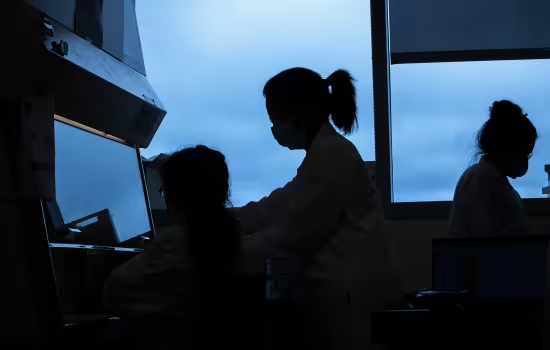
The Who, What, Why and How of a Novel Surveillance Testing Program
Since the fall of 2020, UAlbany’s COVID Surveillance Testing Program has been keeping its students and employees up-to-the-minute in where they stand in regard to a virus that still afflicts campuses across America.
Research Report: September 17-23, 2021
A collection of the University at Albany's School of Public Health research from September 17-23, 2021.