


Engaged Alumni: Daniel Butterworth, MA '11, MPA '13

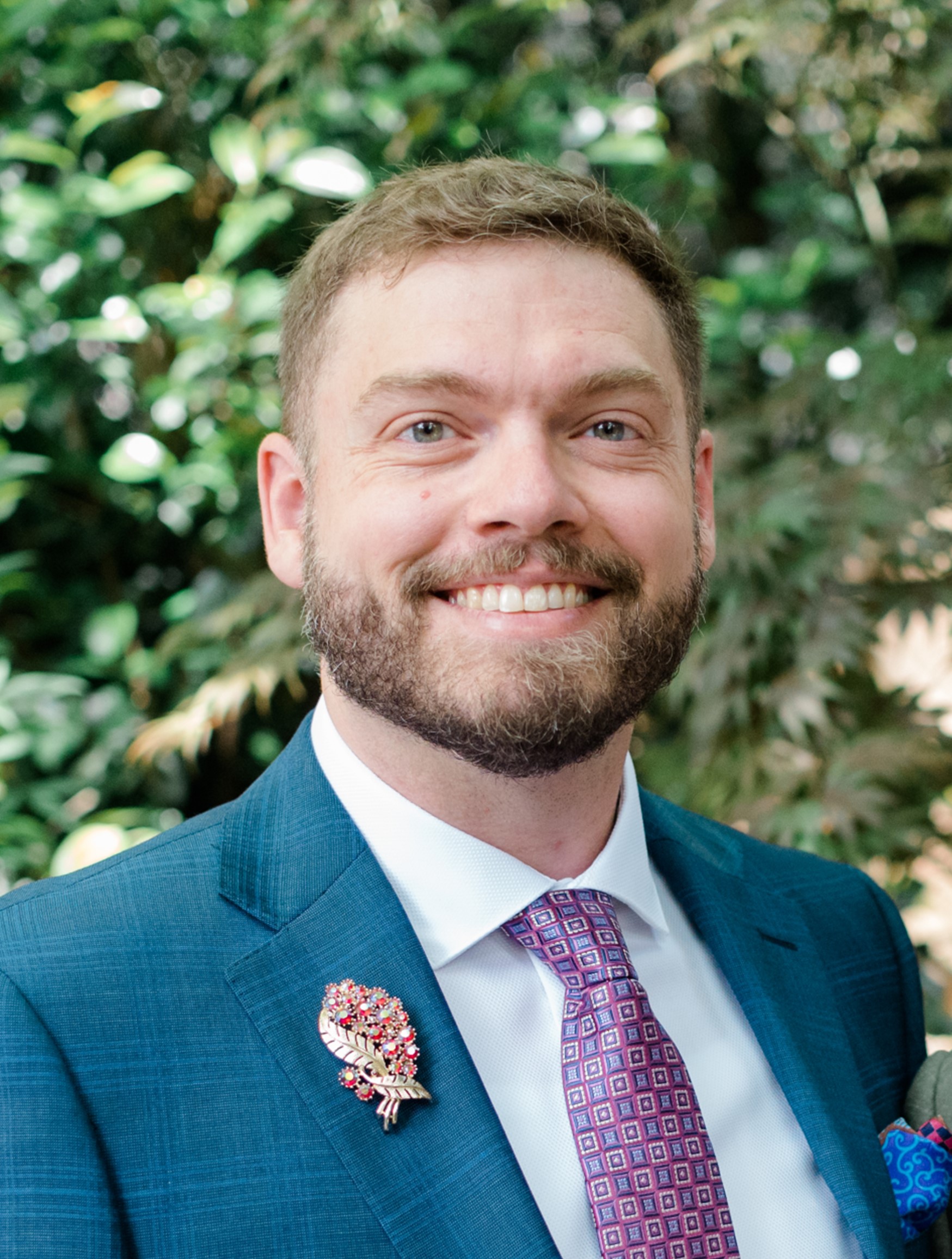
Daniel Butterworth, MA '11, MPA '13 is the Executive Director of Refugee & Immigrant Support Services of Emmaus, Inc. (RISSE) in Albany.
Who does RISSE serve and what services do you provide?
RISSE serves the refugee and immigrant community in the Capital Region. We provide English as a New Language classes for adults, afterschool programming for newcomer youth, wraparound case management services and employment assistance. We also run a U.S. Department of Justice-accredited immigration clinic as well.
We serve about 2,000 people a year. We have a small team of about 30, most of whom are part-time paid staff, but we're supplemented by about 200 active volunteers in the community who help us accomplish our mission.
What is that mission?
Our mission is to help our refugee and immigrant newcomers build new lives and thrive in the Capital Region. But it's our vision statement that gets me in the heartstrings every time: for the Capital Region to become a model community for how we welcome, support, and celebrate our newcomer neighbors.
Over the three and a half years I’ve been on the job, I have just been amazed at the outpouring of support from the Capital Region. During the asylum crisis we were running a summer-long donation drive to collect food, clothing and personal care items for the 1,000 or so folks who were bussed up from New York City. The sanctuary space in our building was completely filled with donated goods for the newcomers. It was mind-blowing. We got support from all different corners of the region. The Capital Region has really stepped up and made a commitment to being — and remaining — a welcoming community.
Our work at RISSE is not political. It's humanitarian. We're serving our neighbors. We have nothing to do with immigration policy at any level. We’re just here to help people survive and thrive and become a part of the community. I don't see it as political, though I know people will and do. But at the end of the day, it’s neighbors helping neighbors.
Where are the newcomers arriving from?
This is an ever-shifting answer. When I started at RISSE, our client base was about 90% folks arriving through the refugee resettlement process. That has changed dramatically over the last couple of years and RISSE has adopted a policy that we will serve any newcomer who walks through our doors seeking assistance, regardless of their country of origin, length of time in the U.S., religion, language or immigration status.
We've been really intentional about being as inclusive as possible. Last year, we served newcomers from over 90 different countries who spoke 45 different languages. As someone who grew up in the Capital Region watching how diverse and multicultural it has become over the last few decades, it’s exciting to me. I grew up in a rural suburb where there was really no diversity, and yet our little corner of the world has become so cosmopolitan.
As far as the refugee resettlement numbers which are easier to track, the nationalities that are on the top of that list in the Capital Region are refugees from Afghanistan, Syria, Congo, Sudan and Burma. But ever since the start of the asylum crisis in May 2023, when the first buses were arriving from New York City with asylum seekers, a lot more of our client base is coming from Central and South America. We also had an influx of folks from Ukraine because of the conflict there. So, it's ever shifting.
As a leader, and manager, how are you coping with the diverse and ever-changing needs of the people your organization serves? For instance, you mentioned that the individuals and families you serve represent many countries and cultural backgrounds. How can you and your staff equip yourselves with the skills and knowledge to properly and effectively help them?
That’s a tough one. I read as much as I can. I've always been a bit of a news junkie, so having a sense of geopolitical movements and history has been important in that regard and in being sensitive to issues related to culture, language and mores. That’s the approach my team has taken. There's no way that we can be a 100% culturally competent. There are so many different cultures.
I'm here to listen and learn. Actually, the response that we get from a lot of our newcomers is that they want to share their cultures. They want to share their experiences. And just being open and receptive and curious means a lot to the folks we're working with. So, that's been my approach.
As a manager, as a supervisor, as someone who's doing a lot of the hiring, I'm always looking for folks who are empathetic and who are active listeners and who are mission-aligned and reflect that kind of cultural humility, because we're all learning together and growing together and building together.
Why have you chosen this particular career path?
When I was younger — and more naive — I wanted to work in the nonprofit sector because I didn't want to be making money for a corporate entity. I didn't want to have to be thinking about money on a daily basis.
Now, in my role, I think about money on a daily basis! I started my work developing nonprofit programming and as I've progressed over the years, money has become more and more of a focus, hence, the grant writing and a lot of the development work that has become a big part of my job.
Service was a big part of my upbringing. My dad was in K-12 education. Mom worked for New York State. And I had some experiences early on doing community service projects that raised my awareness about the needs of the community and that helped me to realize the relative privilege that I had. I think that really made a mark. With privilege comes responsibility. This is a community that I really love. The Capital Region has been really good to me and my family, and I want to share that.
What did you learn during your studies at UAlbany that helped prepare you for your work at RISSE?
There are a couple conversations with faculty members that rattle around in my head all the time.
I remember from my first year in the MPA program at Rockefeller College, Professor Jennifer Dodge saying, “Any decision you make as a nonprofit leader must do double duty. You should be accomplishing more than one goal at any one time.” That really helped me understand how things are interrelated, how systems move and how pulling one lever can have multiple impacts.
Another thing that rattles around in my head all the time is Professor Bob Purtell saying, “Never waste a lunch. That's how you're going to get things done.”
I also had some great service learning experiences at Rockefeller that opened my eyes to the complexity of the work and how many hats nonprofit leaders were actually wearing when they were in the field. I wouldn’t trade getting to see that kind of behind-the-scenes work for anything.
Rockefeller trained me how to think in a different way. That has served me well.
Being able to understand an argument and see the implications of all sides is so important. Rockefeller's got a special place in my heart for sure. And I keep encouraging folks I work with, whether on my team or out in the community, to consider attending Rockefeller because we need more leaders and we need good people in the nonprofit sector.
I think one of the things that Rockefeller also helped me realize was that I’m more of a generalist, a “Jack of all trades,” especially when it comes to working in the nonprofit sector. Having a wide array of skills and being able to wear a lot of different hats is huge.
My career hasn’t been a straight-line kind of thing. I've bounced around and worked in different aspects of nonprofit work, whether it's been program development, fundraising, evaluation, or board or community development. I've got a little bit of experience in all of those, and I didn't see the through line until I was in this role at RISSE.
I’m always telling my folks here at RISSE — and anyone else that I’m talking to — that the world is full of specialists right now. There are not enough generalists. At Rockefeller, I was able to explore a lot of those different skill sets and areas. That was very helpful.
You have a very challenging job, to say the least. You serve individuals at a particularly vulnerable time in their lives and you do so with limited resources — and quite possibly these days, with shrinking or uncertain resources — not to mention in a politically charged environment when it comes to immigration-related matters. What keeps you going?
I've been asking myself that question a lot lately. I'm not sure if I really like the term, but I guess I've always kind of been operating under the servant-leader model, and because of that I have an obligation to my team. That's a big driver for me.
Being able to impact the lives of the folks that we're serving is another. Part of what has been keeping me sane is keeping my head down and continuing to do the work. If I’m still moving things forward, then I don't have time to freak out about every headline that comes across the news.
First and foremost, it’s about seeking justice for the folks that we're serving, but also trying to hold space for my team — not just our paid staff, but also our volunteers who are doing one-on-one direct work with a lot of our clients and absorbing some of the fear and anxiety and trauma they’re feeling. We just keep going and try to sustain things. But I'm still figuring it out.
Recently, we had immigrant defense training that involved 114 people from all over the region from different organizations and faith communities. That is also helping to sustain me. It filled my cup because there was just so much community spirit present and everyone was so engaged. It really meant a lot.
What are your hopes for the people that you serve?
I hope that our newcomer neighbors find safety, security and opportunity in the Capital Region and come to love it as much as I do. I want folks to be able to put down roots, integrate and become part of the fabric of the community.
And I hope that they'll make homes, create businesses, go to college, run for office, and help us build a bright and vibrant future for our community.