



UAlbany Researchers Awarded $3 Million to Study Disparities in Black Maternal and Infant Health
UAlbany researchers recently received new funding to investigate why Black families disproportionately experience negative health outcomes in the first postpartum year. Findings from the five-year study will inform strategies aimed at improving Black maternal-infant health.

Team Investigates Links Between Childhood Exposure to Violence, Biomarkers and Behavioral Outcomes
A team of interdisciplinary UAlbany researchers from the Depts. of Psychology, Sociology and Epidemiology & Biostatistics have published a new study that surveyed the landscape of research into biomarkers associated with childhood exposure to violence and negative behavioral outcomes later in life.
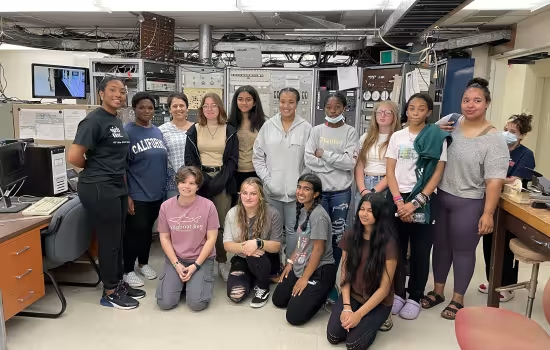
Eureka! Program Powers Girls to Succeed in STEM Fields
A nationally recognized endeavor by Girls Inc. that provides hands-on opportunities in STEM, the Capital Region Girls Inc. Eureka! program has 57 girls from a number of different schools attending UAlbany this summer to learn about atmospheric and environmental sciences, mathematics and statistics, physics, psychology, women’s studies, geography, planning, and sustainability, chemistry, ChoreoPhysics and biology.
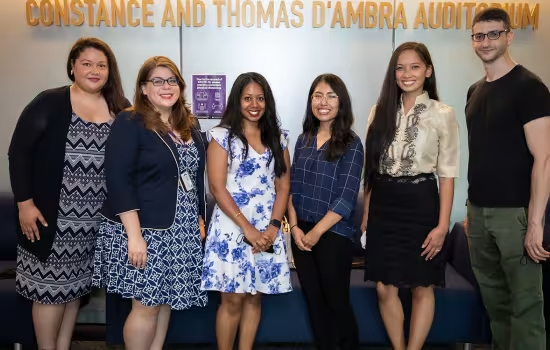
New PhDs Foretell Greater Diversity in Behavioral Neuroscience
The Department of Psychology's Behavioral Neuroscience doctoral program is seeing its largest-ever cohort of PhD students graduate, and five out of the six of this outstanding group are women of color.
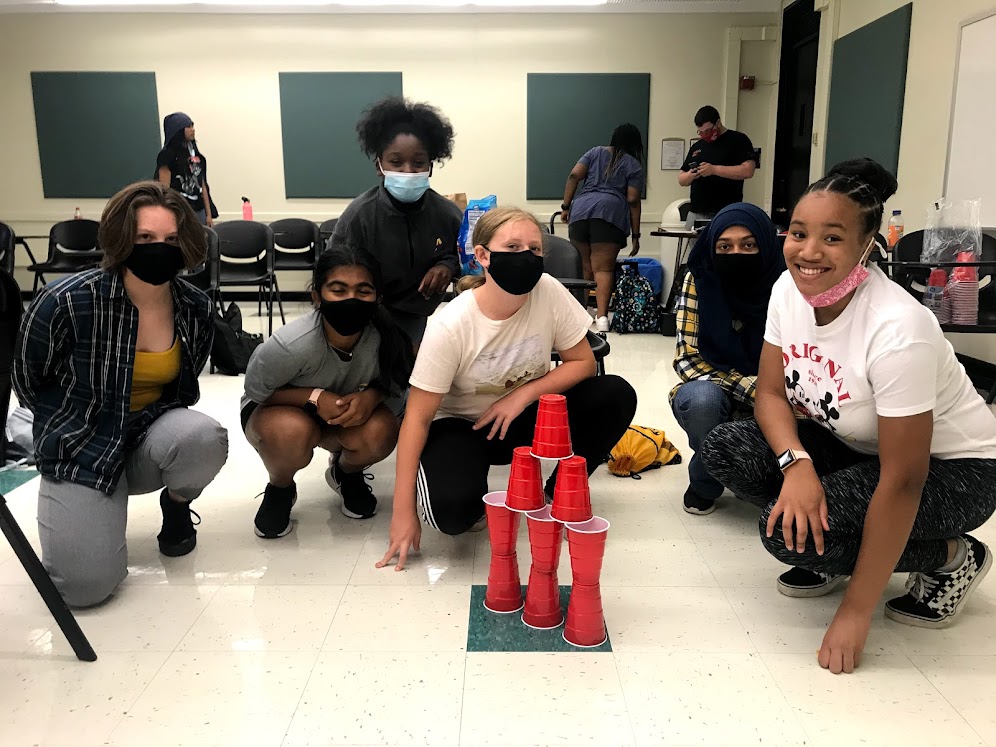
Girls Inc. Eureka! Imparts Knowledge with Fun to Young STEM Students
For the fourth straight summer, the College of Arts & Sciences hosts Girls Inc. Eureka! program, with faculty from seven UAlbany departments imparting a love of STEM subjects to girls from the Capital Region.
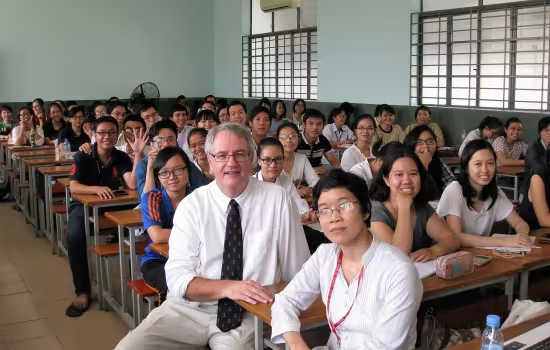
A Passion for Improving Mental Health Systems for SE Asians Brings a Psychologist a 3rd Fulbright Award
Bruce Svare wins his third Fulbright Senior Scholar award to travel to Laos, Indonesia and Malaysia and continue his work of spreading the discipline of contemporary psychology to Southeast Asia.
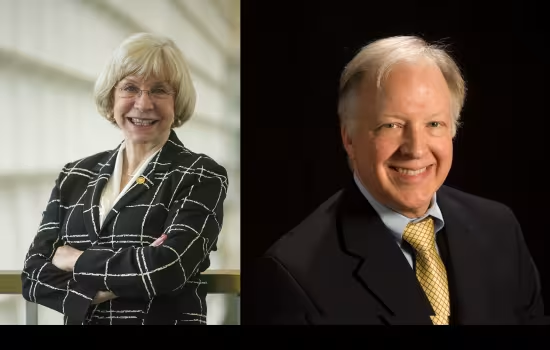
Psychologist and Educator Named Distinguished in Service by SUNY
Longtime UAlbany teachers, researchers and administrators Edelgard Wulfert of Psychology and Alan Wagner of Educational Policy & Leadership are promoted to SUNY’s highest faculty rank.
A Student-Faculty Team Weighs Effective COVID-19 Messaging to Those with Limited English Proficiency
A student-faculty team weighs effective COVID-19 video messaging to those with limited English proficiency