


Environmental Health Sciences Faculty Explore New Tools for Monitoring Air Pollution
ALBANY, N.Y. (October 14, 2022) – Everyone wants to breathe fresh air, but not all of us do. Research has shown that socially and economically disadvantaged populations are more likely to be exposed to air pollution, a fact that has far-reaching implications for long-term health. Additionally, studying these effects can be a challenge because air quality monitoring is expensive and requires substantial resources to carry out.
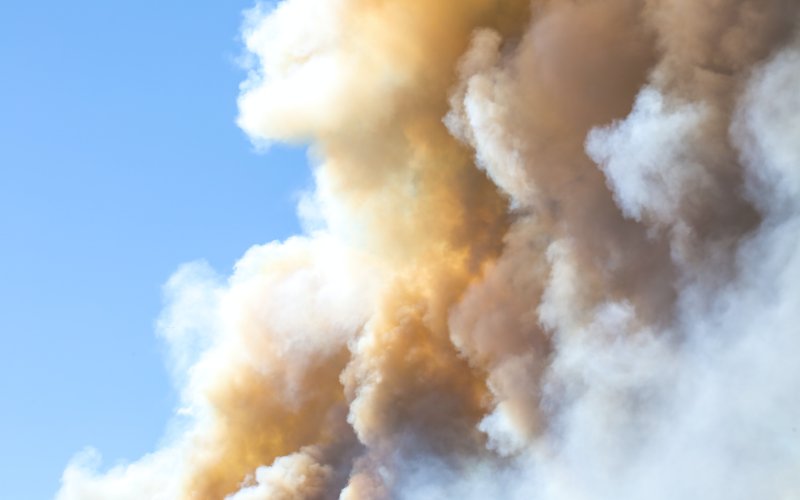
To solve this problem, Kai Zhang of the Environmental Health Sciences Department recently published a study in Science of the Total Environment on the potential of low-cost air quality sensors to allow researchers to get accurate readings in virtually any area of interest. The study was conducted in Houston, Texas in the aftermath of the 2019 Intercontinental Terminals Company (ITC) fire, which burned for six days. The researchers were interested in measuring a certain type of air pollution known as particulate matter (PM), which has been associated with a number of negative health outcomes including respiratory disease, cardiovascular disease, stroke, and even neurological conditions such as dementia and Alzheimer’s disease.
The monitoring devices were placed on rooftops of firehouses and private residences located near the site of the fire. The data from these low-cost monitors was then compared to the EPA regulatory monitors located in the region. The researchers found that not only did the low-cost sensors perform well in terms of accuracy, but they also captured more temporal peaks because of a higher number of observations per day.
“We found that the low-cost sensor network reported comparable data for some types of particulate matter pollution and even more robust data for others, and from a wider variety of geographical locations. This allowed us to locate pollution ‘hot spots’ we might not otherwise have known about,” Zhang explains.
Zhang also noted that the EPA regulatory sensor network was not able to provide data on some types of particulate matter pollution (PM1) at the time of the fire, while the low-cost sensor network was: “This suggests that air pollution levels could potentially be overlooked by regulatory sensor networks, particularly during incidents such as chemical explosions.”
With the new low-cost sensor network, Zhang and his colleagues were also able to corroborate the findings of other environmental health researchers around the world who recorded lower levels of air pollution during the COVID-19 pandemic. But even more importantly, the results of this study indicate that low-cost sensors could be used to cover larger areas with greater data granularity, capturing readings that can be used to compare exposures between different neighborhoods and, ultimately, conduct environmental justice analyses.
“Using low-cost sensors can help measure environmental injustice and provide evidence for public health policy and urban planning. It can also raise awareness in environmental injustice, and collect data for education purposes, without unbearable costs for local governments, communities, and school districts,” the authors explain. But they are also quick to note that there are still some disadvantages of these types of sensor networks, including the need for ample data storage and processing, sensor hardware maintenance, and software development.
Nonetheless, low-cost sensor monitoring has the potential to offer underserved communities the opportunity to present evidence of environmental injustice to elected officials, prompting them to set policies that alleviate health disparities.