





UAlbany Summer: Improving NOAA's Hurricane and Winter Weather Forecasts

By Mike Nolan
ALBANY, N.Y. (Aug. 19, 2026) — Two atmospheric science seniors have spent their summer inside the research and operations of the nation's top weather forecasting agency.
Micaela Maywald and Michael Miller, both incoming seniors in UAlbany’s Department of Atmospheric and Environmental Sciences at the College of Arts and Sciences, were selected this summer for William M. Lapenta NOAA Student Internships. The competitive 10-week program places students with NOAA mentors across the agency's forecasting and research offices.
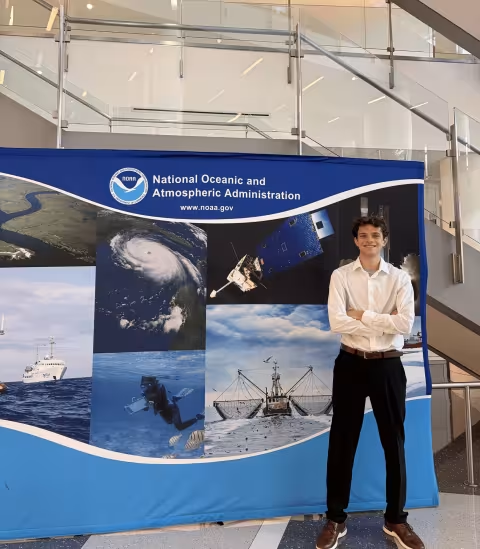
Micaela worked at the National Hurricane Center in Miami, building an interactive map viewer for hurricane forecasters to use when briefing emergency managers and government officials. Michael worked at NOAA's campus in College Park, Maryland, evaluating and improving seasonal snowpack forecasts for the Western U.S.
We recently caught up with both of them to learn more about their summer.
What drew you to the Lapenta Internship?
Michael: The Lapenta Internship stood out as a chance to do hands-on research with leading experts in our field and connect with professionals about potential career paths. My project involved analyzing seasonal snowpack forecasts for the Western U.S. I've always been interested in public service and wanted to help NOAA achieve its mission.
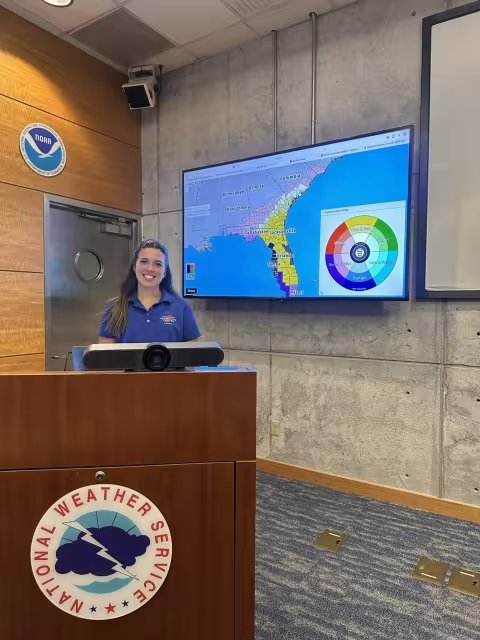
Micaela: What drew me was the program's emphasis on mentorship and the rare chance to work at the National Hurricane Center (NHC). My project was building an impact-based decision support toolbox for forecasters briefing partners. It aligned closely with my previous internship at UAlbany’s State Weather Risk Communication Center, where I used GIS technologies to analyze hurricane impacts in New York. This summer let me build on that while supporting decision-making at the NHC.
What did a typical day this summer look like?
Michael: A typical day was a mix of programming, data analysis and meeting with my mentors to go through findings and plan next steps. I spent a lot of time writing code to evaluate how accurate our snowpack forecasts are against reality. On active-weather days, I'd sometimes shadow forecasters at the Weather Prediction Center and learn how they issue forecast discussions.
Micaela: A typical day started with a mentor meeting to set goals, then coding and developing my project, with regular check-ins with mentors and NHC staff to make sure the toolbox aligned with what forecasters actually needed. When hurricanes were active, I shadowed forecasters building the advisory package. Every day was a little different.
What's been the most surprising part of this experience?
Michael: How much collaboration happens throughout NOAA. There are so many different roles and it was amazing seeing how much they rely on each other to help NOAA fulfill its goals.
Micaela: Seeing how research transitions into operations. Knowing the toolbox I built will support NHC forecasters made me realize the impact of this work extends well beyond my internship.
How does this work connect to what you've studied at UAlbany?
Michael: My coursework gave me a strong foundation in data analysis and coding. A course on meteorological data visualization taught me how to present data so people can easily understand. It was rewarding to apply that classroom knowledge to research that improved our understanding of snowpack forecasting.
Micaela: Coding and GIS courses gave me the technical foundation to build the toolbox, and my atmospheric science and emergency preparedness courses helped me understand how weather information is used during high-impact events like hurricanes.
What advice would you give students hoping to land a competitive research internship?
Michael: Highlight your passion and willingness to learn. Those are the traits employers are looking for. Don't get discouraged if you're not accepted the first time, it only takes one "yes." Believe in yourself and keep working toward your goals. The hard work pays off.
Micaela: Be yourself and let your passion show. Technical skills matter, but employers also want genuine excitement and eagerness to learn. Keep applying even after rejection. If I hadn't been rejected from previous internships, I wouldn't have had this life-changing opportunity at the NHC.