





Grads at a Glance: Exploring Global Backlash on Gender Studies

ALBANY, N.Y. (May 13, 2026) — For master’s candidate Raneem Afifi, journalism is more than storytelling — it’s a form of resistance. This spring, Afifi, who earned the Distinguished Scholar-Leader Award, is completing her degree in Women’s, Gender and Sexuality Studies with a documentary, "Gender (Studies) is Burning," examining the global rise of political attacks on gender studies and what they signal about academic freedom.
A feminist journalist from Egypt and founder of the media initiative She Has Other Faces, Afifi has spent years training reporters and producing gender-sensitive work. “Part of attacking gender studies is attacking academic freedom in general,” Afifi said. “As someone who comes from an autocracy, I understand how controlling education and discouraging people from asking questions shapes society.”
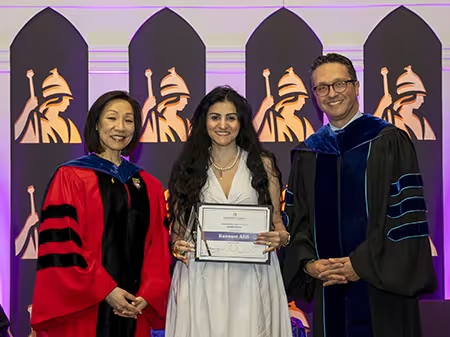
Afifi said coming to UAlbany allowed her to explore those questions more freely and expand her perspective.
“I could have studied at home, but there are limits to what you can say and explore,” she said. “Here, I had the freedom to examine these issues more deeply and connect them globally. There’s an urgency to this work — because when you restrict knowledge, you’re shaping what people are allowed to imagine.”
Afifi, who also received a Lavender Award for leadership, completed the documentary under the supervision of Professors Janell Hobson and Barbara Sutton.