





UAlbany Students Adapt Books for Young Learners
ALBANY, N.Y. (April 7, 2026) — From Goodnight Moon to The Very Hungry Caterpillar, children’s books are often our first experience with storytelling, language and connection.
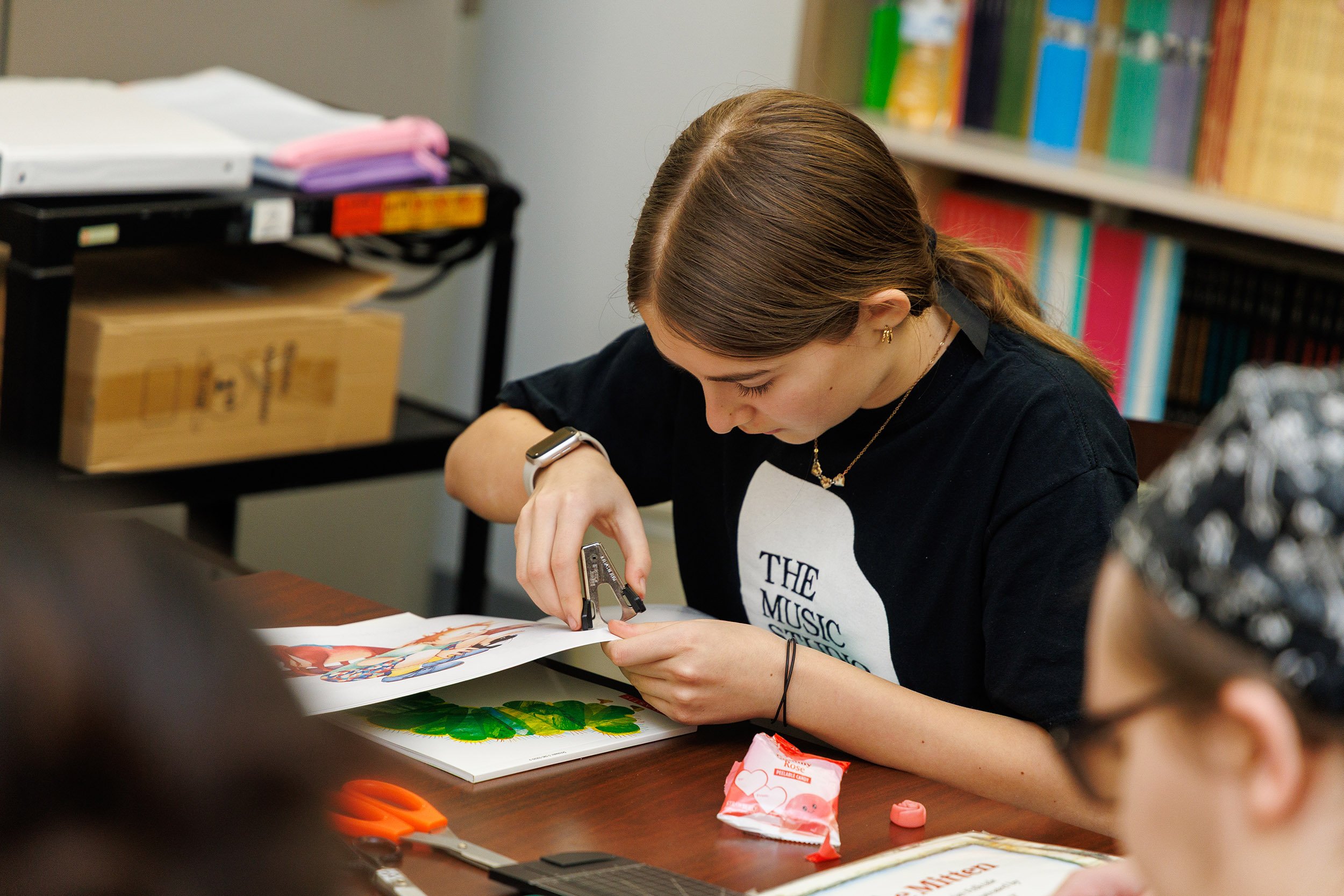
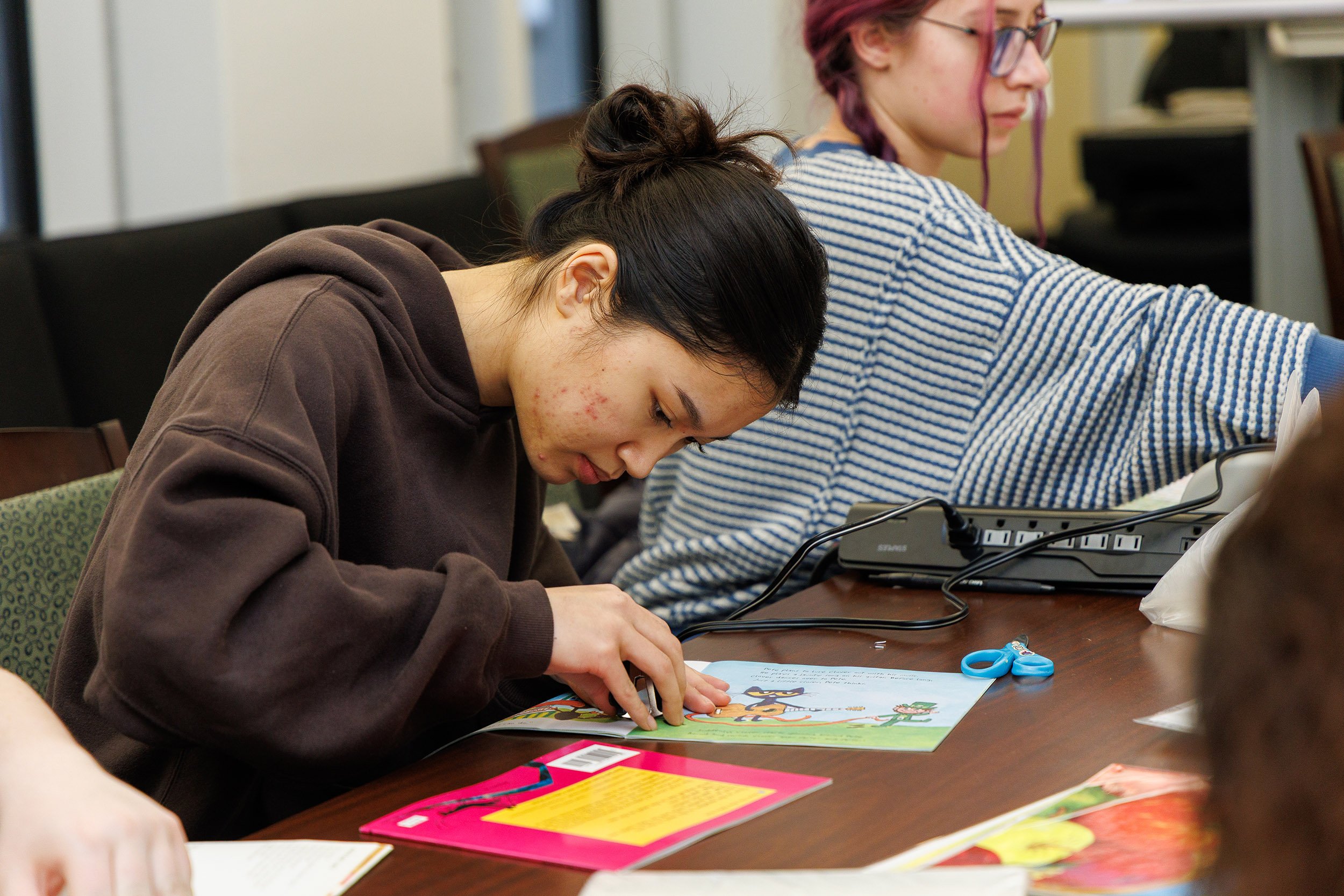
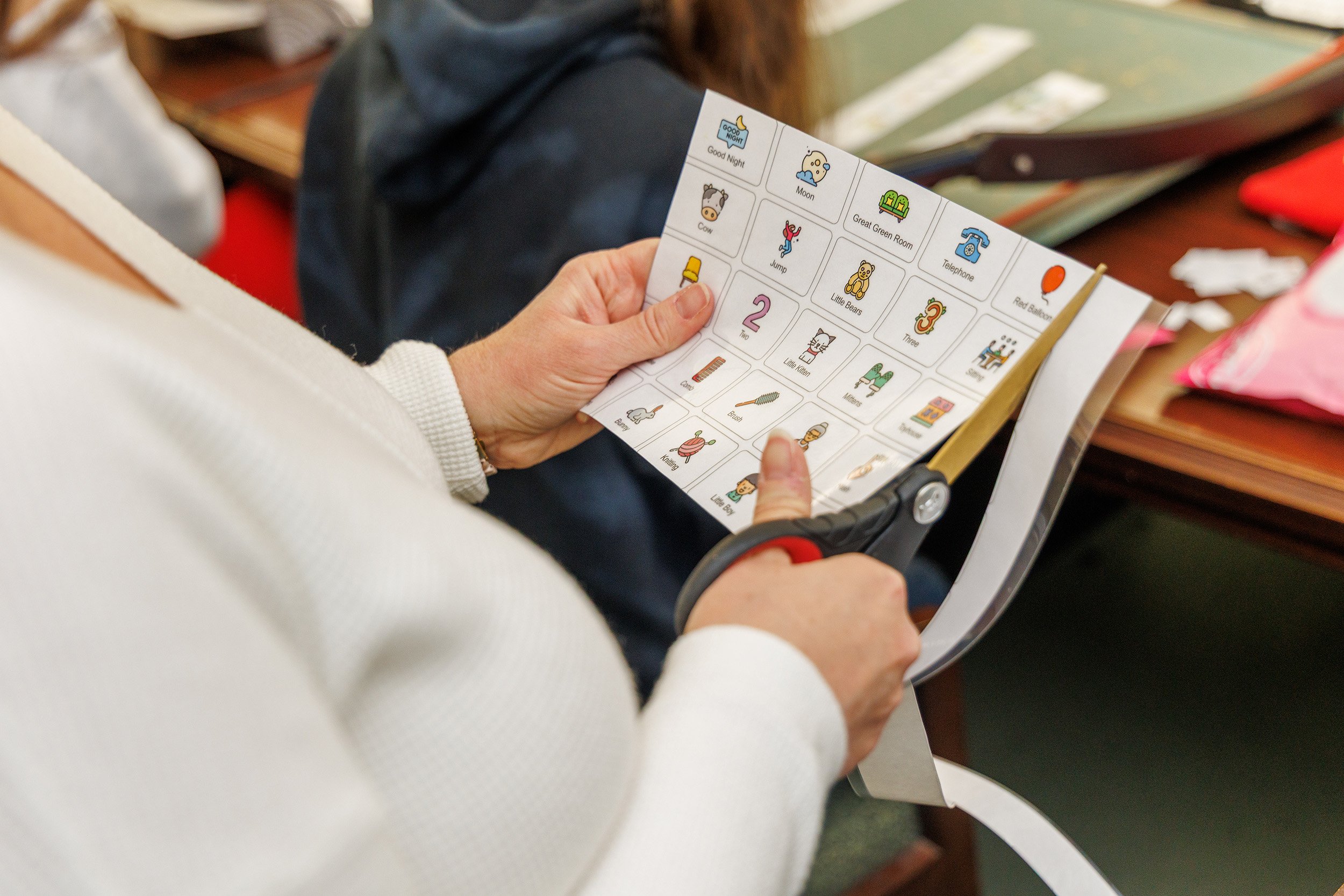
In some classrooms, those familiar stories take on a more interactive form. Pages are laminated. Velcro tabs line the margins. Characters can be lifted, moved and placed from one page to the next — a caterpillar inching forward, a story unfolding through touch as much as sight.
These adaptations help ensure that all students, including those with autism and other diverse learning needs, can engage with the same stories in ways that match how they learn and communicate.
At the University at Albany, students are learning how to build those books by hand.
Learning Language Through Practice
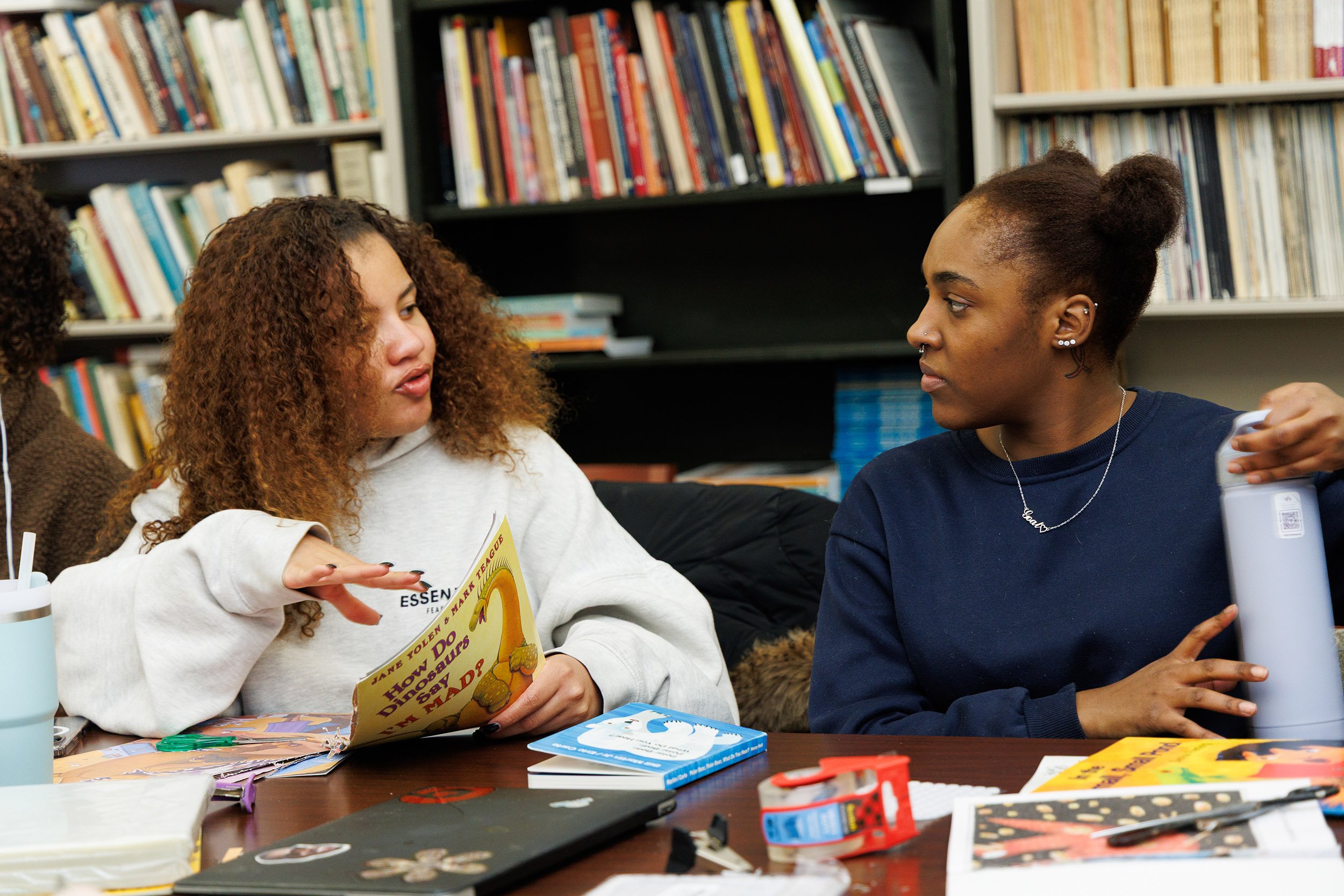
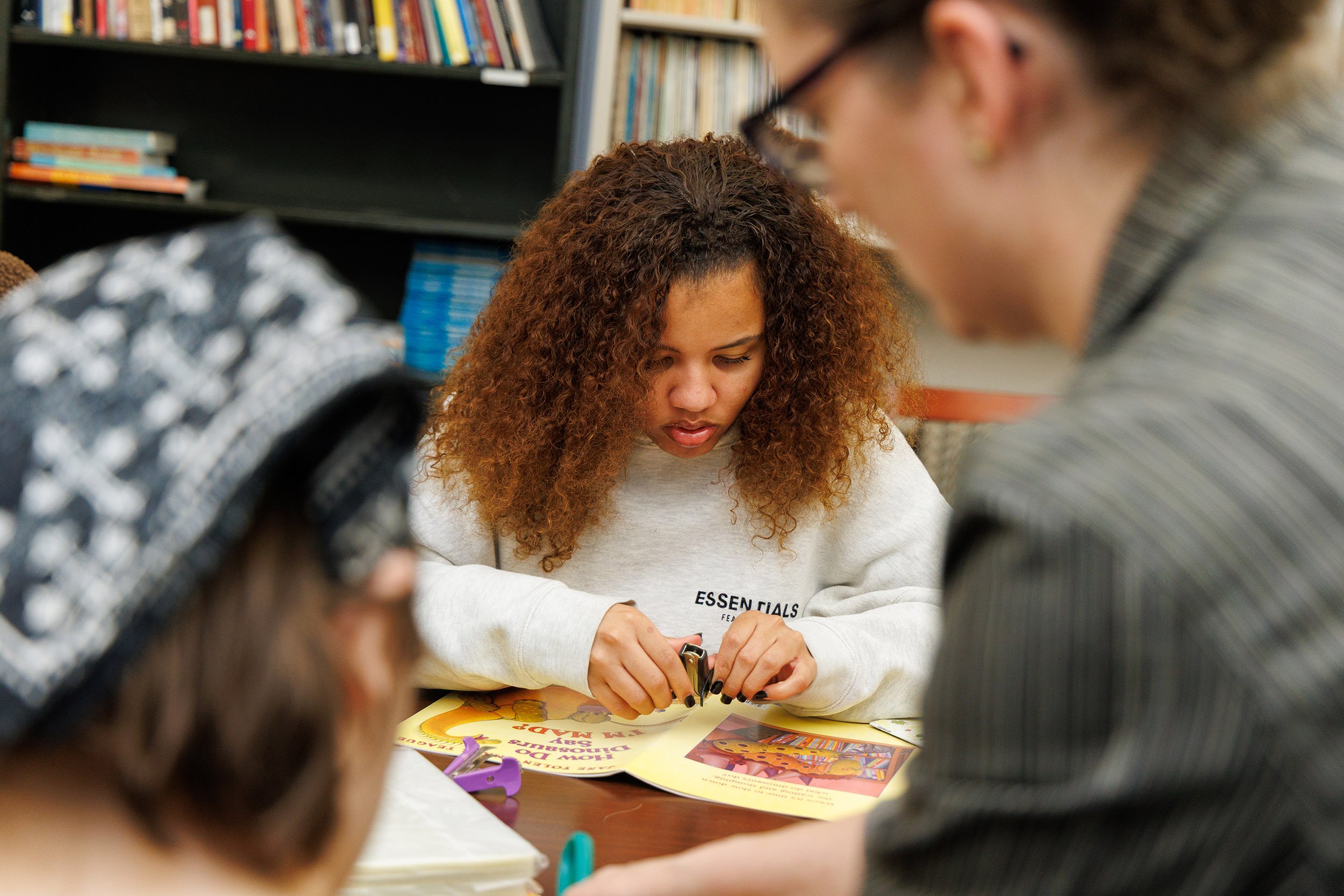
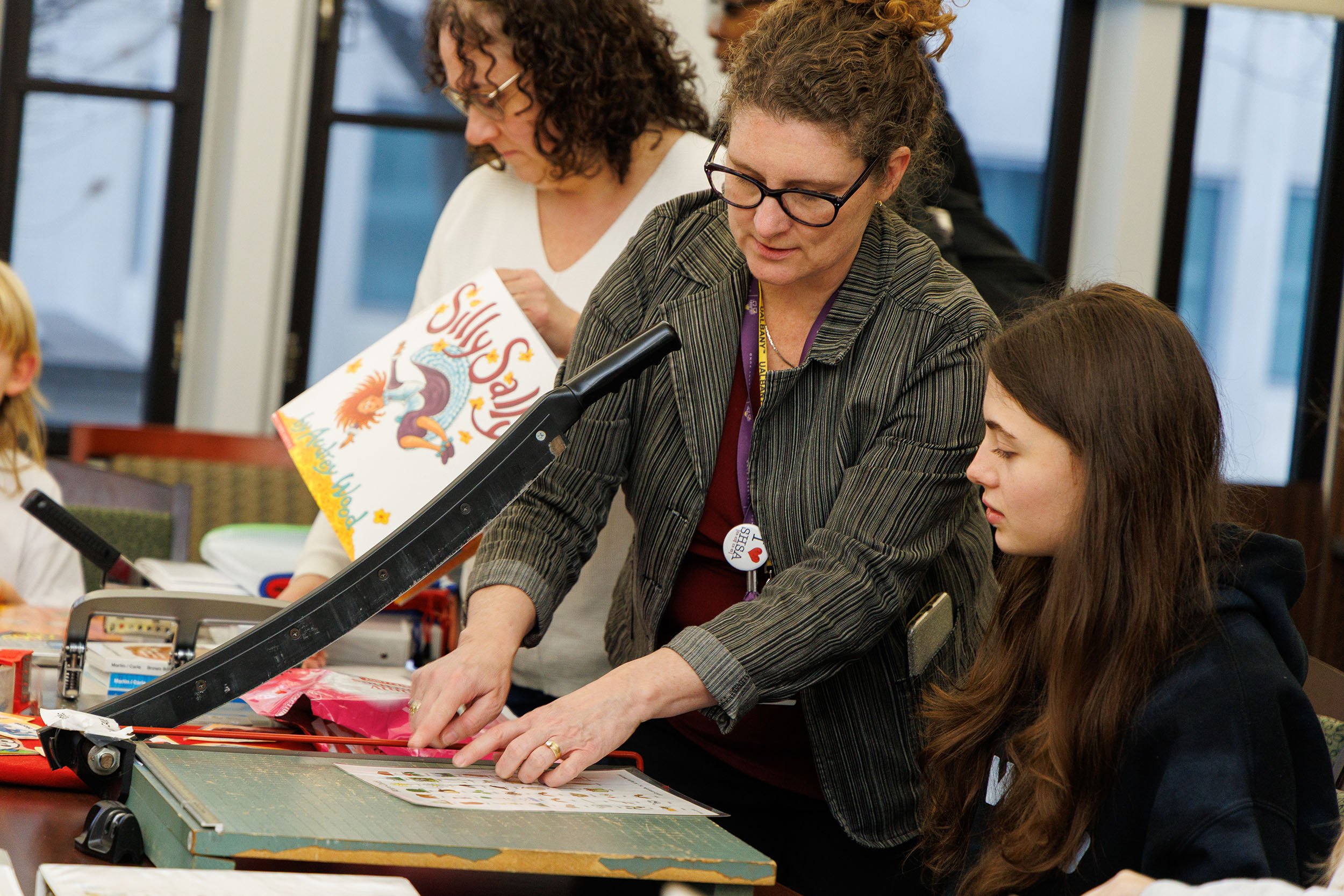
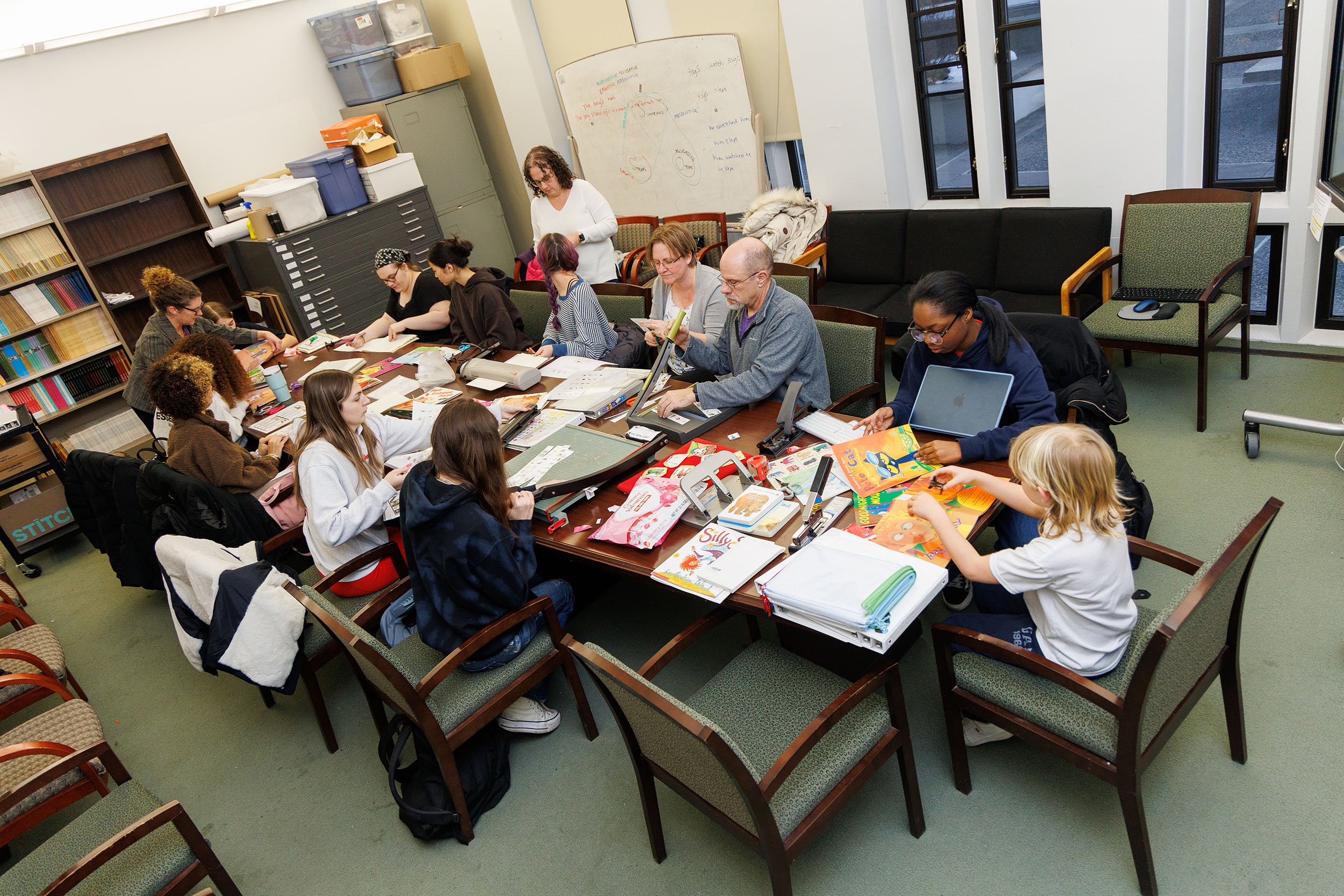
In a service learning in language & linguistics course at UAlbany, students are taking apart traditional children’s books and reconstructing them into interactive tools tailored for young learners.
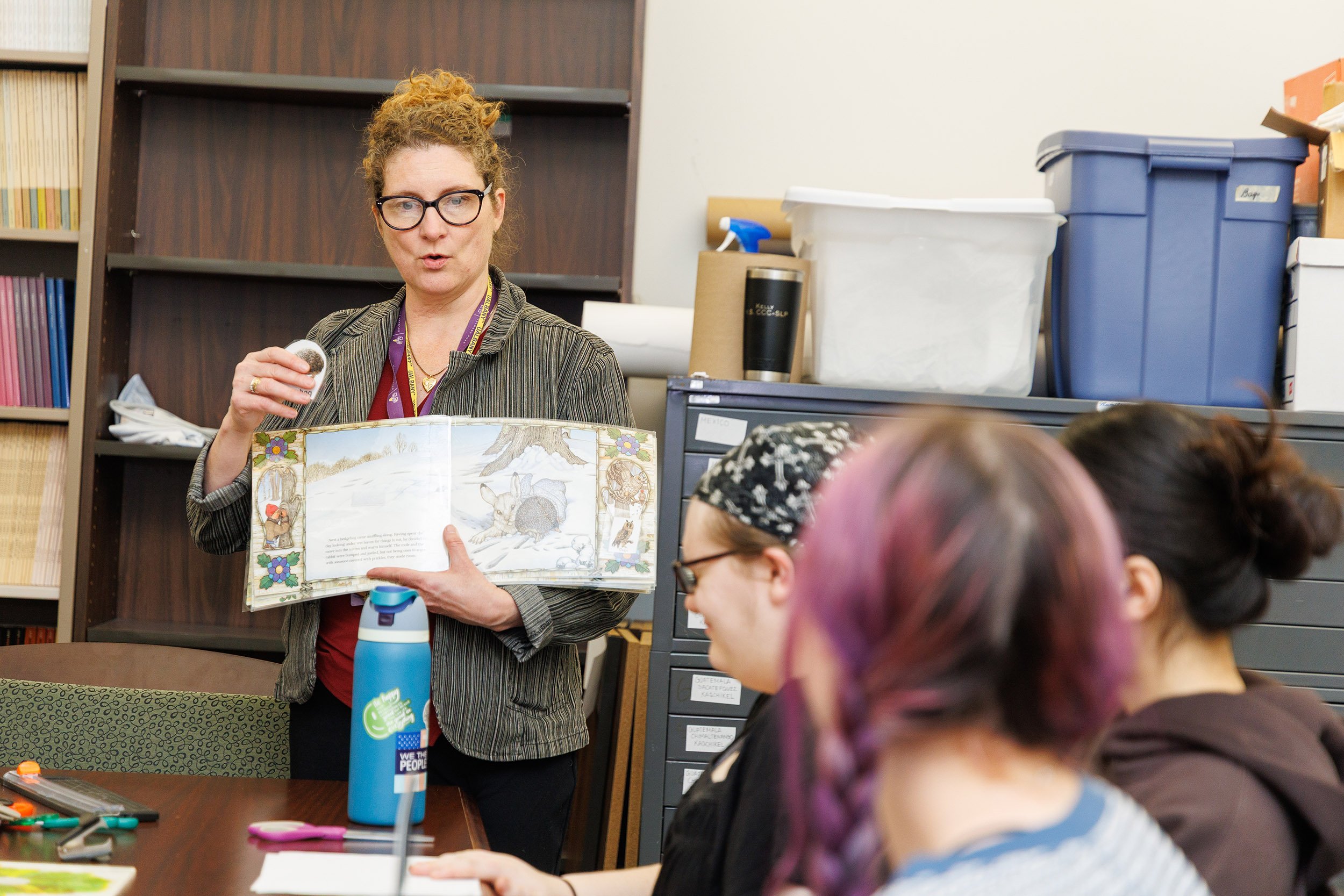
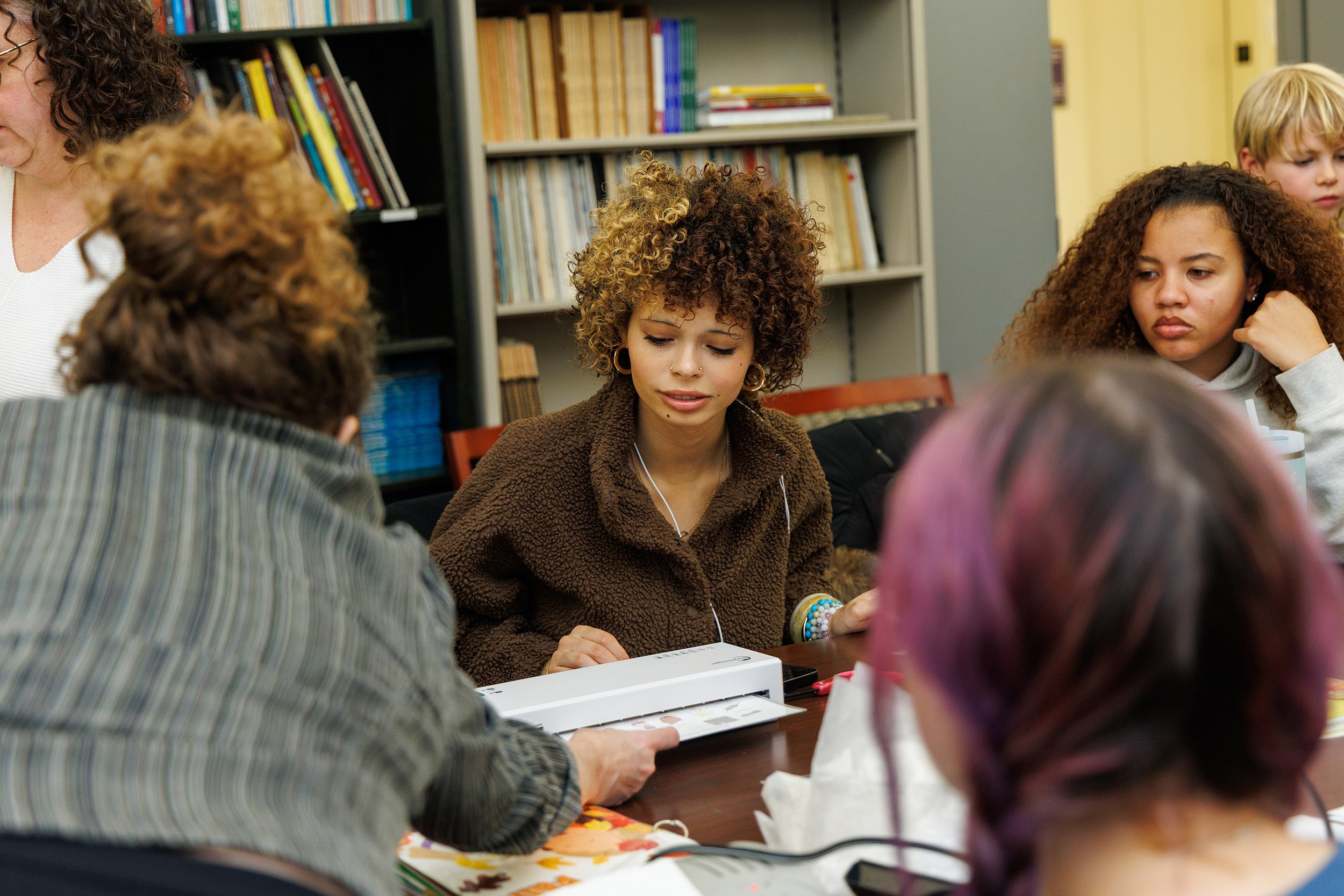
Under the guidance of instructor Kelly Fagan, a speech-language pathologist, students laminate pages to prevent tearing, add velcro components and create communication boards and visual supports that allow children, including some who are non-speaking, to actively participate in reading.
The process connects classroom concepts in linguistics and communication directly to real-world application.
“I learned how books can be adapted differently based on ability level,” said Ayanna Hewling, a junior psychology major/linguistics minor from Queens on a speech pathology pathway. “Physically working on the materials showed me how what we learn can be applied in real life.”
For Hewling the project also reinforced how interactive design supports understanding.
“Adding interactive parts to books can engage different parts of the brain,” she said. “It allows learners on different levels to interact with materials."
For other students, the experience has opened a window into fields they had not previously considered.
“Speech-language pathology is such a different world for me,” said Janyse Moore, a senior anthropology major from the South Bronx. “I’m learning so much — from making interactive cards to understanding AAC (augmentative and alternative communication) to deconstructing books.”
Moore, who is neurodivergent, said the work has also reshaped how she thinks about access in education.
"I don’t remember seeing this kind of support when I was growing up,” she said. “I’m glad kids now can have that sense of educational equity and access that meets them where they are and open doors for how they learn.”
From Classroom to Community
The books created by UAlbany students are now making their way into local classrooms, where they are being used to support literacy and communication for young learners.
Lynn Stephens, a speech-language pathologist with the City School District of Albany, has begun incorporating the adapted books into her work with students who have complex communication needs.
“Students with autism and other disabilities often struggle with standard books,” Stephens said. “When books include simplified language, repetition and interactive elements, it allows students to engage with the story and respond in ways that work for them.”
Stephens received funding for the materials through a grant from Broadview Federal Credit Union, which supports innovative teaching approaches in classrooms across the region.
For Fagan, the collaboration highlights both the immediate impact for local students and the long-term value for UAlbany students preparing for careers in communication sciences and disorders.
“Often students who are non-speaking have limited access to books or are not read to as frequently,” Fagan said. “Adapting books so they are interactive and durable helps them participate in shared reading and develop communication skills.”
The course is also helping to build a pathway for students interested in speech-language pathology and audiology — fields that are in high demand locally.
“We’re giving students hands-on experience while supporting schools in our community,” Fagan said. “It’s a direct connection between what they’re learning and how it can be applied.”
Lauren Clemens, associate professor of anthropology, said the course reflects the broader mission of linguistics and cognitive science.
“Linguistics gives students tools to investigate the structure and use of language across different contexts,” Clemens said. “Experiences like this show how those skills can be used to support language processing, communication and learning in socially meaningful ways.”
Clemens, who directs UAlbany’s Program in Linguistics & Cognitive Science, pointed to a growing need for students trained in these fields, particularly following the closure of The College of Saint Rose’s communication disorders program.
“Those skills translate directly into careers in education, speech-language pathology and other fields focused on communication and learning,” she said.
Back in UAlbany’s classroom, that impact begins with a reimagining of what a book can be — one that invites students not just to read a story, but to interact with it.