


Autumn 2025 ISHE Newsletter
Welcome to the Institute for Social and Health Equity (ISHE)
The Institute for Social and Health Equity (ISHE) includes four centers within its umbrella: the Center for Healthy Aging (CHA), the Center for the Elimination of Health Disparities (CEHD), the Center for Social and Demographic Analysis (CSDA), and the Global Center for AI in Mental Health (GCAIMH).
From the Director’s Desk
As we move towards the end of 2025, we are reflecting on the momentum built through our collective work. The Institute for Social and Health Equity (ISHE) celebrates a productive 2024 year filled with new partnerships, research support initiatives, and growing engagement with the rest of the UAlbany research community.
Our commitment to support equity-driven, interdisciplinary research continues to guide our work.
Expanding Partnerships through Administrative Support
ISHE plays a key role in advancing interdisciplinary collaboration at UAlbany by providing strategic administrative support for centers and institutes, organizing speaker series, workshops, and major events like the GCAIMH 2025 Summit that fosters innovation and broadens impact.
What We've Been Working On
This season, ISHE has been actively supporting major grant submissions and awards across campus. Our team assisted with an NIH R01 proposal on Social Media Use and ADHD and a Letter of Intent for the Burroughs Wellcome Fund’s Climate + Health Excellence (CHEX) Centers initiative, totaling $10 million over five years.
On the post-award front, ISHE is providing administrative support for recently funded projects, including a $1.4 million U.S. Department of Education grant on bullying and victimization and a $500,000 New York State Department of Victim Services grant focused on disaster mental health preparedness.
We are also supporting several new working groups to strengthen strategic research outcomes for successful grant proposals. These include partnerships with the AI community, along with focused initiatives on mental health, climate, air quality, education, healthy aging, and criminal justice.
Highlights & Achievements
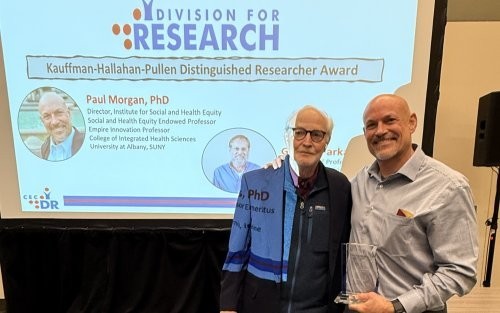
ISHE Director, Dr. Paul Morgan received the prestigious Kauffman-Hallahan-Pullen Distinguished Researcher Award for his work in special education.
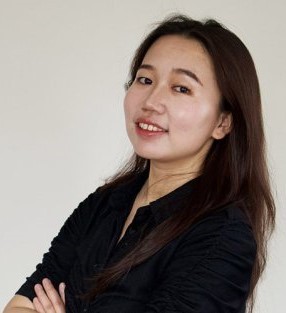
Dr. Qingqing Yang, ISHE Research Scientist, was awarded a highly competitive 2025 NAEd Spencer Postdoctoral Fellowship, a top honor for early-career scholars.
Welcome New Team Members
We are excited to welcome Dr. Sherry Gao and Dr. Stephanie Thibault as our two new Postdoctoral Associates.
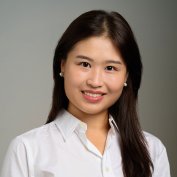
Dr. Sherry Gao
Postdoctoral Associate

Dr. Stephanie Thibault
Postdoctoral Associate

To round out the season, ISHE was featured on UAlbany’s podcast, The Engagement Ring, where Dr. Morgan talked about institute’s mission and impact.
Catch the full conversation with Dr. Paul Morgan on The Engagement Ring podcast.
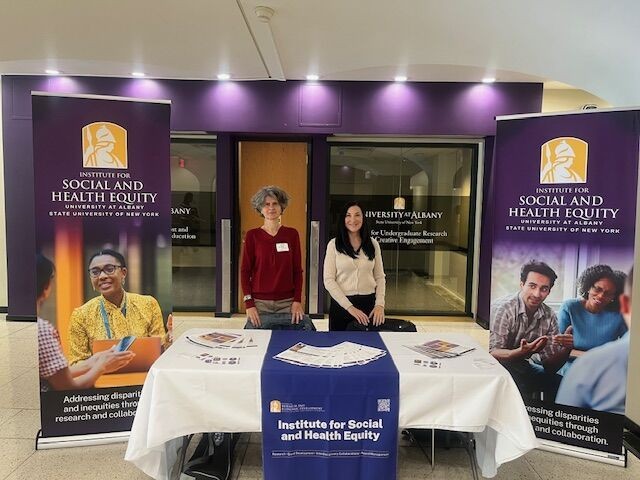
In addition, ISHE was featured at UAlbany Showcase Day, connecting with campus partners and expanding outreach efforts.
Research Proposal Service Request Form
Are you looking to fund your research and need assistance? Submit your request via the ISHE Support Service Form.
Center Highlights
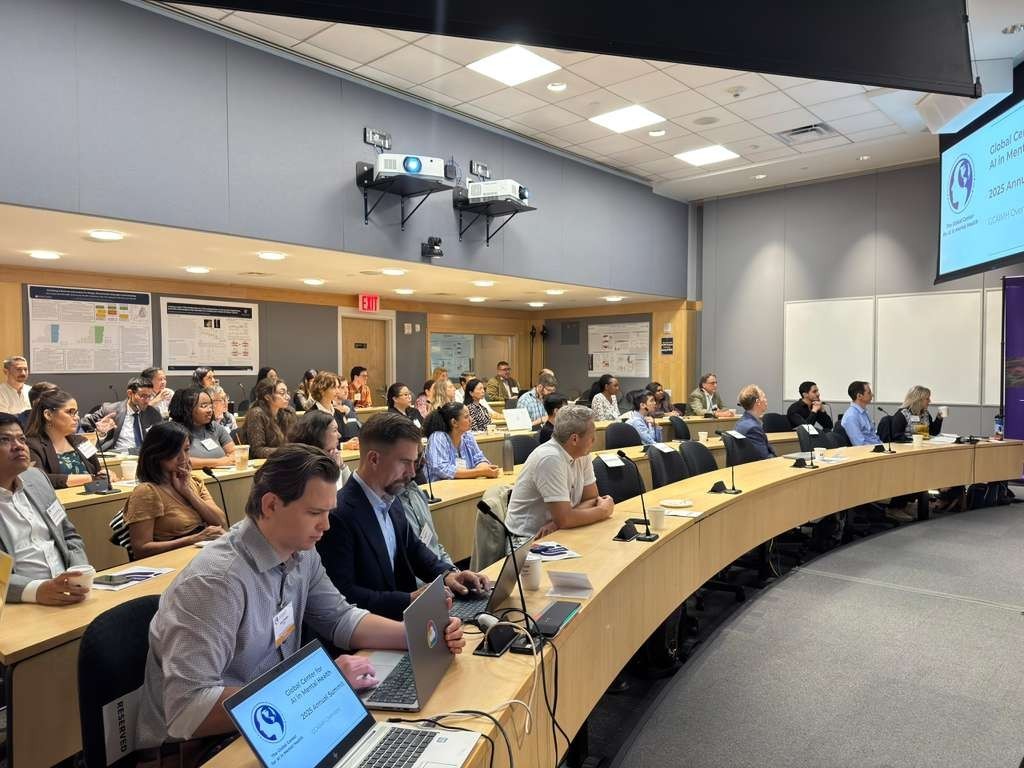
On September 19, the Global Center for AI in Mental Health (GCAIMH) organized its third Annual Summit at the SUNY Global Center in NYC. We brought together researchers, industry leaders, and global partners to explore how AI can advance mental health through resilience, equity, and innovation.
The day featured inspiring keynotes, prototype demos with IBM and Google, poster sessions, and startup showcases, highlighting cutting-edge projects like computational modeling, digital twins, and AI-powered mental health tools. Thanks to the vision of GCAIMH’s founders and directors, along with partners including Google, IBM, the UN, UNICEF, AWS, and HIEx, the summit showcased the power of collaboration for building an equitable future for mental health. Learn more about GCAIMH's third summit.
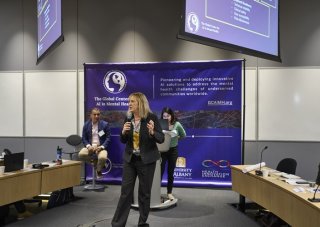
Dr. Amy Nitza, GCAIMH Director at UAlbany, presents Ther-Assist, a unique generative AI tool created in partnership with Google. Ther-Assist is a tool that helps clinicians customize treatment for diseases, including anxiety, depression, and trauma related disorders, by providing real-time, evidence-based prompts during therapy sessions. This promotes innovation and equity in mental health care globally.
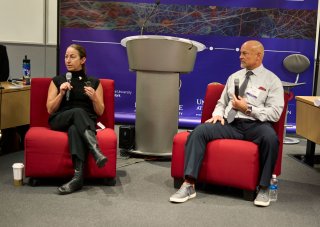
During the summit, a fireside chat featuring Dr. Paul Morgan, Social and Health Equity Endowed Professor and Director of the Institute for Social and Health Equity (ISHE) at UAlbany, and Kat Esser, Global Impact Initiatives Leader at Amazon Web Services (AWS), brought together leading voices in research, innovation, and mental health care. The discussion explored how AI-driven tools like Ther-Assist can be leveraged responsibly to expand access, strengthen evidence-based practice, and promote equity in mental health care delivery.
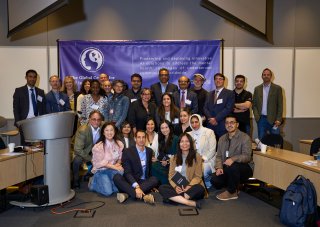
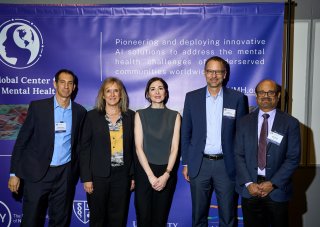
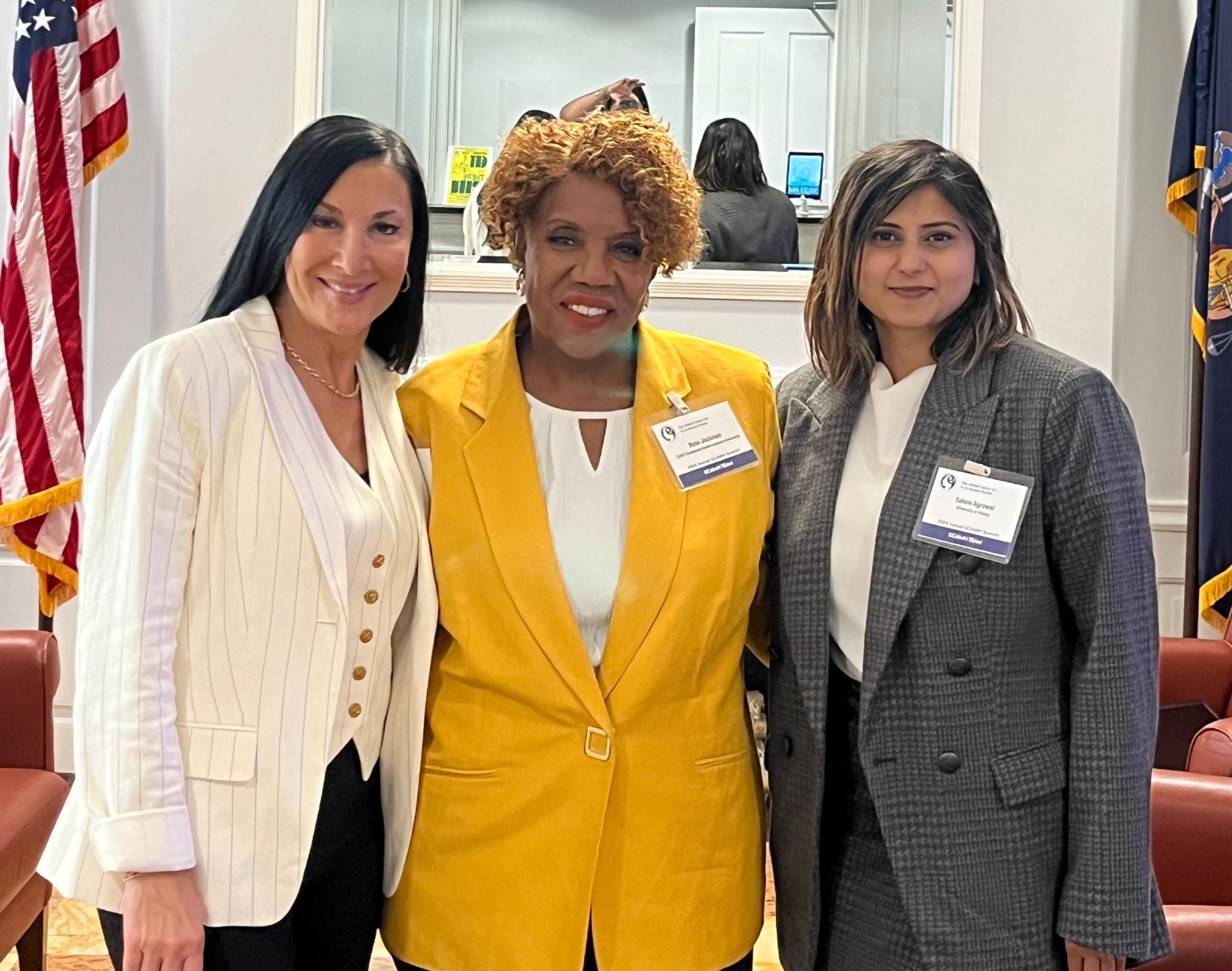
Images from the 2025 GCAIMH 3rd Annual Summit. On the left, some participants and presenters. The picture on the right features (from left to right) Dr. Salvador Dura-Bernal, Director of GCAIMH and Associate Professor at SUNY Downstate Health Sciences University; Dr. Amy Nitza, Director of the GCAIMH at UAlbany; Dr. Zeinab Hijazi, Global Mental Health Lead at UNICEF; Dr. David Christini, Senior Vice President for Research at SUNY Downstate Health Sciences University, and Dr. Thenkurussi (Kesh) Kesavadas, Vice President for Research and Economic Development at UAlbany, whose collaboration and leadership contributed significantly to the success of this year’s summit.
The Center for Healthy Aging (CHA) has launched its inaugural Aging Well Speaker Series for the 2025–2026 academic year. This series features leading researchers, clinicians, and policy scholars exploring critical issues in aging, from biological aging and supportive care to health equity, policy reform, and data innovation. With events offered both in-person and virtually, CHA aims to foster interdisciplinary dialogue, inspire action, and promote well-being across the lifespan. Learn more about the Center for Healthy Aging (CHA).
The Center for the Elimination of Health Disparities (CEHD) is proud to co-sponsor several impactful events with community and academic partners. Highlights included the Black Men’s Mental Health Conference on August 16, Bias and Microaggressions Workshops on August 28 and October 2, and the L.E.T.S. Save Lives suicide prevention program on September 19. On October 16 to 17, CEHD co-hosted a two-day symposium with Harvard’s JPB Fellowship on the Environmental and Social Determinants of Health, followed by the Prescription for Progress Coalition Fall Summit on November 20 addressing the opioid crisis. Learn more about the Center for the Elimination of Health Disparities (CEHD).
The Center for Social and Demographic Analysis (CSDA) hosted a Colloquium featuring Dr. Richard Ocejo, who shared insights from his latest book, Sixty Miles Upriver: Gentrification and Race in a Small American City. The talk examined how rising housing costs in large urban areas are reshaping smaller cities like Newburgh, NY, and explored the moral complexities of gentrification in racially and economically diverse communities. Open to all faculty and graduate students, this event advanced CSDA’s mission to foster critical dialogue on pressing social and demographic issues. Learn more about the Center for Social and Demographic Analysis (CSDA).