


How a Technically 'Non-Technical' Woman Became One of New York’s Most Influential Public Technologists
By Sarah Peter Nelson
In this monthly series, we celebrate the journeys of women who have taken their fellowship experience beyond the program. Each feature highlights a past or present fellow of the Center for Women in Government who is driving change and shaping her community. From emerging voices to established leaders, these women embody the spirit of purpose-driven leadership. Their stories inspire, empower, and remind us what’s possible when women lead boldly.
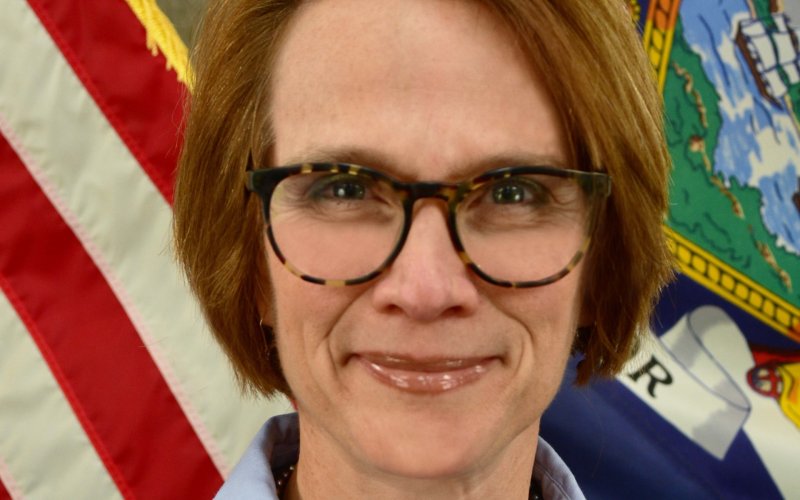
In the high-stakes world of public sector tech, Dana Rosenstreich is a name that commands attention — not just for the systems she oversees, but for the quiet, relentless force of her leadership. As the Deputy Commissioner for Technology for the Office for the Aging and the Justice Center, Dana holds a role equivalent to Chief Information Officer for two major New York State agencies — a rare dual appointment that places her at the intersection of justice, elder care, and digital innovation.
But what might surprise you most?
“I am actually not very technical!”
That kind of honesty — sharp, self-aware, and humble — cuts through the jargon-laced world of government IT. And it’s also what makes Dana Rosenstreich not just effective, but exceptional.
One Fellowship, Infinite Impact
The journey didn’t start with code, or even with policy. It began with a decision that would fundamentally change her career: applying to the Center for Women in Government & Civil Society Fellowship.
“My career path was definitely formed by my time in the Fellowship,” Dana says now, years later, with absolute clarity.
At the time, she was straddling two worlds: the theoretical safety of academia and the unpredictable terrain of public service. The fellowship, she explains, was her first real bridge between those worlds — not just in terms of career exposure, but in mindset.
“During my time in the fellowship I was transitioning from being a student of public administration and policy to a professional. Being book smart only goes so far. The interaction with a bonded group of colleagues where we discussed our different experiences was pivotal during that time of my career.”
Those conversations — the after-hours debates, the roundtable disagreements, the shared growing pains — proved more influential than any syllabus. Dana found herself learning not just how policy worked, but how people navigated the politics around it. She began to understand that the “real world” didn’t always follow the rules she had studied.
“The biggest challenge was recognizing that the real world does not always align to what you may read in textbooks. There are more factors to account for, especially the politics of an administration or organization. I recall talking through these challenges with my cohort and relying upon group discussion to help smooth out the incongruity.”
It was a crash course in public sector realism. And it worked.
Making the Call — Even When It Costs You
Years later, Dana found herself leading a high-profile government initiative. It was Big. Ambitious. Political. And she was at the helm.
But leading isn’t always about popularity — and Rosenstreich made decisions that, while deeply unpopular, were rooted in her understanding of what the state truly needed.
“I had to make some very unpopular decisions that impacted the timeframe of the effort. However, there is no doubt in my mind that my approach and ultimate decision was the only path to take.”
The fallout was real. The pressure was immense. But she didn’t waver. And that resilience? It wasn’t born in a crisis room — it was seeded in that fellowship, where she learned to trust not just her judgment, but her voice.
“If I had turned away from doing what was just and right for the State of New York I would have considered that a failure of my moral compass.”
You Can’t Lead Alone
For someone leading state-level tech strategy, Dana’s most cherished lesson isn’t technical at all.
“Your circle of contacts can never ever be large enough.”
It’s not just networking in the transactional sense — it’s building a real community. That sense of camaraderie, she says, was one of the most meaningful gifts of the fellowship.
“My time in the fellowship really helped solidify for me how important a network of colleagues is – both professionally as well as personally.”
Tech Isn’t the Goal — Justice Is
Today, that attitude carries through everything she does — from mentoring rising professionals to pushing the boundaries of what government tech can look like. She ensures that technical tools are used equally and intelligently in a rapidly changing world.
“The current Federal regime is taking a wrecking ball to the safety net for some of the most vulnerable people. The work I do ensures that we are leveraging technology to support social services in the most equitable and efficient way possible.”
Redefining What Tech Leadership Looks Like
What makes Dana’s story remarkable isn’t just what she’s achieved — it’s the way she’s done it.
She’s broken unspoken rules, including the one that says you must mask your humanity in a leadership role.
“Letting work colleagues see more of my true self,” she says, was a rule she broke that led to something great.
And she’s never once considered quitting. Not even during the hard days.
“No, that’s never been an option for me. Just keep on plugging away.”
That grit — combined with her strategic mind and Fellowship-forged confidence — continues to open doors for future change-makers. To them, she offers this:
“Please don’t assume that the ways in which policy or public administration has been implemented and executed in the past has to be our future. Find the most equitable and innovative ways to support our communities and our environment with respect for the past but with ingenuity and imagination.”
The Quiet Power of Showing Up
For Dana Rosenstreich, being a Center for Women in Government & Civil Society Fellow wasn’t just a stepping stone. It was a springboard — into leadership, into service, and into herself.
“I take a lot of pride in standing alongside so many other talented, passionate and intelligent people.”
And though she may not write code, her work writes a different kind of language — one of equity, access, and courage. A language which is needed in public service.
To those wondering if they should apply for the Fellowship, Dana’s advice is swift and unwavering:
“Do it! It is a great experience even if you are looking to go into public or private. Getting a peek into how New York State works is so eye-opening.”
From fellowship halls to high-stakes boardrooms, Rosenstreich’s journey reminds us: you don’t have to fit the mold to break new ground.