





History Lecturer Lenart Named Fulbright U.S. Scholar for 2025-26

ALBANY, N.Y. (Sept. 4, 2025) — When UAlbany’s Camelia Lenart first encountered the history of the Fulbright Program, she wasn’t reading about it in a brochure — she was holding original archival documents in her hands while visiting the United Kingdom’s National Archives at Kew in London.
“I was deeply impressed by its core values, mission and the idea of ‘citizens’ diplomacy,’” said Lenart, a lecturer in the Department of History at UAlbany. “At this point in my life and career, I think about what I can do for my countries, as both Romania and the U.S. have done so much for me.”
That vision will soon take her back to her native Romania as a Fulbright U.S. Scholar for 2025-26, where she will teach, research and serve as what she calls a “citizen diplomat” in the country where her academic journey began.
Bridging Two Worlds
Lenart will spend the spring of 2026 at the University of Bucharest, where she will teach a course she designed, "Art, Music and History in Europe: A Multimedia Approach," as well as launch a history club and a symposium on Romanian-American cultural exchange. She will also advance her book project, Black Bodies, American Cultural Diplomacy and the Cold War: Alvin Ailey Company’s Tours to Romania during the 1970s.
Her research explores the role of African American cultural diplomacy in Cold War Romania, a topic she first encountered while interviewing a Romanian modern dancer for her PhD dissertation. The work, she says, sits at the intersection of dance diplomacy, performance studies, and foreign affairs — and can only be fully developed through on-site research in Romanian archives and direct engagement with local scholars.
“It’s a unique opportunity to deepen and expand my current research,” said Lenart. “This project will be a premiere in dance and diplomatic history, as well as in Black, cultural, women’s and Eastern European studies.”
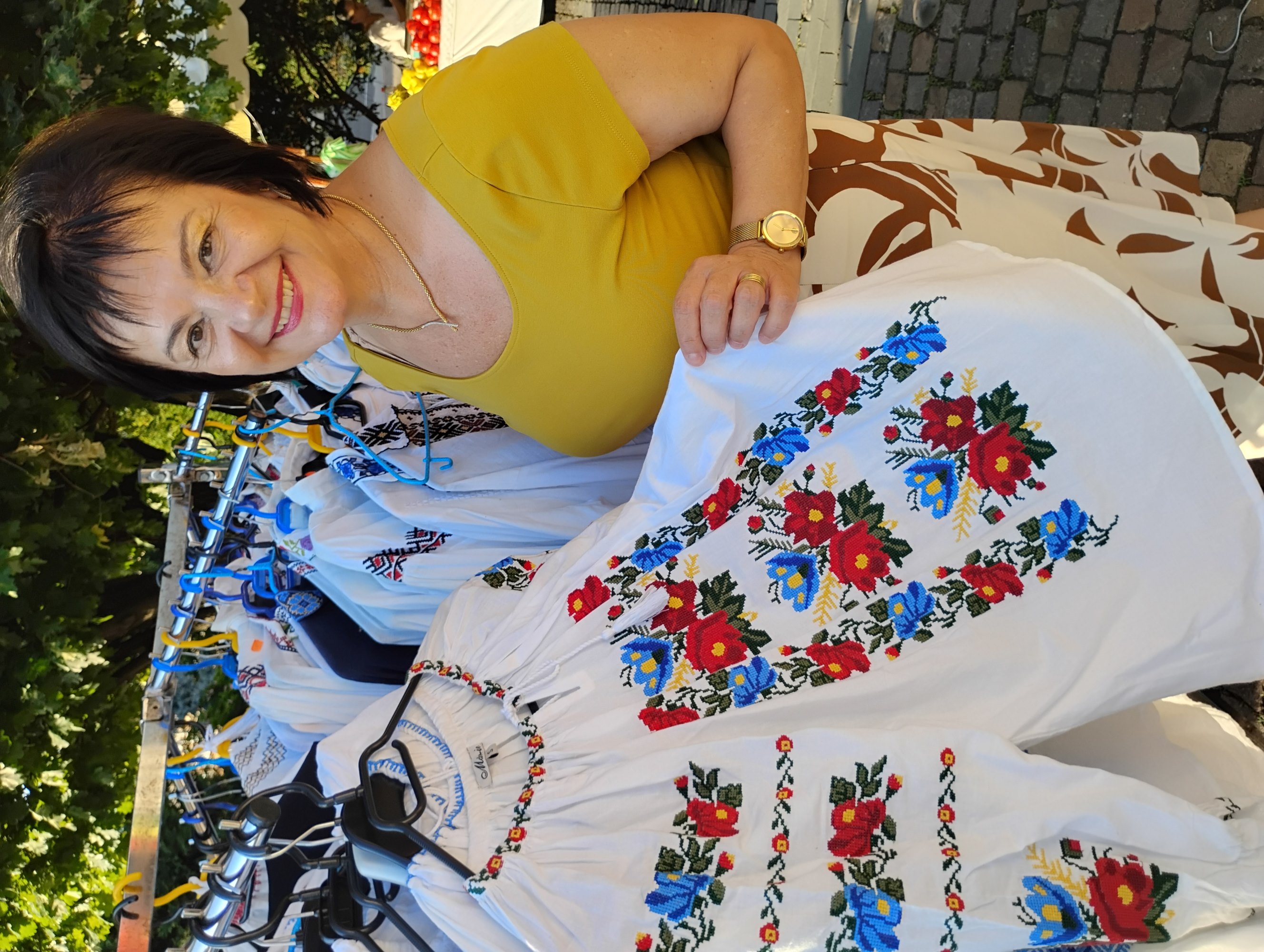
Lenart’s dedication to teaching is long-standing. In Romania, she taught high school history and earned national recognition for her work. After immigrating to the U.S. in 2000, she earned both her master’s (2005) and PhD (2015) in history at UAlbany while raising three children with her husband, Professor and Chair of Mathematics Cristian Lenart.
She began teaching at the University soon after completing her comprehensive exams.
“I teach with passion, joy and an immense sense of responsibility toward each student,” Lenart said. “Teaching history carries a huge social responsibility, because our students will be the ones to shape the future.”
That commitment has been recognized repeatedly. Since 2017, Lenart says she has received 287 thank-you notes from students, as well as UAlbany’s College of Arts and Sciences Excellence in Teaching Award, the Torch Award, and top-tier course evaluations. She has advised student conference presenters and leads the UAlbany Dance Club, one of the largest and most diverse groups on campus.
A Personal and Professional Milestone
For Lenart, UAlbany is more than a workplace — it’s where she relaunched her academic career after immigrating, and where she found an environment that encouraged open dialogue, interdisciplinary exploration, and “thinking beyond.” It’s also where she and her husband have built their professional and personal lives.
“Everything — but especially the students — has been the best part of the UAlbany experience,” she said. “They made my American dream both real and beautiful.”
Lenart sees the Fulbright not only as a personal and professional milestone, but also as a way to connect her Romanian and American students in lasting ways. She plans to use the Collaborative Online International Learning (COIL) system to create exchanges between UAlbany and the University of Bucharest.
She also intends to bring back more than just archival research. As a firm believer that “a picture speaks a thousand words,” she will return with photographs and stories from historical sites, museums and UNESCO monuments, as well as glimpses of everyday Romanian life — all of which, she said, add authenticity and excitement to her classes.
Ultimately, the award is about giving back to both of the countries she calls home.
“One of the hardest questions I’ve been asked is which country I love more — the U.S. or Romania,” said Lenart. “There’s no answer. Both are part of me. This award gives me the chance to show my deep gratitude to both, and to bridge them in meaningful ways.”
The Fulbright U.S. Scholar Program offers funding for U.S. citizens to teach, carry out research, or conduct professional projects around the world. The program offers more than 400 awards in over 135 countries, providing faculty, artists and professionals from numerous fields the opportunity to enhance skills and forge new connections.