


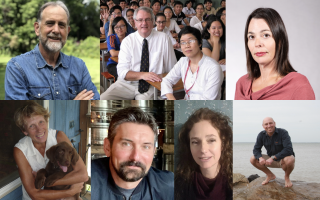
Seven UAlbany Faculty Win Fulbright Scholar Awards
Seven University at Albany faculty and staff members have received a Fulbright U.S. Scholar Program award to conduct research and teach in their respective fields across Europe, South America, Central America and Asia during the 2023-2024 academic year.
Noteworthy: Research grants, awards and publications
ALBANY, N.Y. (June 27, 2023) — The latest developments on University at Albany faculty and staff who are receiving research grants, awards and other noteworthy attention.
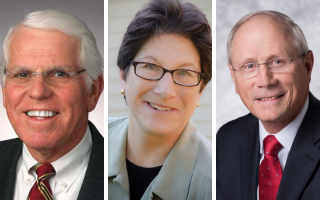
University at Albany Foundation Announces 2023 Citizen Laureates
James K. Reed, MD, Robert W. Lazar and Roberta Bernstein, PhD, have been named 2023 Citizen Laureates by The University at Albany Foundation.
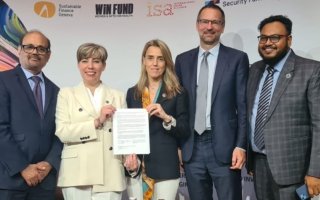
UAlbany, SUNY Downstate Explore AI’s Role in Mental Health Care
The Global Center for AI in Mental Health, formed in collaboration with the Health Innovation Exchange, will explore ways to use AI and other deep technology to advance early detection of mental health conditions, track patients’ progress and monitor them after medical intervention — helping alleviate shortages of in-person professional care where resources are currently scarce.

Study: Tailor Healthcare Messages to Language and Culture of Target Community
Researchers tracked COVID-19 vaccination rates to determine the effectiveness of communications to foreign-born U.S. residents who weren't native English speakers.

UAlbany Atmospheric Scientist Partners with GE to Help Build More Sustainable Aviation
Fangqun Yu, a senior researcher at the Atmospheric Sciences Research Center, is working with a team at GE Research that is developing next-generation combustion engines fueled by hydrogen.
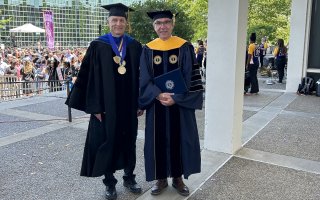
UAlbany, Leibniz Institute Connect Through Laser-Based Technology
Chemists Igor Lednev and Jürgen Popp have built a strong connection over their use of Raman spectroscopy.