





Disaster Response PhD Student Rallies Support for Flood-Ravaged Nepal

By Sia Patel, Class of '26
ALBANY, N.Y. (Oct. 20, 2026) — When Prabin Sharma woke up on the morning of Aug. 26, he reached for his phone. The videos of devastating floods in Nepal were so shocking they looked like they had been made by AI.
Then he saw the missed calls from his father. For Sharma, a PhD student in the University at Albany’s Department of Information Sciences and Technology, the effect of the disaster was much more than a piece of news.
He had previously worked in the affected districts of Nuwakot and Rasuwa, visited their villages and established contacts with local people. Now those very places were inundated.
Unprecedented devastation
Sharma, who is from Nepal, says the flooding disaster is harder to cope with compared to the 2015 earthquake, one of the deadliest disasters in the country’s history.
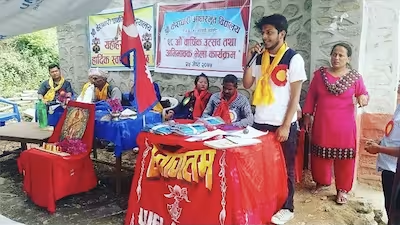
When the earthquake struck, homes were destroyed, but families often found bodies of their loved ones close by. After the recent flooding, which left at least 1,400 dead and 5,500 people missing, many bodies have been found far away in India.
Generations of families have vanished. One elderly man lost his son, daughter-in-law, grandchildren and great-grandchildren. One of Sharma’s friends lost as many as 150 neighbors.
“I do not think that people are likely to recover,” Sharma said.
His family lives in Lalitpur, about 70 miles from the affected area, and was spared. Still, he lost some of his friends and witnessed the destruction of the places he used to work. A school he supported was destroyed so completely that nothing remains, just minutes after 1,000 students were evacuated.
“The relationship with the affected area and with the community is tremendously profound,” he said.
Nepal’s path forward
At UAlbany, Sharma is a graduate research assistant in the College of Emergency Preparedness, Homeland Security and Cybersecurity's Extreme Events, Social Equity, and Technology lab. The lab studies how extreme events and disasters impact vulnerable populations — such as older adults, people with disabilities and racial and ethnic minorities — and how advanced technology can improve preparedness and decision-making.

Sharma’s research is focused on disaster aid, and he plans to follow closely how the Nepali government and aid agencies handle the recovery in coming months. He is especially interested in how they involve affected people in decisions about relocating to safer ground and rebuilding their lives.
“Recovery is not just about delivering aid,” Sharma said. “It matters whether the people who lost their homes have a say in where they live next and how they rebuild.”
Nepal has improved its disaster preparedness since 2015, with new policies, building codes and local disaster plans, Sharma said. But as a developing country, investing in infrastructure remains an uphill battle.
Climate change adds to that challenge. Nepal contributes very little to global carbon emissions and is 40 percent forested, yet it remains one of the countries most vulnerable to climate change.
“Disaster risk reduction doesn’t often get the same priority as other basic needs,” Sharma said.
Taking action from afar
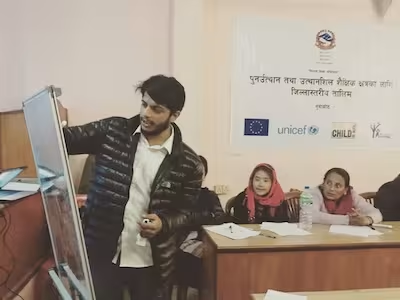
On campus, Sharma, who is vice president of the Nepali student organization, recently helped organize a candlelight vigil and is leading fundraising efforts for Street Child of Nepal, a nonprofit helping affected students and schools.
While being at such a distance from his homeland during a crisis has been “incredibly difficult,” Sharma continues to raise awareness and collect funds, working to help Nepal and its people.
“Each time someone from Nepal says the country is hurting, there is a very literal sense of closeness behind those words since the country is geographically small and deeply connected,” he said. “The line between people affected and someone you know is very thin.”