





For Virginia Eubanks, a Lifeguard Manual Provided the Key to Trauma Recovery
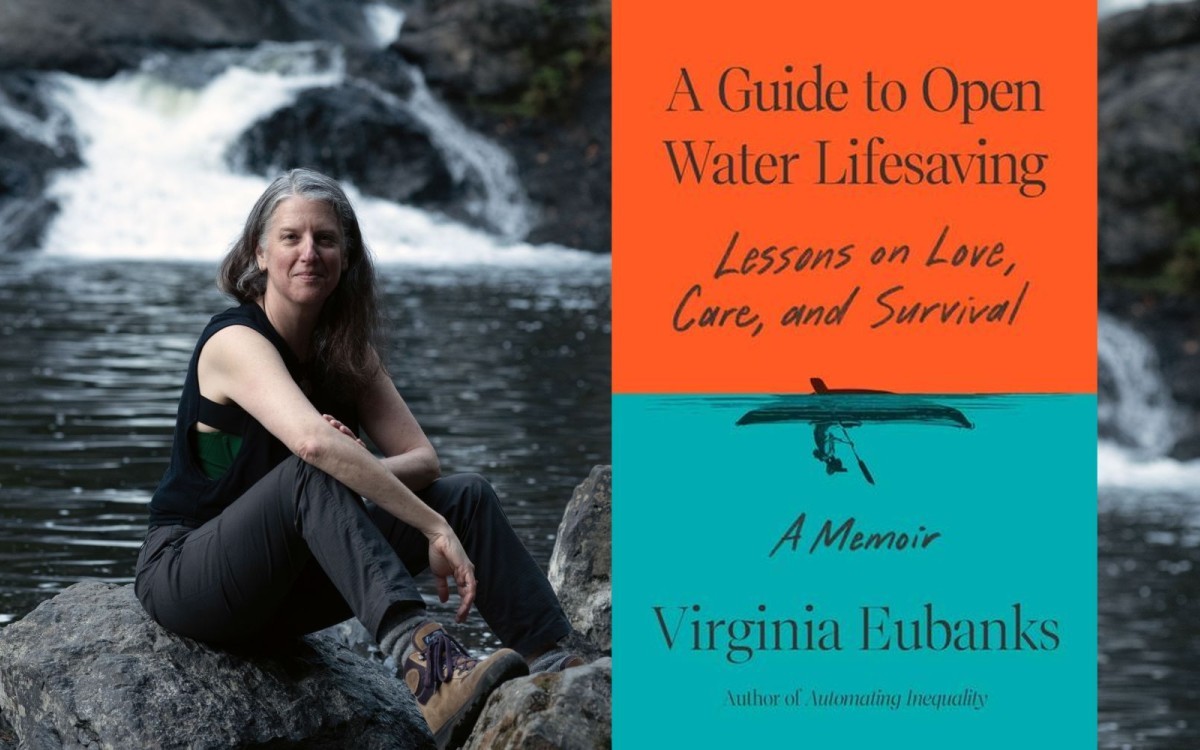
ALBANY, N.Y. (Sept. 23, 2026) — Virginia Eubanks popped out of the stairwell smiling, apologizing for being a couple of minutes late. She took the cup of tea I handed her, settled into a chair in my office and we started talking.
Eubanks has been talking a lot lately, at bookstores, radio stations, podcasts and interviews as she tours with her new book, A Guide to Open Water Lifesaving: Lessons on Love, Care, and Survival.
It’s a remarkable work, part memoir, part trauma tale, part social criticism, part survival manual. Eubanks will tell you it’s also a love story, one that ends with a twist. A book that manages to be hopeful and helpful, without the toxic treacle you might find in a self-help book.
The underlying plot is two brutal attacks on Eubanks’ partner and the toll it took on him, the survivor, and her, the caregiver. It’s about PTSD and the fight to get the services they needed to recover. And how a lifeguard manual ended up being the first useful roadmap she found toward recovery.
This is the absurdity of it, right? There are 13 million people with a PTSD diagnosis in the country right now, and 59 million kin caring for adult family and friends. And the first book that felt genuinely useful to me was a lifeguarding manual.
Grounding the book are descriptions of learning lifesaving — from water rescue to wilderness first aid. Eubanks, an associate professor of political science at UAlbany’s Rockefeller College of Public Affairs and Policy, used a portion of her reporting budget to take every survival course she could get to within a day’s drive.
I wasn’t 30 pages in before I was recommending the book to my kids, my reading pals, my friend who owns a bookstore. I was eager to ask Eubanks what I knew was the most obvious question: After all the books you read on PTSD and trauma, how did you figure out what you needed was a lifeguard manual?
“I still don't remember exactly how I found the manual,” Eubanks said. “This might be my narrative brain working overtime, but the thing that I recall is that I was just googling ‘I'm drowning.’”
That was around 2021, six years after the violent attacks on Eubanks’ partner, just blocks from their home in Troy. Six years of fighting medical, insurance and mental health systems for help, guidance, diagnoses, services. Six years of managing and reacting to physical and emotional upheaval, of reading and researching, asking for help.
“When it arrived, I just remember being really blown away by how resonant the titles of the chapters were to me: Maintaining Vigilance, Special Rescues and Defenses, Drowning Stages. I felt like it was describing my experience even though obviously I was not in the water,” Eubanks said. “This is the absurdity of it, right? There are 13 million people with a PTSD diagnosis in the country right now, and 59 million kin caring for adult family and friends. And the first book that felt genuinely useful to me was a lifeguarding manual.”
Meet Virginia
Virginia Eubanks will be part of a panel and book signing at the New York State Writers Institute's ninth annual Albany Book Festival.
- What: Heads Above Water - Survival Memoirs: A conversation with authors Cara Benson and Virginia Eubanks
- When: 2:15 to 3:15 p.m. Saturday, Sept. 26, 2026
- Where: Campus Center West Boardroom
- More Info: The Albany Book Festival features dozens of events, including author panels, book sales and signings, readings and children's events. Saturday from 10:30 a.m. to 5 p.m. throughout UAlbany's Campus Center
The manual prompted her to study survival in the wilderness and on the water, looking for a feeling of competence. She took a kayak self-rescue course, got certified as a lifeguard. She studied wilderness first aid, orienteering, learned to bushwack. She sought out experts, interviewed her instructors.
“Lifeguarding teaches you that you are just one link in a chain of survival,” she said. “And I think that there was something in that that made me start realizing that even though we were both doing the very best we could, I did not have the tools, training and team that I needed to do caregiving effectively.”
Lifeguards learn early on that you need that training to help someone who is drowning. Untrained bystanders too often become victims themselves, just as people who care for PTSD sufferers can end up with their own PTSD diagnoses. Yet caregivers are too often thrust into the role of providing complex medical and mental support with little or no training.
Eubanks was repeatedly told that there’s no roadmap for family caregiving, which, she said, is just nuts. And while her book doesn’t map out one correct path, there’s a lot of information in it that can help caregivers.
“My publisher wants me to say that the advice I give to people is that no one can do this perfectly. But the real advice I give to my friends who are thrust into emergency caregiving is you're not even going to be able to do this well,” she said. “Forgive yourself now, because the system is not set up for you to succeed … you're not resourced to do it well. You don't have tools, you don't have a team.”
Eubanks notes the book doesn’t have a “happily ever after” ending but does have a hopeful message. She survived. Her partner survived. She discovered seemingly invisible networks of care, from trauma care models to forest rangers.
“One of the great joys of writing this book was starting to see those networks in a way that I hadn't before,” she said. “Even though I've reported on care for a long time, it wasn't until I had this experience that I really started to see the extraordinary ways that people show up for each other.”
Which is important because nobody survives the wilderness alone, she said.