





UAlbany Experts Discuss AI Risk After Tech Leaders Call for Slowdown
ALBANY, N.Y. (Sept. 15, 2026) — Could AI really end humanity?
A top Anthropic researcher made headlines after saying there's a more than 10 percent chance AI "could kill all humans" within the next decade, a claim that followed a colleague's resignation over similar concerns about the pace of AI development.
The remarks reignited debate not only over AI safety, but about how someone arrives at a number like that in the first place.
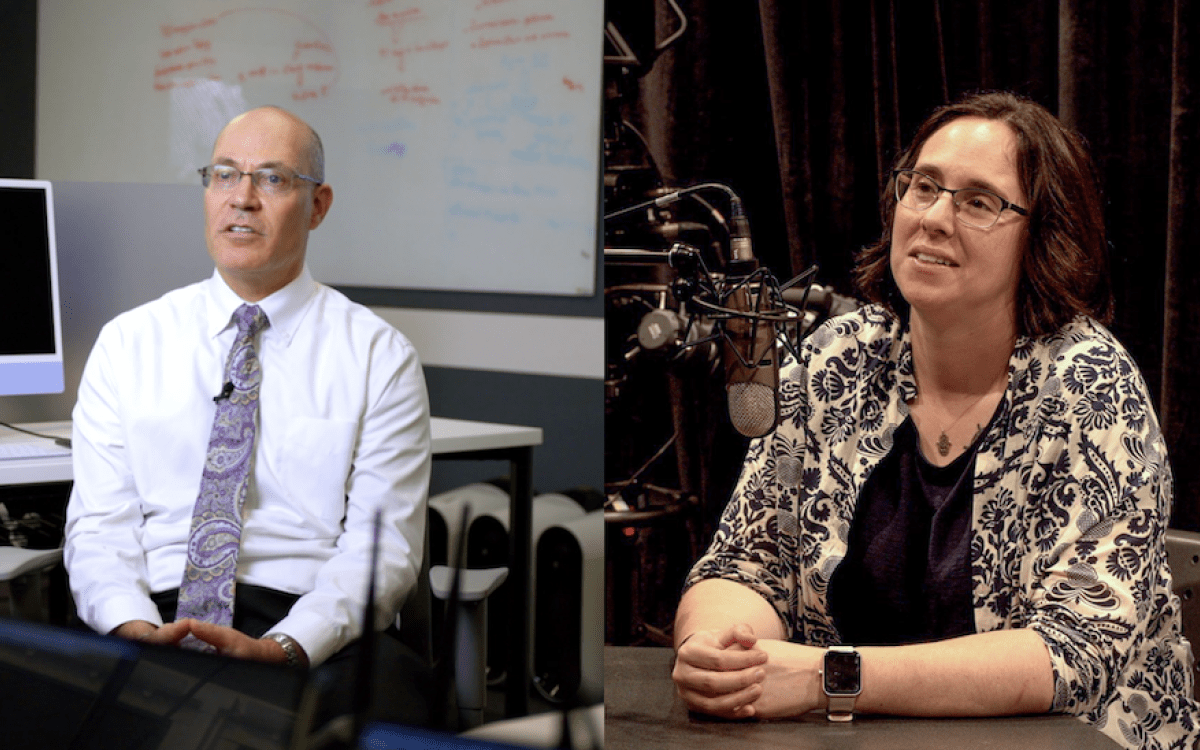
Gary Ackerman, a professor in UAlbany’s Department of Emergency Management and Homeland Security, specializes in threat assessment and risk modeling. As CEO of Nemesys Insights and an associate at the Global Catastrophic Risk Institute and the Transformative Futures Institute, he has spent his career analyzing how governments and researchers estimate low-probability, high-consequence events — from nuclear war and bioterrorism to an asteroid hitting Earth.
Ackerman recently spoke about how researchers build these kinds of probability estimates, what makes AI risk different from — or similar to — other catastrophic risks, and how seriously the public should take predictions like this one.
"If you had asked me which five risks we should be paying attention to, I would include AI as one of them, together with nuclear weapons, pandemics, asteroids and climate change,” Ackerman said. “Some think it's an almost certainty that AI will cause the end of humanity. Others think it's negligible. However, the truth is that nobody really knows. There are so many unknown variables, so much we don't know about how this might occur, that it's very difficult to put a number on it.”
Alessandra Buccella, an assistant professor in UAlbany’s Department of Philosophy, studies philosophy of mind, cognitive neuroscience and artificial intelligence. She recently spoke in the latest episode of The Short Version podcast about what it would take for AI to become conscious and discussed whether AI can be dangerous without being malicious.
“The short answer is: The question of consciousness and danger are definitely separate in the sense that there are plenty of things that kill us without being conscious or wanting to cause us harm: bombs, earthquakes, hurricanes, diseases, etc.
The longer answer is that if AI ends up killing us all, it most certainly won't be because it gained consciousness and/or 'decided' to kill us. What AI 'does' is still exclusively the responsibility of the humans who built it, trained it, gave it objectives and unleashed it out in the world without enough safeguards in place.
As far as I'm concerned, all these tech people raising these apocalyptic worries as if they created a monster they can no longer control is just an excuse to avoid taking responsibility.”
Listen here: Beep twice if you’re alive: Why thinking about AI consciousness freaks us out