





UAlbany Researcher Studying Impact of PFAS ‘Forever Chemicals’ on Edible Crops, Food Quality
By Bethany Bump
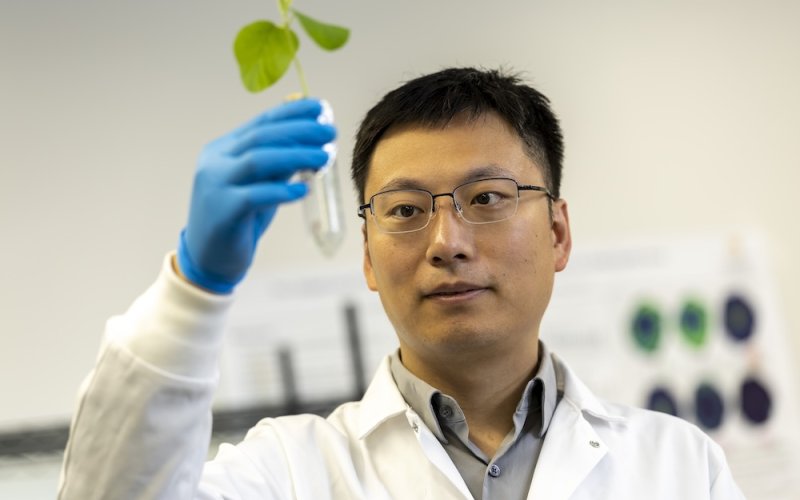
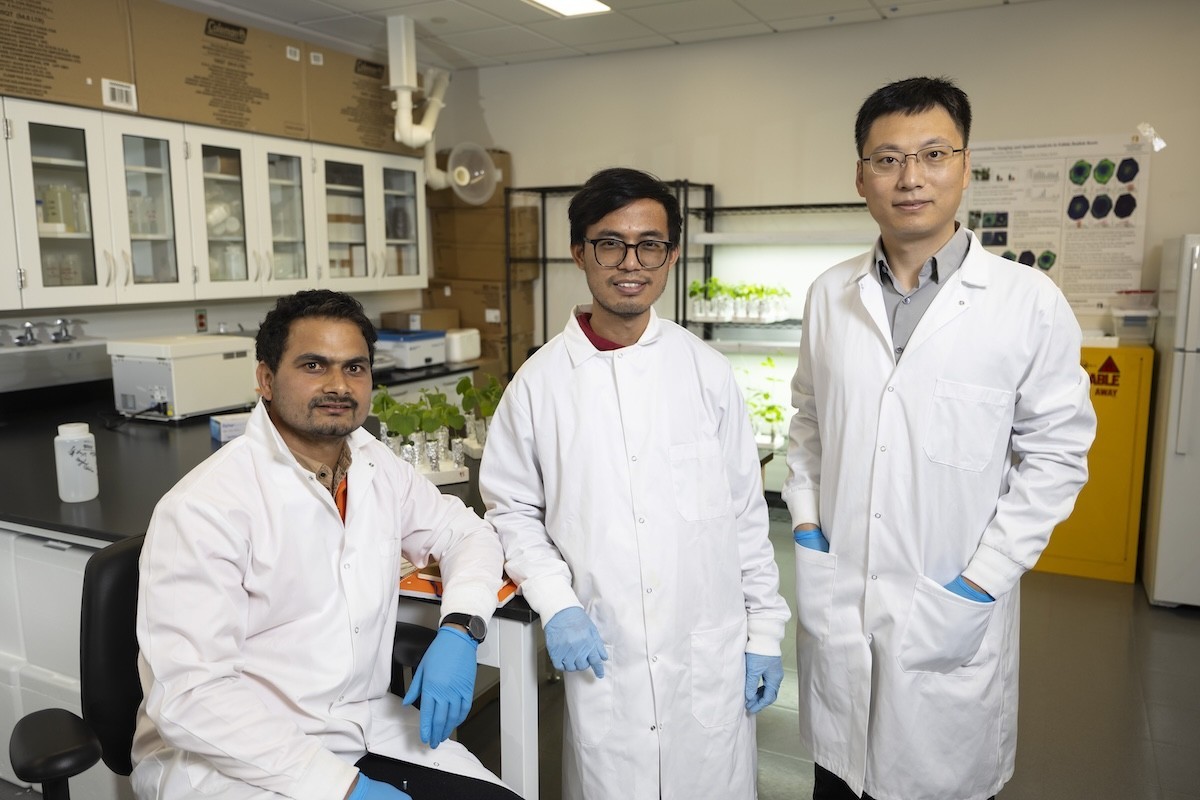
ALBANY, N.Y. (Dec. 18, 2025) — A researcher in the University at Albany’s College of Nanotechnology, Science, and Engineering was awarded nearly $420,000 from the National Science Foundation to study how the accumulation of toxic “forever chemicals” in edible plants impacts food quality and safety.
Weilan Zhang, an assistant professor in the Department of Environmental & Sustainable Engineering, has been studying perfluoroalkyl and polyfluoroalkyl substances, or PFAS, since he came to UAlbany as a postdoctoral associate in 2018.
The large group of synthetic chemicals developed in the 1940s for their stain- and water-resistant properties and used in products like nonstick cookware, food packaging, clothing and firefighting foam are known as “forever chemicals” because they are extremely difficult to break down and can persist in the environment for a long time.
Because of their widespread use and resistance to degradation, PFAS have been found just about everywhere — in water, soil, air and animals, including humans. Contamination is higher in some areas than others, such as near industrial facilities, military bases and airports that use firefighting foams. Exposure has been linked to negative health effects like high cholesterol, decreased immune response, liver and kidney disease, and certain types of cancer.
“There are some studies showing that if plants take up these pollutants and animals consume those plants, PFAS can go through the plants to the animals,” Zhang said. “And because the half-life of the chemicals in animals is very long — decades — they can slowly accumulate in animals, and eventually people eat those animals, or directly eat the plants, and then they accumulate in human beings.”
As part of the NSF grant, Zhang will study how PFAS are taken up by plants, how these chemicals distribute across different parts of the plant tissue, and how this accumulation affects the nutritional quality of food crops.
“Studying the uptake and distribution of PFAS in edible plants, especially in parts that strongly accumulate PFAS mass, is essential for evaluating the potential health risks associated with consuming PFAS-contaminated crops,” the project summary reads. “Understanding the dynamics of PFAS in soil-plant systems is also critical for developing regulatory standards to protect public health and the environment.”
How PFAS Get into Crops
Zhang’s prior research into PFAS remediation laid the groundwork for his latest grant. His earlier work focused on removing PFAS from water and soil using high temperature and pressure treatments, as well as phytoremediation, which uses plants to absorb environmental contaminants into their biomass, which is then treated to a thermal degradation process.
“This gave us a lot of preliminary data showing that plants are capable of taking up PFAS from the water and soil into their biomass,” he said. “We have been using grass and wetland species to do this phytoremediation process, but my previous studies inspired me to go into more agricultural settings and see how crops take up PFAS and how that affects the agriculture system.”
Food crops may be particularly prone to PFAS contamination. The chemicals are prevalent in biosolids, or sewage sludge, which can be applied as fertilizer, as well as in pesticides that are sprayed directly onto crops and the water used to irrigate them. Once in the soil, they can be absorbed by crops and livestock, leading to the presence of PFAS in produce, milk and other food supplies.
Where PFAS Accumulate in Plants
PFAS do not distribute uniformly across all plants and can pose different risks based on which part of the plant someone consumes, Zhang noted. Long-chain PFAS are more likely to be found in the roots of certain plants, while short-chain PFAS may be more present in the leaves and seeds. Zhang’s study will elucidate which proteins act as carriers helping to transport PFAS across these tissues.
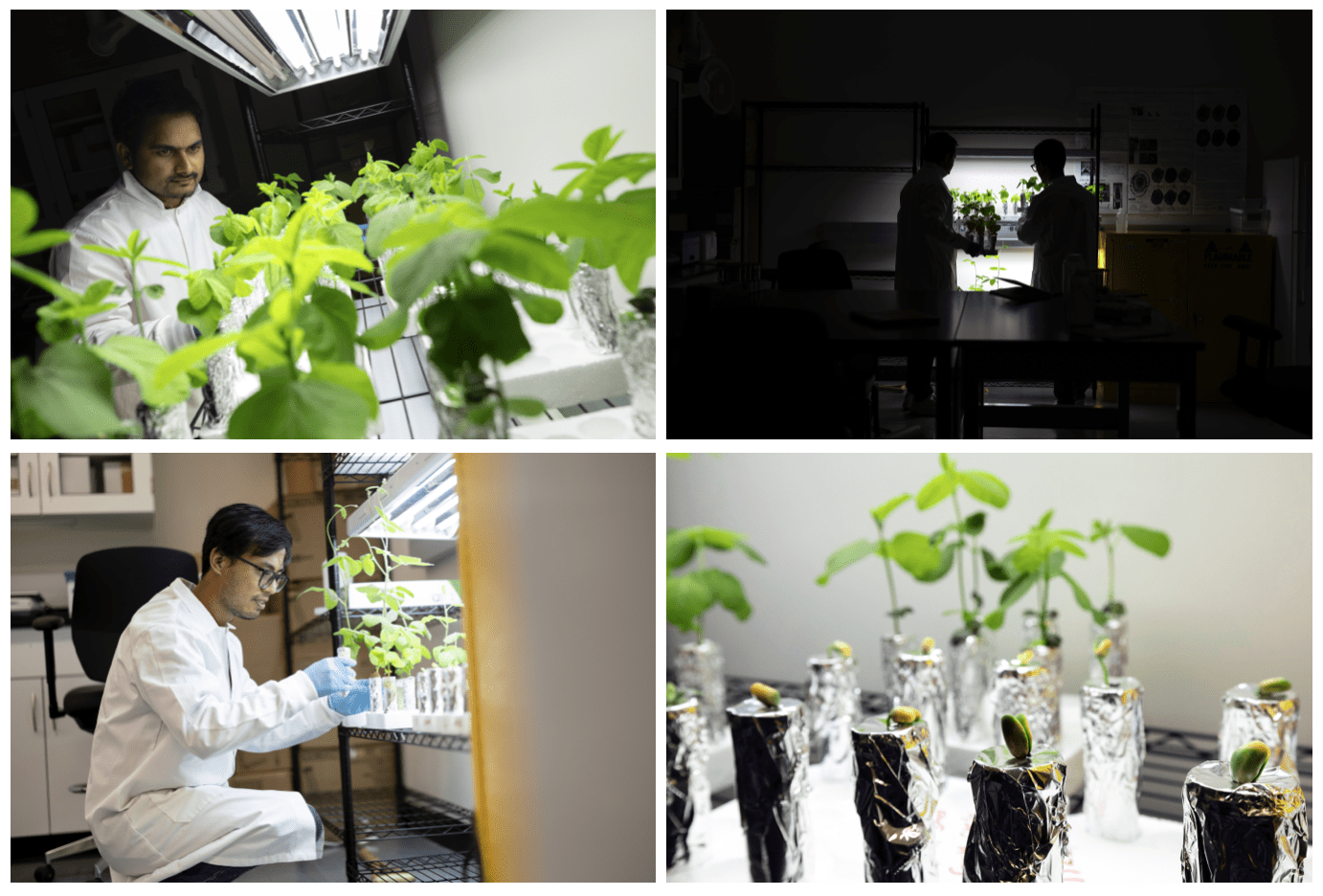
Three crop species were selected for the study — radish for its edible root, lettuce for its edible leaves, and soybean for its edible seeds.
“This represents the whole growth cycle of the plants,” he said.
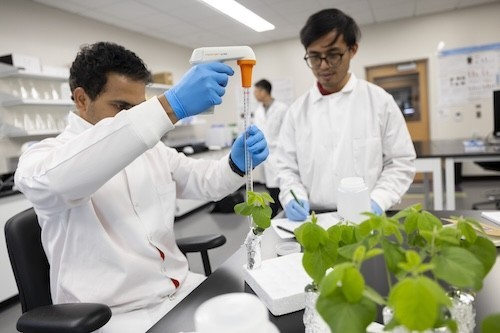
Zhang is growing the plants from seed using clean soil collected from a local farm, which will then be spiked with controlled levels of PFAS. As the plants grow, he will use a high-resolution mass spectrometer to visualize the PFAS distribution across different parts of the plant. Zhang introduced an innovative approach for visualizing and mapping PFAS in plants in a paper co-authored earlier this year in the Journal of Hazardous Materials Letters.
“When PFAS concentration is low, we have previously not observed negative effects on plant growth,” he said. “But when it’s high, we do see negative effects. In radishes, we see a smaller bulb. In lettuce, we see the leaves go yellow. And in soybean seeds, we may not see the seeds at the end of the growth cycle.”
The mechanism of how PFAS affect plant nutrient uptake and biosynthesis will also be evaluated through the analysis of gene expression and changes in nutrient content, he said.
“We hope this helps other researchers and farmers understand how PFAS affects the growth and nutritional quality of plants, and provides the general public information about the potential health risks associated with consuming those PFAS-containing products,” he said.