





UAlbany Researchers Develop FEMA Dashboard to Support Emergency Alert Messaging

By Mike Nolan
ALBANY, N.Y. (July 15, 2025) — Emergency managers across the nation now have access to a dashboard that can help them write effective alert messages before disaster strikes, thanks to researchers at the University at Albany.
Through a $2.8 million contract from FEMA, now completed, researchers from UAlbany’s College of Emergency Preparedness, Homeland Security and Cybersecurity (CEHC) teamed up with the Center for Technology in Government (CTG UAlbany) to develop a Message Design Dashboard that supports public safety communicators to write effective emergency alerts.
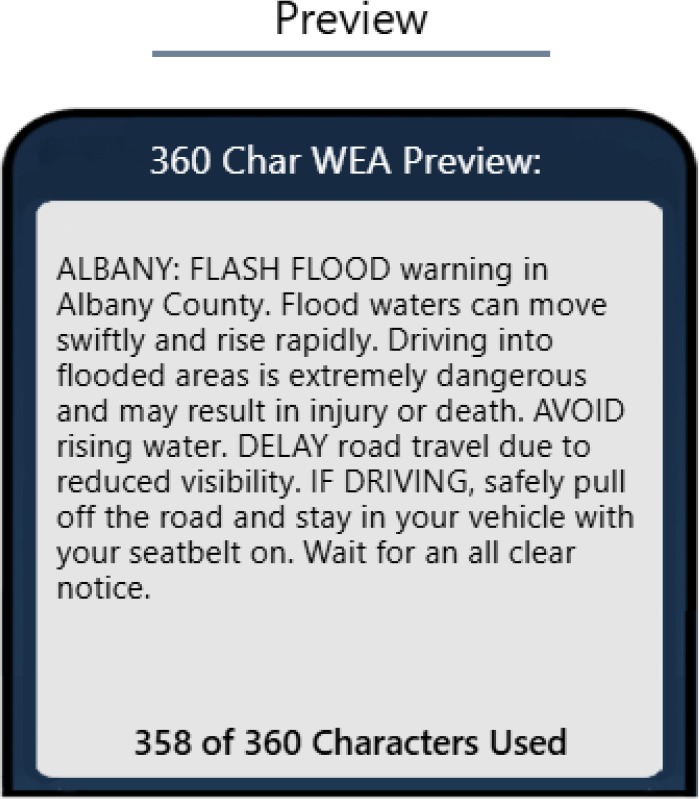
The Message Design Dashboard can be used to create 90- and 360-character messages for more than 50 hazard types, ranging from extreme weather events and toxic material leaks to mass casualty incidents. The message content is based on scientific research and has been tested with the public.
A second version of the dashboard was launched earlier this month, adding new content for missing and endangered persons, as well as all-clear messages, plus improved functionality for both desktop and mobile users.
"The Message Design Dashboard is a first-of-its-kind tool to help emergency managers write effective alerts,” said Jeannette Sutton, an associate professor at CEHC and the project’s principal investigator. “Everything we developed was backed by our own research, with emergency manager input along the way. It is designed to help improve alert messaging, as well as increase public response to warnings.”
"At CTG, we’re always talking with government partners about how they can transform public service through technology. This tool is a great example of that,” said CTG UAlbany Director of Technology Innovation and Services and the project’s co-principal investigator Derek Werthmuller. “It demonstrates the tremendous value of applied research partnerships between universities and government agencies, delivering a solution that would have cost much more if developed by a private sector company with far less research backing its effectiveness."
The Integrated Public Alert & Warning System (IPAWS) is FEMA’s national system for local alerting. It gives federal, state and local public safety agencies the ability to send geographically targeted emergency messages through channels including mobile phones, radio and television.
Authorities send their own emergency alerts. FEMA does not review, edit or approve the messages.
In 2021, UAlbany researchers at CEHC and CTG UAlbany were funded together through IPAWS to develop a software — now known as the Message Design Dashboard — to help emergency managers write effective public alerts and warnings.
The four-year project involved social science and user interaction research to design the software, develop evidence-based lexica, and create trainings that were delivered to more than 500 emergency managers throughout the country on how to write effective messages and use the dashboard.
Sutton specializes in disaster and risk communication, with a primary focus on public alerts. Much of her research, done through CEHC’s Emergency and Risk Communication Message Testing Laboratory, investigates the evolving role of communication technologies, including social media and mobile devices, for disaster preparedness, response and recovery.
For 30 years, CTG UAlbany has immersed itself in government operations in New York, nationally, and in countries all over the world, working to better understand how technology can be used to improve public services.
"This partnership between my research team at the Emergency and Risk Communication Message Testing Lab and CTG shows what’s possible when research meets application,” Sutton said, “While the lab conducted the science behind the message content, CTG handled the design, coding and user testing of the dashboard. Together, it’s an effective tool that can help save lives.”
With the FEMA project concluded, the UAlbany research team is continuing to publish their results and connect with practitioners who can make use of the research to improve their alert and warning programs.