





UAlbany English Professor Featured in Netflix’s New Vietnam War Documentary

By Bethany Bump
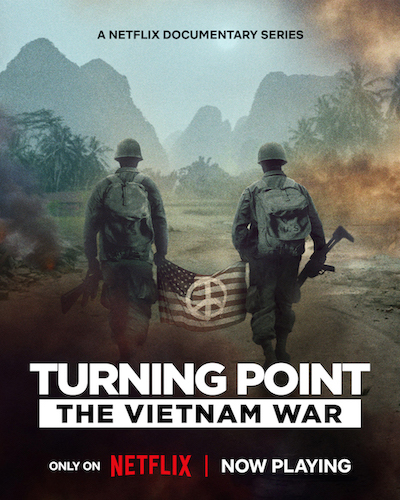
ALBANY, N.Y. (May 27, 2025) — UAlbany English Professor Thomas Bass is a featured presenter in the new Netflix documentary, Turning Point: The Vietnam War. The five-part series by filmmaker Brian Knappenberger was released April 30, on the 50th anniversary of the end of the Vietnam War, and examines the war’s consequences and its lasting impacts on American identity.
Born in 1951, Bass came of age with the specter of the Vietnam War hanging over his head. The war, which began in 1955 with the stated purpose of preventing a communist takeover of the region, lasted 20 years and preoccupied the imagination of many young men during those years.
“The Vietnam War was this kind of black shadow sitting on top of my head, and I spent many years resisting being drafted,” he said. “I was slightly too young to be conscripted. And by the time I was going to be drafted, they had introduced a lottery system where if you got a high enough number then you didn't get sent to Vietnam. If you got a low number, you might be the last GI to die there. Anyway, I lucked out on that one.”
His interest in Vietnam continued long after the war. Bass would go on to travel to the country and write numerous articles and books about the war’s lasting effects, including Vietnamerica: The War Comes Home (1996-97), about the Vietnamese-American children who were airlifted out of Vietnam into the U.S., The Spy Who Loved Us (2009), about famed Vietnamese spy Pham Xuan An, and Censorship in Vietnam: Brave New World (2017), about his and other writers’ experiences having their work censored in Vietnam.
Last spring, Bass received an email from a producer on the Netflix series asking if he would be open to participating in the documentary.
“Ken Burns did a series for PBS on the Vietnam War and I found it infuriating,” he said. “He described it as a noble cause begun by honorable men. I did not think the war was a noble cause conducted by honorable men. So I was intrigued by the prospect that Netflix, in revisiting the Vietnam War in this multipart series, could offer a more honest evaluation of the war.”
The series opens with Scott Camil, one of the organizers of the Winter Soldier Investigation who confessed to committing war crimes in Vietnam and later joined 800 other veterans, including future Sen. John Kerry, in marching on Washington to throw their military medals on the Capitol steps.
“It took a fair amount of bravery for Netflix to begin there,” Bass said.
He believes the failed war marked a turning point for the U.S., planting the initial seeds of distrust in government that is so prevalent today.
Prior to Vietnam, Americans had immense national pride tied to memories of success in the First and Second World Wars. But following the publication of the Pentagon Papers, which revealed the government had lied about the scope and nature of its actions in Vietnam, and newspaper accounts from U.S. journalists on the ground, Americans began to grow disillusioned — leading to a shift in public perception and a vocal anti-war movement.
“The Vietnam War was 20 years of trauma and tumult for this country, and I believe it ended in a fair amount of distrust for our government and our elected officials. The United States, however great a military power it was and is in the world, actually lost the war in Vietnam, which was a profound blow to this country — and some people to this day refuse to admit that the war was lost or even wish they could refight it.”
Bass was impressed by the researchers working on the Netflix series, who had a background in journalism and were able to dig up tape recordings from the Oval Office of presidents discussing the war. These included President Richard Nixon expressing satisfaction that students protesting the war at Kent State University had been shot.
“He thought this would reduce the number of students showing up at future protests against the Vietnam War,” Bass said. “A chilling statement, not unlike the kind of things we’re hearing today.”
When he agreed to participate in the documentary, Bass asked for a favor in return. He wanted to interview Knappenberger, the director, and watch him as he worked. He documented this process in an essay called, “Netflix Goes to War,” which outlined his experience participating in the series.
“I was really curious how Netflix was going to put this together, and how it was going to do it differently from Ken Burns,” he said.” This was going to be an opportunity to look at how Vietnam is perceived today. I am fascinated by how the past is interpreted, and how these interpretations change over time.”
Bass said he is pleased with how the series turned out, even if he would have liked to see more context on the First Indochina War, which laid the groundwork for the Vietnam War.
“I hope the Netflix documentary becomes the new touchstone, the new reference point for the history of the Vietnam War and its place in our culture,” he said. “I certainly hope that the Netflix series is spoken of in the same breath as the Ken Burns series. I think the Netflix series is a more honest confrontation with Vietnam than the Ken Burns series was. I think it's more honest and more revelatory.”
The series is available to stream now on Netflix.