





UAlbany Professor Helps Reconnect Guatemala with a Foundational Maya Text
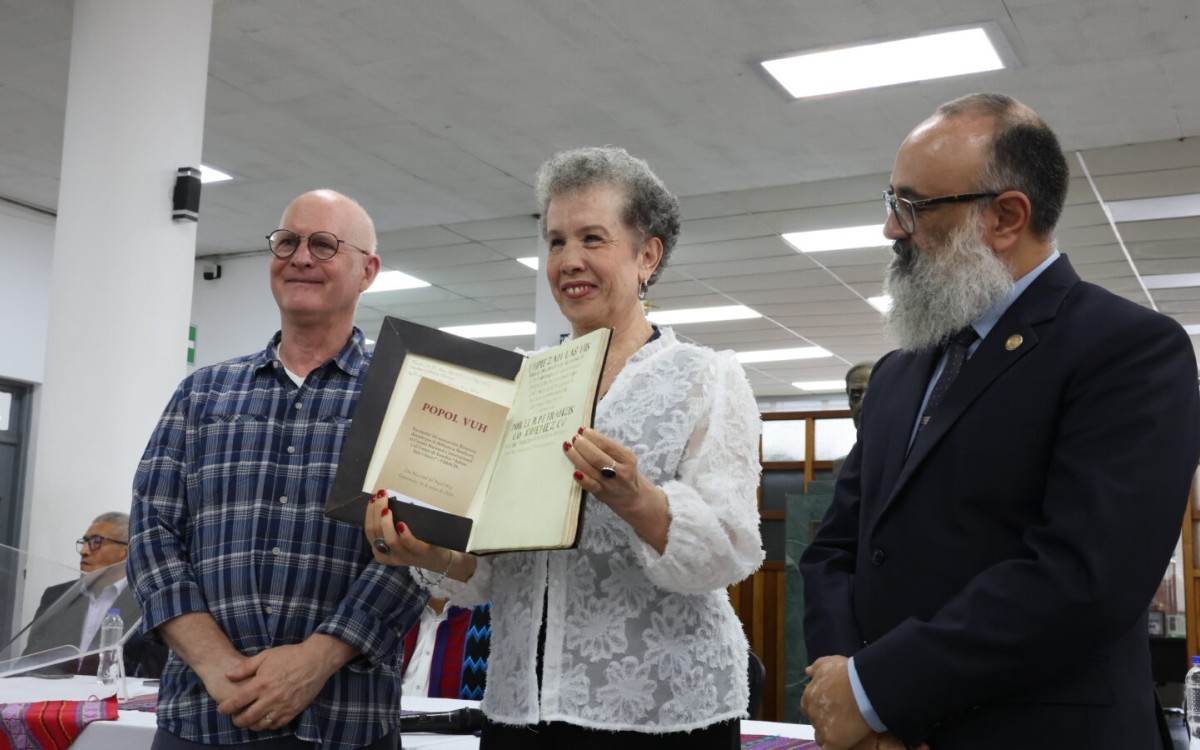
ALBANY, N.Y. (July 30, 2026) — The Popol Wuj, whose name can be translated as the “Book of the Community” or “Book of Counsel,” preserves the creation stories, sacred narratives and history of the K’iche’ Maya people. One of the few early accounts of Mesoamerican mythology to survive Spanish colonization, the work remains central to Guatemala’s literary heritage and to contemporary Maya understandings of identity, spirituality and community.
Now, UAlbany Professor Walter E. Little has helped place faithful reproductions of the earliest known surviving manuscript in public libraries across Guatemala, where students, researchers, educators and other members of the public can consult them.
Little, professor and chair of the Department of Africana, Latin American, Caribbean and Latinx Studies, served on the project’s international committee, which helped obtain four facsimiles from the Newberry Library in Chicago and arrange for them to be placed in Guatemala’s national and municipal libraries. He also participated in the official presentation of a facsimile to the National Library of Guatemala.
“The Popol Wuj is not simply a historical text. It continues to shape how K’iche’ Maya communities understand their history, values and place in the world,” said Little, who is also a professor of anthropology at UAlbany. “Placing these facsimiles in public libraries gives Guatemalans greater access to a work that is fundamentally part of their own cultural heritage. The response showed how meaningful it was for people to encounter this record of Maya knowledge within their own country and through institutions that are open to the public.”
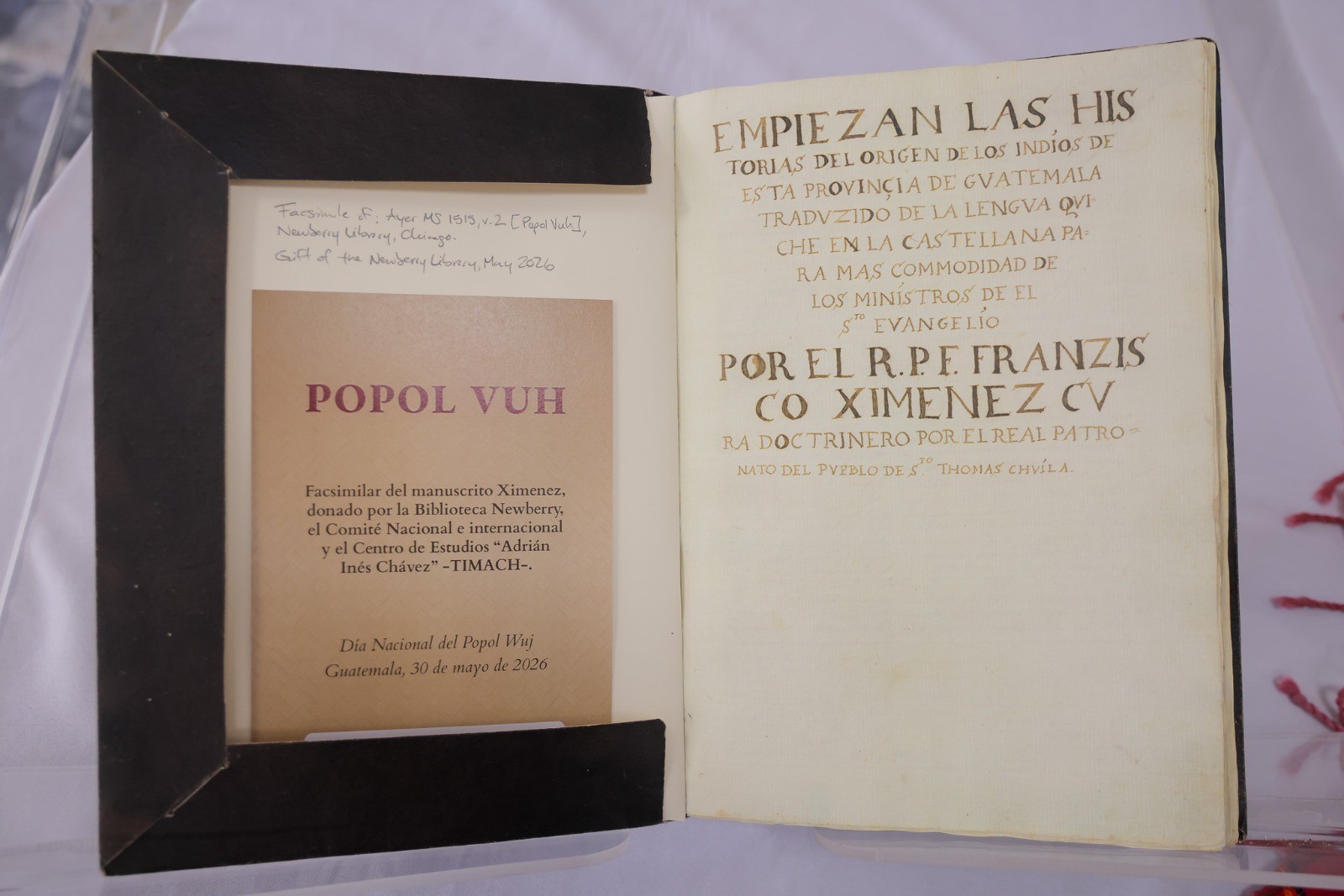
The facsimiles reproduce the earliest known surviving manuscript, prepared in the early 18th century by Dominican friar Francisco Ximénez, who transcribed the K’iche’ narrative and placed a Spanish translation beside it in parallel columns.
“While the Popol Wuj has appeared in many published editions and translations, modern versions do not preserve all the evidence contained in the manuscript itself,” said Little. “The facsimiles replicate its handwriting, corrections, crossed-out passages, colors and page arrangement, allowing researchers to study how the narrative was recorded, translated and transmitted during the colonial period.”
The manuscript left Guatemala in the mid-19th century, passed through collections in Europe and eventually became part of the Newberry Library’s collection, where it has been housed for more than a century. Before the new project, only two comparable facsimiles in Guatemala were held in private collections. Placing the reproductions in public libraries represents a symbolic return of the work to Guatemalan hands. The Popol Wuj was declared Guatemala’s national book in 1972 and part of the country’s intangible cultural heritage in 2012.
The project received widespread media attention throughout Guatemala, where coverage emphasized its scholarly importance and the cultural significance of making the manuscript publicly accessible.
“Making these facsimiles available creates opportunities for Guatemalan scholars, students and Maya communities to bring new questions and perspectives to the manuscript and shape how its knowledge is understood and carried forward,” said Little. “That continued engagement is what will keep the Popol Wuj a living part of Guatemala’s cultural and intellectual life.”